
Connect with us

Entertainment

$4 Billion Reasons to Bring Back Jimmy Kimmel on Air

ABC is on its knees, the audience proved who really runs the show, not the networks, not the affiliates,

Published

on

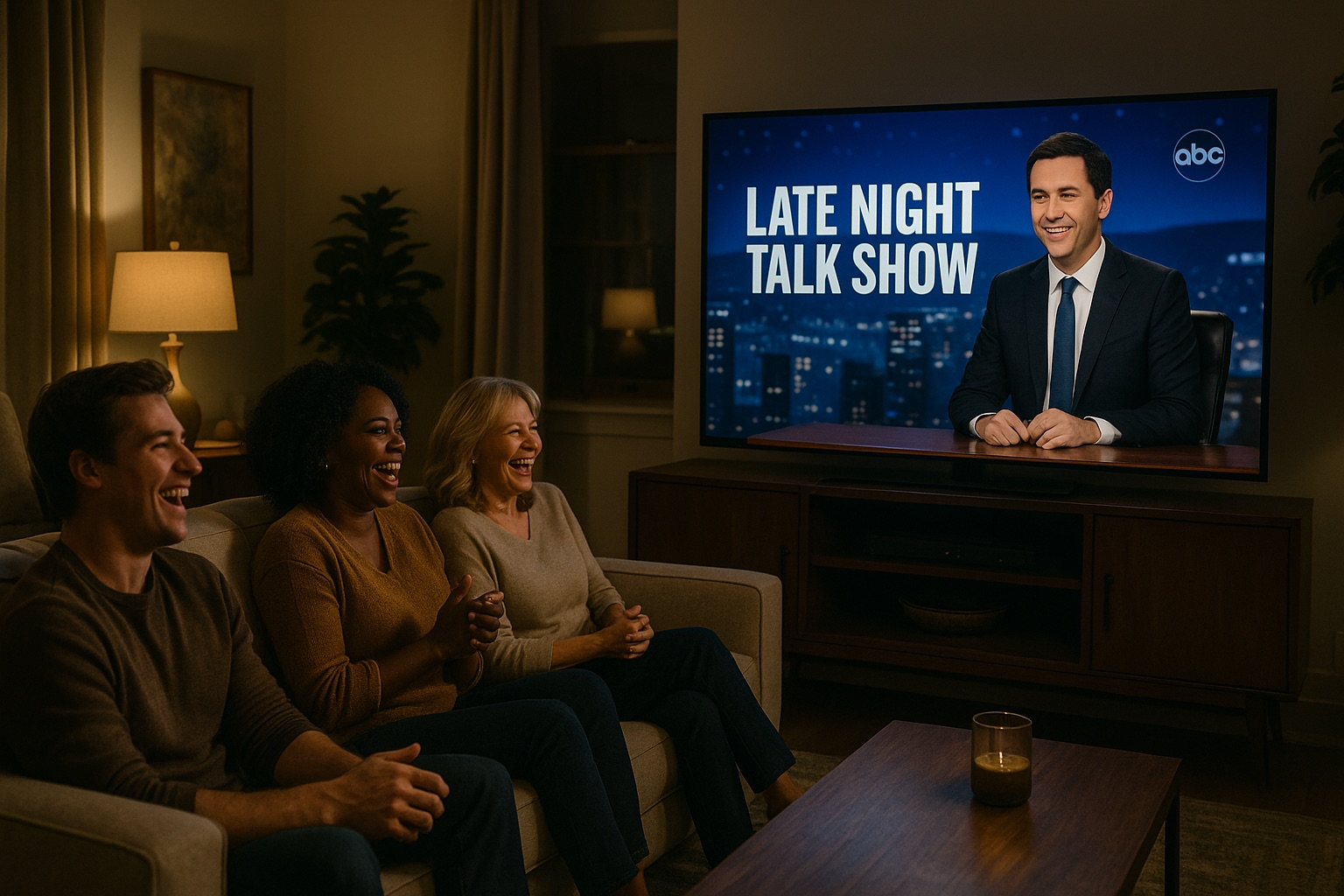
ABC Boycott worked Jimmy Kimmel back live
Photo: The Polichinelle Post
🎧 Listen Article
How a Late-Night Monologue Exposed the Fragility of Corporate Power

When Jimmy Kimmel stepped on stage that night, he had no idea his words would ignite a firestorm big enough to shake the Disney empire.

Here’s a clear diagram of the ABC–Disney–affiliate power chain:

ABC Boycott worked Jimmy Kimmel back live
  • Disney sits at the top as the owner.
  • ABC Network produces and distributes programming.
  • Local Affiliates (mainly Sinclair & Nexstar) act as gatekeepers, deciding what actually airs.
  • Finally, the shows reach households, but only if affiliates give the green light.

This visual captures the bottleneck that allowed Sinclair and Nexstar to pull Jimmy Kimmel Live! off-air despite Disney’s ownership.

For viewers unfamiliar with how television works in America: ABC is owned by the Walt Disney Company, but its shows don’t beam directly to your screen. They pass through a critical layer of distribution, local affiliates. And the two most powerful owners of those affiliates, Sinclair Broadcast Group and Nexstar Media Group, act as gatekeepers. Without their green light, a show, no matter how famous, can vanish from millions of households overnight.

It was in this fragile ecosystem that Jimmy Kimmel delivered a monologue that would rattle the industry and trigger a corporate crisis worth billions.

The Monologue That Sparked the Firestorm

Kimmel opened with a direct shot: the MAGA movement, he said, was twisting the murder of Charlie Kirk to dodge accountability while exploiting it for political points.

He then mocked Donald Trump’s strange response, noting that when asked about the death of a man he once called a friend, Trump rambled about White House ballroom renovations. “This isn’t grief,” Kimmel quipped, “this is how a child mourns a goldfish.”

From there, he ridiculed Trump’s claim that California doesn’t have ballot boxes. “We’ve got ballot boxes, mailboxes, lunch boxes, hell, we’ll even give you a toolbox to live in.” and blasted FBI Director Kash Patel for botching the investigation. He closed by skewering Marjorie Taylor Greene’s call for a “peaceful national divorce”: “What does that even look like? You get Florida, we get Vermont, and we share custody of Disney World?”

It was sharp, sarcastic, and merciless. For Sinclair and Nexstar executives, though, it was too much. Within hours, affiliates threatened not to air the show. ABC panicked, and suspended Kimmel.

ABC’s Panic

To Sinclair and Nexstar, wary of alienating conservative audiences in key markets, Kimmel’s jokes weren’t satire. They were provocation. Local stations warned they would preempt the show. Lobbyists piled on.

Disney executives, fearing a distribution crisis, acted fast. Within 48 hours, ABC announced the suspension of Jimmy Kimmel Live!.

ABC, which has aired Jimmy Kimmel Live! since 2003, did not immediately explain why it suspended the show on Wednesday. But its announcement came after both Nexstar and Sinclair said they would stop airing Kimmel’s show on their ABC-affiliated stations.

Their official statement of Andrew Alford, President of Nexstar’s broadcasting division:

Mr. Kimmel’s comments about the death of Mr. Kirk are offensive and insensitive at a critical time in our national political discourse, and we do not believe they reflect the spectrum of opinions, views, or values of the local communities in which we are located. Continuing to give Mr. Kimmel a broadcast platform in the communities we serve is simply not in the public interest at the current time, and we have made the difficult decision to preempt his show in an effort to let cooler heads prevail as we move toward the resumption of respectful, constructive dialogue.”

Behind the words was a simple reality: ABC had no other choice then bowed to affiliate and political pressure. But the network underestimated its audience.

The Consumer Revolt

The public response was swift and brutal. Viewers furious that Disney had silenced Kimmel organized boycotts. Hashtags like #CancelDisney#BoycottABC, and #StandWithKimmel dominated social media.

Millions of subscribers canceled Disney+ and Hulu. The exodus was so massive that the “unsubscribe” pages on both platforms crashed repeatedly under demand. Customer service lines were swamped.

By the fifth day, Disney’s market value had fallen by more than $4 billion. Advertisers grew uneasy. Shareholders demanded answers. What ABC had intended as a quick fix had spiraled into a corporate hemorrhage.

The Return

Faced with billions in losses, Disney reversed course. Within a week, ABC announced Kimmel’s reinstatement. The statement emphasized “reflection” and “conversations,” but the truth was unavoidable:

Their official statement was polished, almost sterile:

Last Wednesday, we made the decision to suspend production on the show to avoid further inflaming a tense situation at an emotional moment for our country. It is a decision we made because we felt some of the comments were ill-timed and thus insensitive. We have spent the last days having thoughtful conversations with Jimmy, and after those conversations, we reached the decision to return the show on Tuesday.” Walt Disney Company

Jimmy Kimmel Live! returned not because ABC valued free speech, but because silencing him was too expensive.

The Titans Behind the Curtain

To understand why this unfolded, you have to know who Sinclair and Nexstar are, the “family network titans” that hold the keys to ABC’s distribution.

Sinclair Broadcast Group
  • Who they are: One of the largest owners of local TV stations in the U.S., including dozens of ABC affiliates.
  • Political leaning: Openly conservative, known for injecting right-wing commentaries into local broadcasts.
  • Role in this crisis: Sinclair affiliates were among the first to signal they would not air Kimmel’s show after the monologue, pressuring ABC.
Nexstar Media Group
  • Who they are: The single largest owner of television stations in America, reaching nearly 70% of households.
  • Political leaning: More cautious than Sinclair but protective of conservative-leaning markets and advertisers.
  • Role in this crisis: Nexstar affiliates withheld Kimmel’s program in key states, amplifying pressure on Disney leadership.

Together, Sinclair and Nexstar act as silent giants of American broadcasting. Networks may produce shows, but affiliates hold the local veto power.

Titans vs. Audience

For decades, affiliates like Sinclair and Nexstar influenced what Americans watched without most viewers even knowing their names. But the Kimmel saga revealed the limits of their control.

Yes, they could block his show locally. Yes, they could panic Disney. But when millions of consumers organized, canceling subscriptions and erasing billions in market value, the affiliates’ leverage crumbled.

In the triangle of networks, affiliates, and audiences, it was the audience that emerged as the true power.

Hitting Them Where It Hurts

The lesson is blunt: corporations don’t respect speech, they respect profit. Disney didn’t bring Kimmel back out of principle. They brought him back because four billion dollars vanished in less than a week.

For consumers, the blueprint is clear:

  1. Identify the revenue stream.
  2. Organize economic pressure.
  3. Stay united on the demand.
  4. Force corporations to choose between censorship and survival.

In Kimmel’s case, the strategy worked flawlessly.

Who Runs the Show?

Jimmy Kimmel’s suspension and return was never about one man’s jokes. It was about power. Sinclair and Nexstar tried to flex their influence. Disney tried to appease them. But in the end, it was the consumers who proved they are the real owners of the format.

Kimmel is back on air not because ABC cherishes free expression, but because millions of viewers reminded Disney who pays the bills.

The “family network titans” may own the microphones, but the audience owns the volume knob. And this time, they turned it up loud enough to cost Disney $4 billion, a price too steep for even the biggest titan to ignore.


Sidebar: The Numbers Behind the Showdown

Disney’s Financial Hit

  • $4 billion: estimated market value lost in 5 days after the boycott.
  • Tens of thousands of subscription cancellations per hour at peak.
  • Disney+ and Hulu “unsubscribe” pages crashed repeatedly under demand.

Sinclair Broadcast Group

  • Owns or operates 190+ TV stations across the U.S.
  • Includes more than 50 ABC affiliates.
  • Estimated reach: 40% of American households.
  • Known for conservative-leaning editorials and mandated commentaries.

Nexstar Media Group

  • The largest local TV owner in the country.
  • Controls or services nearly 200 stations.
  • Reaches about 68% of U.S. households.
  • Heavy influence in swing-state and rural markets.

The Audience

  • More than 160 million U.S. households have access to ABC via affiliates.
  • Social media hashtags (#CancelDisney, #BoycottABC, #StandWithKimmel) trended globally within 48 hours.
  • Online forums documented thousands coordinating cancellations as “economic protest.”

How Many Cancellations Equal $4B?

  • Disney would need to lose about 20–22% of its subscriber base, roughly 40–42 million people, to wipe out $4 billion in projected annual revenue.
    ⚠️ Important nuance: Stock market losses (like the $4B market cap dip) don’t directly equal subscription revenue loss; they reflect investor panic and projected future declines. So it’s possible fewer cancellations (10–12% of subscribers, ~20–25 million people) could trigger a $4B drop, because Wall Street “prices in” further damage.

Continue Reading
Advertisement

Entertainment

“Radioactive Emergency”: When Fiction Rewrites Reality, and Reinforces a Narrative

Published

on

By

The Polichinelle Post _ Review of Brazilian serie Tv "Radioactive Emergency"
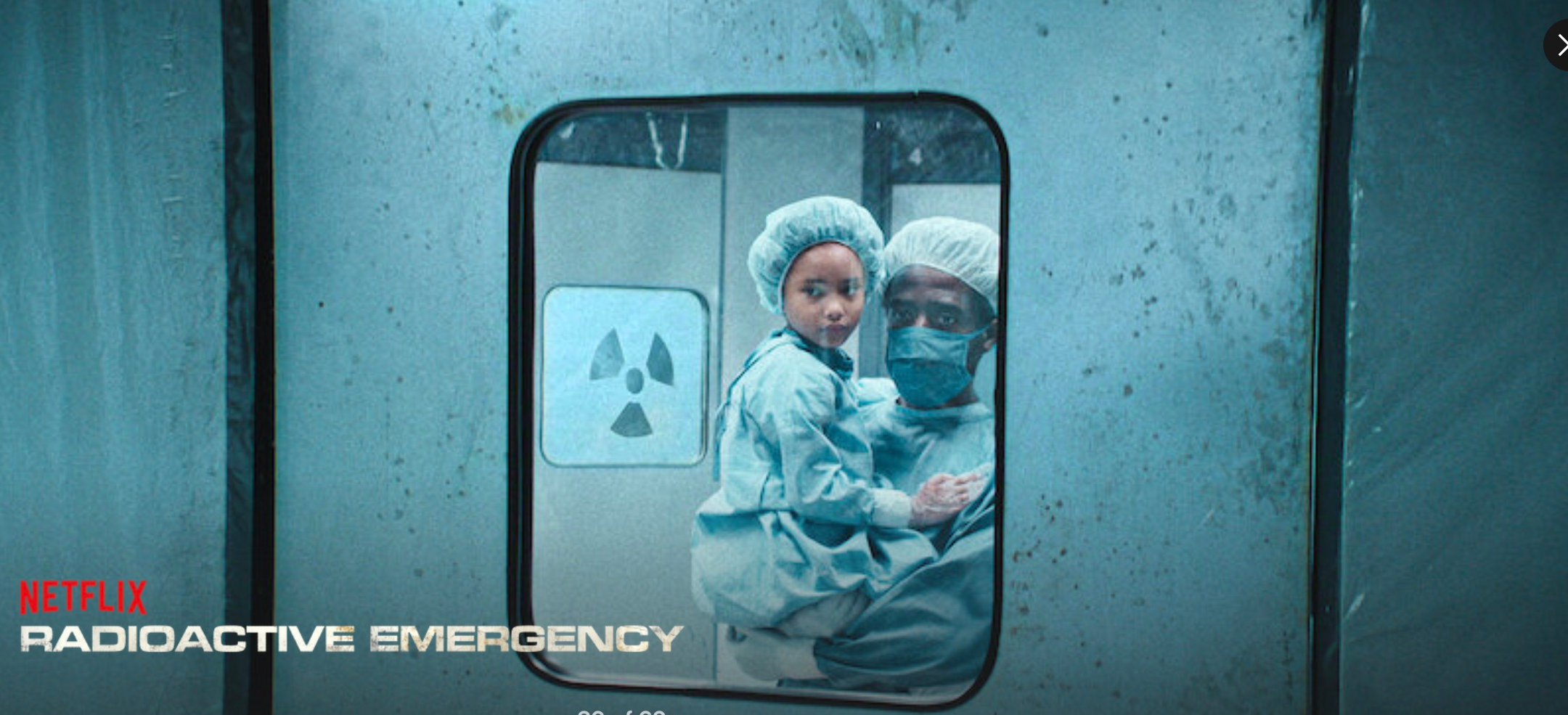
Photo: Screenshot "Radioactive Emergency"
🎧 Listen Article

Netflix didn’t just tell the story of the Goiânia disaster.

It recast it.

What happened in 1987 was one of the worst civilian radiological accidents in history, a chain reaction of ignorance, exposure, and institutional failure after a radioactive source was removed from an abandoned clinic and circulated through a scrapyard network.

It spread the way real disasters spread: through proximity, through trust, through human error.

On paper, this is a story about radiation.

On screen, it becomes something else entirely: a story about who gets to embody suffering, and who doesn’t.

When Accuracy Becomes Selective

The real Goiânia disaster had no racial script.

Victims were linked by contact, not identity: scrapyard workers, relatives, neighbors, people pulled into the same invisible chain of exposure. Contamination moved through touch and curiosity, not through any demographic divide.

The fatalities reflect that reality. They came from the same working-class network, including a child, all connected by proximity to the source, not by any constructed contrast between groups.

Even the most documented case, six-year-old Leide das Neves Ferreira, complicates the visual narrative imposed by the series. Her real-life identity, widely recorded at the time, does not align with the pattern the adaptation leans into.

Because on screen, a different logic takes over.

A pattern emerges:

  • The exposed, the contaminated, the suffering → disproportionately darker-skinned
  • The analysts, the authorities, the ones in control → more often lighter-skinned

One instance might be incidental.

A repeated structure isn’t.

Not an Error, A System

This is where the series stops being a dramatization and starts following a template.

Because this pattern didn’t start here.

Across global media, the same visual hierarchy keeps resurfacing:

  • Vulnerability has a look
  • Authority has a different one
  • Chaos is embodied
  • Control is institutional, and visibly separate

“Radioactive Emergency” doesn’t invent this language. It speaks it fluently.

Even at the level of intimate storytelling, the symbolism holds. Within affected families, visual contrast is preserved, not just narratively, but aesthetically. The result isn’t accidental nuance. It’s coded familiarity.

This is how modern bias operates: not declared, not explicit—just repeated until it feels natural.

Creative License, or Convenient Flexibility?

The defense is obvious: artistic interpretation.

And that argument holds, until it doesn’t.

Because the series, created by Gustavo Lipsztein, is meticulous where it chooses to be:

  • The physics of radiation
  • The progression of symptoms
  • The timeline of contamination

Precision everywhere.

Except in representation.

That’s where realism loosens. Patterns appear. Consistency disappears.

You don’t get to claim authenticity while selectively bending the human reality at the center of the story.

That’s not creative freedom.

That’s curation.

Rewriting Memory in Real Time

“Based on a true story” is not a neutral label.

It’s a claim on memory.

For most viewers, this version is Goiânia. There is no competing reference point. No footnote. No correction.

So when representation shifts, memory shifts with it.

And what gets lost isn’t just accuracy, it’s context:

  • A complex, mixed social fabric flattened into visual shorthand
  • A disaster driven by exposure reframed through familiar imagery
  • A reality replaced by something more recognizable, but less true

Over 100,000 people were examined. Hundreds were contaminated. Not by race, but by contact.

That distinction isn’t minor.

It’s the difference between history and narrative.

The Industry Pattern Hiding in Plain Sight

This is bigger than one series.

The real question isn’t whether media reflects bias.

It’s whether it keeps standardizing it. quietly, consistently, visually.

Because the roles rarely change:

  • Who is shown as exposed?
  • Who is shown as helpless?
  • Who is shown as needing intervention?

And on the other side:

  • Who analyzes?
  • Who contains?
  • Who restores order?

These aren’t random distributions.

They’re patterns.

And patterns, repeated often enough, stop being noticed, and start being believed.

Conclusion

“Radioactive Emergency” succeeds in recreating the fear of invisible contamination.

But it also reveals something far more familiar: how easily reality can be reshaped, not by what is said, but by what is shown.

The Goiânia disaster was not a racial allegory.

It didn’t need one.

But when storytelling begins to assign roles instead of reflect them, subtly, visually, repeatedly, it stops documenting tragedy and starts redesigning it.

And at that point, the most dangerous form of exposure isn’t radioactive.

It’s narrative.

Continue Reading

Entertainment

All’s Fair: When Fame Replaces Competence

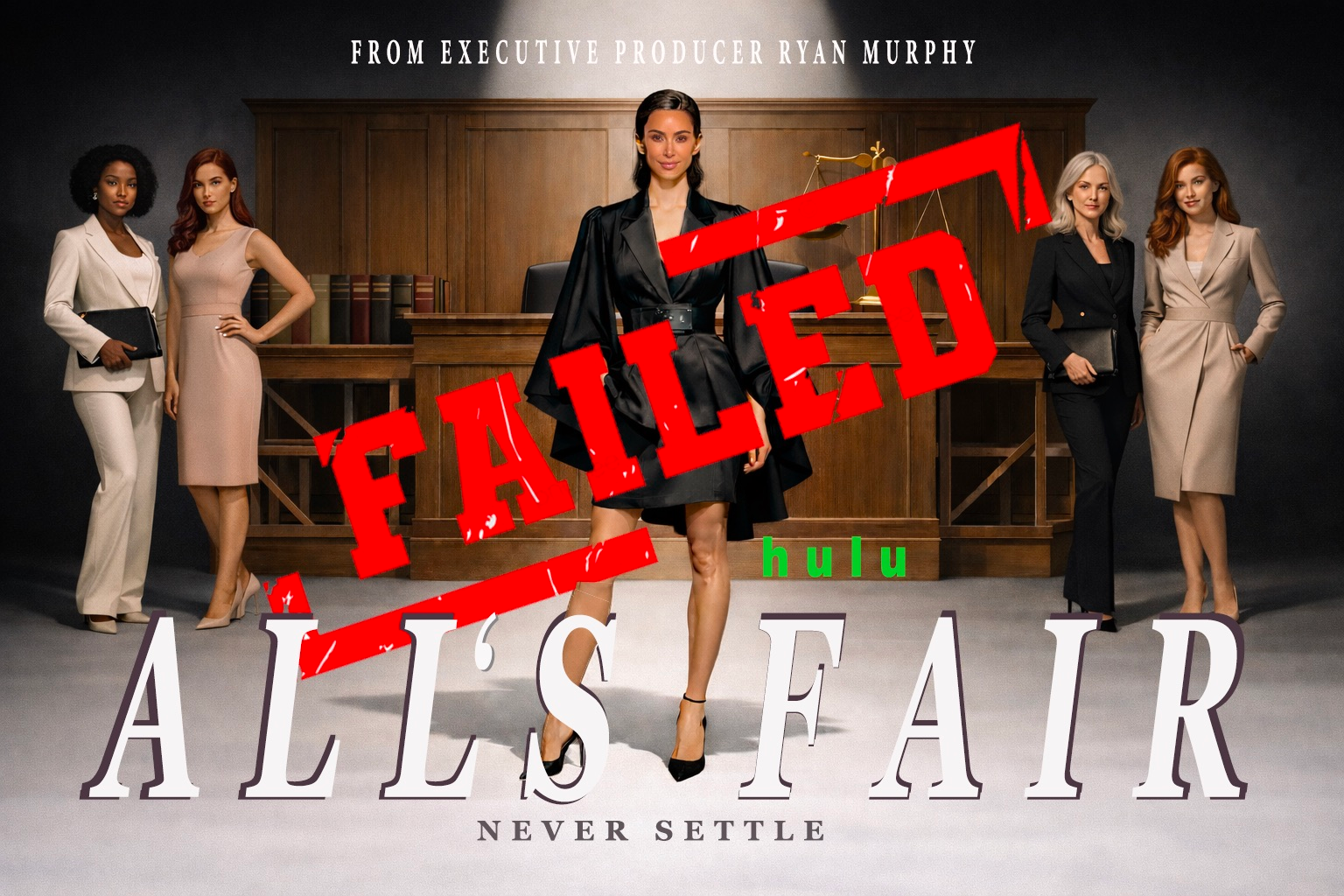
All’s Fair treats the law as an aesthetic rather than a discipline, turning the courtroom into a runway.
Published

on

By

All's Fair Tv Show Critique
Photo: The Polichinelle Post
🎧 Listen Article

All’s Fair arrives not merely as a television series, but as a declaration of confidence.
Created by Ryan Murphy, backed by 20th Television, and financed to the tune of nearly $70 million, the show enters the cultural arena armored with institutional trust. Few series debut with such an unspoken guarantee: this matters.

That promise collapses almost immediately.

Not because All’s Fair is underfunded.
Not because it lacks access to talent.
But because it embodies a more corrosive belief now metastasizing through prestige television: that image can replace authority, fame can substitute for competence, and power no longer needs to be earned so long as it is convincingly displayed.

This is not a failed legal drama.
It is a successful illusion, and that is far more damning.

Law as Costume, Not Constraint

All’s Fair calls itself a legal drama, but the law here behaves like clothing, not structure. It is worn, admired, and discarded, never felt. Cases drift through the series like props rolled onto a stage and quietly removed once they’ve served their visual purpose. They create noise without pressure, motion without momentum. Nothing hardens. Nothing breaks.
There is no moment where a character hesitates because the consequences might be real. No fear that a mistake could end a career. No sense that preparation separates the powerful from the exposed. The law never closes in. It never tightens the room. It never remembers what came before.
In serious professional drama, law acts like gravity. It limits movement. It drags arrogance downward. It rewards discipline and punishes shortcuts. It turns ambition into risk. Here, it does the opposite. The institution bends politely out of the way, existing only to flatter whoever stands at the center of the frame.
What remains is not stylization but weightlessness. Conflict floats. Stakes evaporate on contact. Authority is never challenged because it is never placed under strain. It simply arrives fully formed, untouched by effort, consequence, or doubt, an image of power with nothing underneath it.

Kim Kardashian Center of Gravity

The show’s central miscalculation is also its governing thesis: Kim Kardashian is not merely cast in All’s Fair, she is its organizing principle.

Reportedly paid over $10 million for the season and installed as both lead actress and executive producer, Kim is positioned as an unquestioned axis around which the series bends. The show never asks whether her character deserves authority; it presumes the audience will accept it by recognition alone.

This is not stunt casting.
It is an ideological statement.

All’s Fair operates on the premise that fame itself is now a credential, that visibility can bypass apprenticeship, branding can replace discipline, and authority no longer needs to be demonstrated if it can be convincingly staged.

Kim’s performance is not forged through sacrifice, failure, or intellectual pressure. It is frictionless. Power is worn, not built. Expertise is implied, never shown. The fantasy is not interrogated—it is protected.

Craft Reduced to Decorative Capital

That fragility becomes impossible to ignore given the presence of genuinely elite performers, Glenn Close, Naomi Watts, Sarah Paulson, Niecy Nash, actors whose careers were built through rejection, rigor, and professional filtration.

They are impeccably delivered and structurally neutralized.

Their characters behave without institutional logic. Emotional outbursts carry no strategic cost. Decisions are untethered from incentive. Conflict ignites and extinguishes without leaving scars. These actors are asked to perform intensity rather than intelligence, reaction rather than calculation.

They do not orbit power.
They decorate it.

What should have been a living professional ecosystem instead resembles a showroom, veteran talent arranged around a preordained center that cannot be challenged, tested, or meaningfully opposed.

The Fraud of “Strong Women”

All’s Fair markets itself as a celebration of powerful women. What it delivers is luxury feminism emptied of professional substance.

Authority is communicated not through mastery, preparation, or strategic command, but through wardrobe, glamour, real estate, and lifestyle excess. The camera lingers on surfaces, not labor. Success is visualized through consumption rather than competence.

This is not empowerment.
It is containment.

The show reproduces patriarchal logic under a feminist veneer: women are validated through aesthetic dominance rather than operational power. Authority is ornamental, not functional. Labor is invisible. Competence is suggested, never demonstrated.

In this world, women do not win by being formidable.
They win by being seen.

Why The TV Show “Suits” Still Humiliates This Project

The comparison to Suits is unavoidable, and humiliating.

Suits was imperfect, stylized, and occasionally implausible. But it was professionally credible. Law functioned as consequence. Careers rose and collapsed. Partnerships were earned slowly. Betrayals carried cost. Dialogue conveyed intelligence. Wardrobe signaled hierarchy rather than distraction.

Most importantly, Suits understood that authority must be defended daily.

All’s Fair, with vastly superior resources, abandons that understanding entirely. It does not dramatize how power is acquired or maintained. It presents power as already owned, luxurious, insulated, and immune to consequence.

Where Suits explored ambition under pressure, All’s Fair displays status under glass.

Luxury Is the Point

The show’s budget is not invested in narrative depth or institutional complexity. It is spent on display: designer wardrobes, pristine interiors, expensive vehicles, curated excess.

This visual language mirrors Kardashian’s existing brand more than it serves drama. The show does not interrogate power through law; it aestheticizes power as lifestyle.

The profession is incidental.
The luxury is essential.

Final Verdict

All’s Fair does not fail because it lacks money, attention, or access. It fails because it embodies a dangerous assumption now spreading through prestige television: that craft is optional, training is obsolete, and authority can be borrowed from fame rather than earned through competence.

This is not a mistake of execution.
It is a declaration.

All’s Fair asks image to carry meaning, and when image is finally forced to do that work, it collapses.

Continue Reading

Entertainment

Hollywood’s PR-Engineered Romances: The Cost of Being Taylor Swift

In a world where every emotion is monetized, fame no longer rewards art, it rewards those who can remain visibly relevant the longest.
Published

on

By

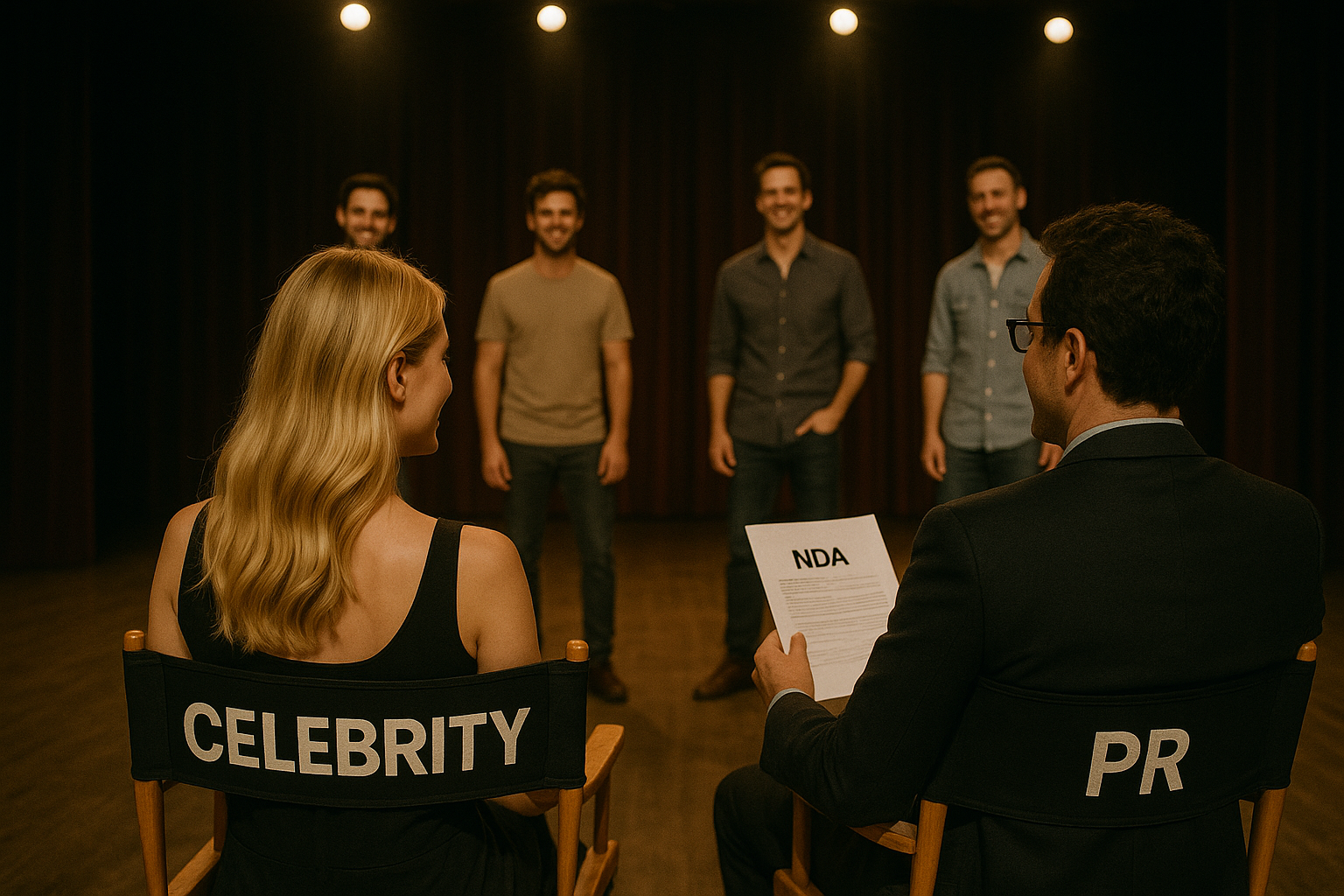
A celebrity and her PR agent sit in director’s chairs marked “CELEBRITY” and “PR,” facing four handsome men on a warmly lit stage, an audition that feels more like selecting a potential date designed to fit a desire public image and impact
Photo: The Polichinelle Post
🎧 Listen Article

Once upon a time, fame was an accident of talent. Now it’s a profession, a full-time performance that stretches far beyond any stage or screen. In modern entertainment, the currency of relevance isn’t art alone; it’s emotion. Every smile, heartbreak, and dinner outing is monetized, measured, and optimized.

Few artists embody this reality, and endure its cost, more vividly than Taylor Swift. Not because she manipulates the system, but because she can’t escape it.

The Industry That Never Sleeps

For over a century, Hollywood has lived by one rule: the show must go on.
In the digital age, the show never stops.

The 24-hour news cycle, algorithmic feeds, and global fandoms have erased the line between public persona and private life. Publicists have become emotional engineers, curating continuity rather than crises. Their mission is simple but relentless: keep audiences feeling something.

Love stories, heartbreaks, and redemptions now arrive in seasons as predictable as album releases. What began with studio-chaperoned romances has evolved into a data-driven factory of sentiment, where affection and strategy blur until they are indistinguishable.

Taylor Swift: The Mirror, Not the Mystery

Taylor Swift has lived her entire adult life inside this structure. Every relationship she forms becomes instant public property, turned into a narrative “era.” Each breakup is an aesthetic pivot, each partner a storyline.

To mistake her as the architect of this system is to misunderstand its reach. Swift is both its beneficiary and its casualty, rewarded for transparency, punished for privacy.
When she sings of heartbreak, it’s “authentic.” When she retreats, it’s “calculated.”
The contradiction isn’t hers alone. It’s the paradox of modern celebrity itself.

Inside the Factory: How Image Management Works

Behind every global superstar lies an invisible workforce, managers, lawyers, brand consultants, media strategists. Their job is to maintain narrative alignment: ensuring every public moment supports ongoing campaigns, partnerships, and endorsements.

A typical high-profile rollout follows a calculated rhythm:

  • Coordinated public appearances timed with releases
  • Calibrated social media activity that mirrors brand tone
  • Pre-approved talking points for every interview
  • Crisis-response playbooks for personal or reputational turbulence

Romance, too, becomes part of the playbook, a strategic variable that can soften controversy, distract from scandal, or expand a fan base through crossover appeal. When love is curated by committee, it no longer exists for intimacy but for alignment: aligning narratives, demographics, and market sentiment.

It’s not deception. It’s defense, the shielding of billion-dollar brands from the volatility of real human life. Yet for an artist whose craft depends on authenticity, that same defense can begin to feel like imprisonment, where even vulnerability must be scripted, and sincerity becomes the first casualty of fame.

The Price of Constant Relevance

In a world where silence equals invisibility, privacy becomes rebellion.
Swift embodies this paradox: to stay human, she must occasionally disappear, but disappearing risks losing momentum in a marketplace that never pauses.

Algorithms reward immediacy. Absence breaks the spell. So even genuine romance must be timed and managed. The artist becomes a perpetual campaign, a personality in constant pre-release mode.

No wonder so many stars describe fame as disassociation: when sincerity becomes performance, survival requires a mask.

Hollywood’s Ghosts

This system isn’t new, only modernized. In the Golden Age, studios scripted personal lives to preserve moral façades. Rock Hudson’s career thrived under the choreography; Judy Garland’s collapsed beneath it.

The tools have changed, not the logic.
Yesterday’s morality clauses are today’s sponsorship deals; yesterday’s gossip columns are today’s algorithms. Image continuity remains the most valuable currency.

From Tom Cruise and Katie Holmes  to Brangelina to Bennifer, each high-profile pairing has operated inside the same industrial logic: romance as brand merger, heartbreak as sequel.

The Economics of Intimacy

In this economy, intimacy becomes transactional not from cynicism but survival. Two public figures align and instantly inherit one another’s markets, demographics, and bandwidth. It’s symbiosis disguised as coincidence.

For the men in Swift’s orbit, actors, athletes, DJs, the benefits are tangible: spikes in followers, streaming numbers, and sponsorships. For her, the gain is narrative continuity, the oxygen of a global brand that cannot go dark.

The machine does the rest, transforming personal moments into international content. Everyone profits. Everyone pays.

The Gendered Double Bind

Fame is not an equal playing field. A man linked to multiple partners is called charismatic; a woman, calculating. Swift’s love life has been treated as both morality play and sport, a paradox that sustains the very scrutiny she resists.

Society demands women in power share everything, yet remain untouched by the sharing. The result is exhaustion disguised as glamour.

The Human Cost

To live as a perpetual storyline is to risk eroding the self. Every gesture is analyzed; every silence, politicized. Even genuine emotion starts to feel rehearsed.

Swift’s recent creative turns, introspective, self-produced, stripped-down, read as quiet rebellion. A reclaiming of authorship from a machine that profits most from her vulnerability.

The Audience’s Complicity

The machinery thrives because we feed it. We demand constant access, decode every lyric, and consume every photograph as serialized fiction.

In this sense, Taylor Swift is not merely the face of the system, she’s its mirror, reflecting our hunger to know and our refusal to look away. The spectacle continues because we keep buying tickets.

A Manufactured Modernity

What we mistake for orchestration is often adaptation. The machinery doesn’t erase emotion; it processes it. It packages love and heartbreak into digestible narratives.

Swift may choose her partners freely, yet every choice is instantly transformed by context. Every date becomes data. Every heartbeat becomes PR.

Toward Empathy, Not Exposure

To see this system clearly is not to condemn it, but to humanize those caught in it. Fame today isn’t built on deceit, it’s built on survival in an economy where identity is product.

The question isn’t who Taylor Swift dates. It’s what it costs her, and anyone, to remain visible in a culture that punishes authenticity the moment it appears.

The Loop That Never Ends

The “PR Power Couple Factory” isn’t a conspiracy. It’s the inevitable outcome of a culture that values narrative over nuance. Taylor Swift didn’t invent it, she mastered surviving it.

In a better world, fame would follow art.
Until then, the machine runs the show, and its brightest stars burn to keep the lights on.

Continue Reading

Trending