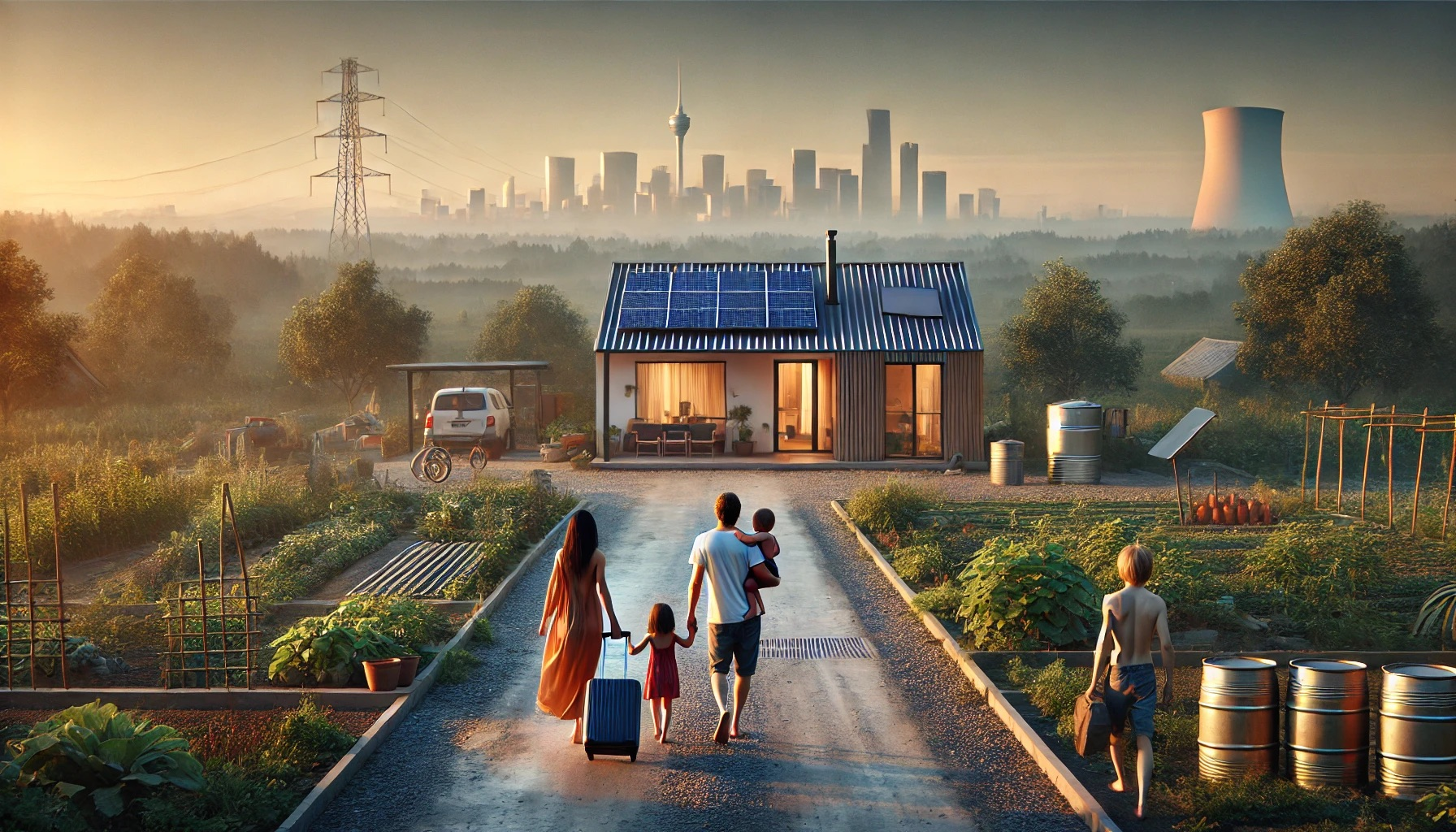
Over the last decade, something subtle but extraordinary has been unfolding across much of the developed world. A growing stream of people, singles, couples, families, retirees, even young professionals, is quietly leaving major cities. They are moving to rural towns, mountains, remote suburbs, or small communities that were once considered “out of the way.” This is not a whimsical return to the romance of nature. This is not a pastoral fantasy. What we are witnessing is a deliberate, strategic retreat: an exodus born out of survival.
Contrary to the easy stereotype, these departures are not led exclusively by back-to-the-land idealists who long to grow tomatoes barefoot in the morning dew. The people leaving include educated professionals, teachers, engineers, nurses, artists, service workers, people from across the social spectrum. They are leaving because the math of modern city life no longer adds up. It is not just expensive; it has become suffocating.
The Pressure Cooker of Urban Life The economic pressures have been mounting for years. Real estate prices in major metropolitan areas have climbed beyond anything remotely sustainable. Interest rates have surged. Rent eats away at wages. Taxes continue to rise as governments try to compensate for drained reserve funds. And every year, everything, from food to healthcare to childcare, costs more. But wages? They barely keep up.
The result is a quiet but relentless suffocation. The cost of staying is no longer just financial. It is psychological. It is emotional. City life, once synonymous with opportunity, now feels like a gilded cage.
So people are stepping out. Some do it abruptly. Others spend months, even years, planning their exit. They are not moving because they have suddenly fallen in love with trees and sunsets. They are moving because they have to, because the only real way to survive a rigged, unsustainable economy is to reduce dependency on that system altogether.
What They See That Others Don’t If you listen closely to those who leave, you’ll notice something telling: they aren’t naive. They aren’t trying to romanticize hardship. They are reading the signs of a system unraveling. They see the creeping monopolization of resources, the tightening grip of industries that control what we eat, how we are treated when sick, and how we live day to day. They are choosing to leave before the trap closes completely.
The patterns are clear. Agriculture, once diverse and locally rooted, has been consolidated by multinational corporations. These companies are buying up farmland at a rate that should alarm everyone. With each acquisition, the future of food production becomes less about community and sustenance and more about profit and control. The endgame is monopoly.
The pharmaceutical industry is following the same playbook. They are not only buying farmland; they are acquiring tracts of land specifically to cultivate the plants that form the basis of modern medicine. When you control the plant, you control the cure. And when you own both, you ensure that no alternative, natural or otherwise, competes with your patented drug.
Control Masquerading as Care These corporations are not satisfied with merely producing medicine. They also shape the very system that prescribes it. They fund medical schools, dictate research priorities, influence curricula, and support medical boards with “grants” and subsidies. This is not philanthropy. It is influence. Big Pharma doesn’t just sell the medicine, it decides what gets taught, prescribed, and approved.
The food industry mirrors this pattern. Food associations receive money from the same companies whose products they’re supposed to regulate. They sign off on what goes on your plate, even when that plate is full of synthetic ingredients.
The end product of all of this? Shelves filled with food that looks real, smells real, tastes real—but is mostly synthetic. Chemical preservatives, artificial colors, engineered ingredients: these replace nutrients and integrity. The priority is no longer to nourish, but to maximize shelf life, reduce costs, and expand margins.
We are now living in a society that sells us something that looks like food but does little to sustain life. It is a market-driven illusion, and people are catching on
When Trust Breaks Once trust is broken, it is nearly impossible to repair. And so, in growing numbers, people are taking back control of the essentials. They grow their own food, not because they are romanticizing farm life, but because they no longer trust that the supermarket has their best interests at heart. They collect clean water because they no longer trust the water systems. They install solar panels because they no longer trust the energy grid. This is not eccentricity. This is self-preservation.
The Financial Machinery Behind the Curtain The other pillar of this exodus, the silent force pushing people away from urban centers, is the unrelenting grip of financial institutions. These institutions, with their predatory loans, speculative bubbles, and opaque schemes, have repeatedly jeopardized the stability of entire economies. And when they fail, the consequences are always the same: they get bailed out. Ordinary people foot the bill. This was true in 2008. It will be true again.
Meanwhile, these same institutions are expanding their reach. Their investments now span every essential aspect of life: oil, housing, agriculture, healthcare. They are no longer just banks. They are gatekeepers. And when a handful of financial actors controls all the pipelines that feed, house, and heal society, we no longer live in a free market. We live in a velvet-gloved form of dictatorship, a system where freedom becomes a slogan instead of a lived reality.
The Global Context: A Resource Race The consequences of these converging crises are not confined to cities. The pattern is global. As powerful Western nations near the end of their resource cycles, they are reverting to a centuries-old playbook: conquest, extraction, and the control of weaker nations. Under the comforting language of “economic partnership” or “humanitarian intervention,” the Global South is once again being eyed as a pantry of raw materials.
This resource race, driven by desperation, only deepens the instability of the system. And those who sense what’s coming, those who understand how fragile the supply chains and political promises really are, are making the choice to step away from the cities while they still can.
Autonomy as Resistance For these individuals and families, autonomy is no longer a dream. It is a strategy. By moving out of the cities, they are attempting to reclaim some measure of control over their own survival. They plant gardens, learn forgotten skills, and live with fewer intermediaries between themselves and the things they need to live.
And contrary to the popular assumption, this is not a retreat from society. It is a form of resistance. Resistance against a system that has placed profit before people for so long that it has forgotten the purpose of community itself.
This exodus is the refusal to be wholly dependent on a network that, time and again, has shown that when crisis comes, it will save itself, not you.
A World at an Inflection Point We are standing on the edge of a seismic shift in wealth and power. The Western world is reconfiguring its ressources. The gap between the protected and the unprotected is widening. Western nations, realizing their resource cycles are closing, are reverting to what they’ve always done when the well runs dry: conquest. Extraction. Strategic partnerships that are anything but equal. Poor nations with untapped resources are back on the table, ready to be bought, coerced, or stolen from.
For those still inside the cities, the day-to-day grind hides the deeper truth: the foundations are shaking. Those who are leaving are not merely escaping, they are adapting.
The Clock Is Ticking The story of this great escape is not one of utopian idealism. It is the story of a system that has pushed ordinary people to make extraordinary choices. It is a warning, written in real time, that when people stop believing in the fairness of the structures that govern them, they will seek alternatives.
Autonomy has become the only rational response to a system driven by power, control, money, and greed. Those leaving now are not just escaping the present. They are preparing for the future.
And if the cities keep tightening their grip, they will not be the last.
What we’re witnessing is not a clash of good versus evil, but a confrontation between actors operating with the same playbook, pressure, leverage, and calculated destabilization. The difference isn’t behavior. It’s permission. Who gets a pass, and who gets punished for doing the same thing.
For decades, the global order, largely shaped by the United States Department of Defense and reinforced through alliances like NATO, was framed as “stability.”
That word deserves scrutiny.
Because what was labeled stability was, in practice, enforced dominance.
At its peak, the U.S. maintained over 800 military bases across more than 70 countries. The Fifth Fleet in Bahrain didn’t simply protect peace, it secured control over the Strait of Hormuz, where roughly 20% of the world’s oil supply transits daily.
That isn’t neutrality. That’s leverage.
And leverage always serves the one holding it.
Now that leverage is being tested, the language is shifting.
Iran has not replaced U.S. power, but it has exposed its limits. Reach has expanded. Costs of disruption have dropped. Influence no longer requires direct confrontation. Even the International Monetary Fund has warned that prolonged instability in the region could trigger global economic shock through energy volatility and supply disruption.
“America has no permanent friends or enemies, only interests.”
That logic didn’t fade. It became the system.
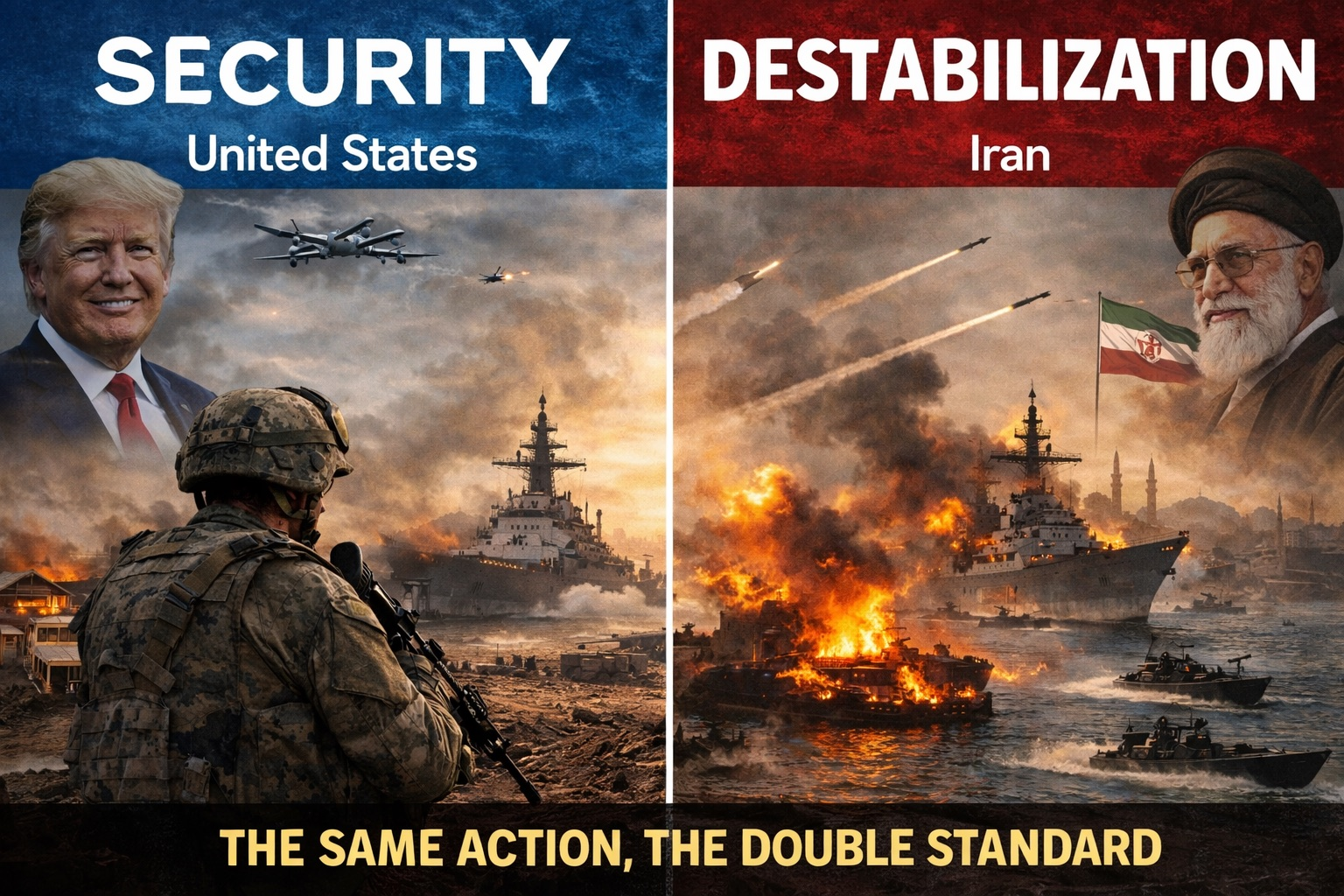
So when the U.S. pressures a corridor, it’s “security.” When Iran does the same, it’s “destabilization.”
Same mechanism. Different label.
And that label is the shield.
Because language is how power protects itself.
Even “freedom of navigation” is conditional, applied as principle when aligned, framed as crisis when challenged.
This isn’t accidental. It’s structural.
As John Mearsheimer argues, great powers are driven to dominate, not out of ideology, but because the system rewards it.
Iran isn’t breaking the rules.
It’s operating within them.
And that’s what makes this moment destabilizing.
Because the system only holds when one actor can impose consequences without facing them.
That condition is fading.
What’s emerging is not the collapse of power, but the end of uncontested power.
And once dominance becomes contestable, the cost rises everywhere:
Deterrence demands constant escalation
Supply chains require rerouting and redundancy
Energy markets embed risk
Diplomacy becomes performance instead of function
This is how systems unravel, not through sudden collapse, but through rising cost that exposes their limits.
And at the center of it is not strategy, but ego.
Leadership that confuses pressure with control. Institutions clinging to narratives that no longer match reality.
The outcome is already visible:
Escalation without control. Power without certainty. Cost without accountability.
Let’s be clear.
The world is not becoming more moral.
It is becoming more transparent.
The United States is not uniquely aggressive. Iran is not uniquely destabilizing.
Both operate on the same logic:
Apply pressure. Control flow. Shift cost.
The only thing changing is permission.
Who can act without consequence, and who cannot.
And that shift, more than any strike or deployment, is what is reshaping the global order.
Because once the illusion of control fades, power doesn’t disappear.
It gets negotiated.
Let’s stop pretending this is about morality.
What we are watching unfold is not a clash between right and wrong, it is a transfer of leverage between two powers that ultimately speak the same language: force, pressure, and control. The only difference is tolerance, who the system allows to act without consequence, and who it labels a threat for doing the same.
For decades, U.S. “stability” in the Middle East was never neutral. It was enforced dominance. Military bases, naval fleets, and security guarantees didn’t create peace, they created compliance. The flow of oil through the Strait of Hormuz remained smooth not because the system was fair, but because it was controlled.
And controlled systems always benefit someone.
Now that control is being challenged.
Iran has not replaced U.S. power, but it has exposed its limits. Bases that once symbolized untouchable authority are now within reach. Supply lines once considered secure now carry risk. The system didn’t collapse, it lost its certainty. And once certainty disappears, dominance becomes negotiation.
Call it disruption. Call it escalation. But don’t call it new behavior.
Because the mechanism is the same.
Pressure the corridor. Influence the flow. Shift the cost.
The difference is that when one actor does it, it’s called “security.” When the other does it, it’s called “destabilization.”
Same action. Different label.
And that label determines who gets tolerated, and who gets punished.
Meanwhile, the cost is exploding.
This war is no longer measured in missiles alone. It is measured in:
tens, if not hundreds, of billions in military expenditure
rising insurance premiums on global shipping
energy markets pricing in permanent instability
supply chains slowing under geopolitical risk
The global economy is now absorbing the consequences of a system that believed it could operate indefinitely without pushback.
And at the center of this acceleration is not strategy, but ego.
The collapse of diplomacy is not accidental. It is the result of leadership that mistakes pressure for control, and arrogance for strength. When negotiation is replaced by posturing, escalation becomes inevitable, and expensive.
This is how systems break, not through sudden collapse, but through rising cost that no one wants to admit is unsustainable.
The uncomfortable truth is this:
The world is not entering a new moral order. It is entering a more honest one, where power is no longer hidden behind language, and control is no longer uncontested.
The U.S. is not uniquely aggressive. Iran is not uniquely disruptive.
They are operating within the same logic.
The only thing changing is who gets away with it.
And that shift, more than any missile or strike, is what is shaking the system.
When the United States and Israel escalated toward direct confrontation with Iran, many of their allied nations chose silence. Not out of ignorance, but out of expectation. The assumption was simple, almost arrogant: this would be swift, controlled, and decisive. A “12-day operation,” as framed in political rhetoric, a demonstration of force, not a systemic disruption.
That assumption shaped behavior.
No strong opposition. No preventive diplomacy. No meaningful resistance. Because if the outcome is already decided, why challenge it?
But geopolitics does not operate on assumptions, it punishes them.
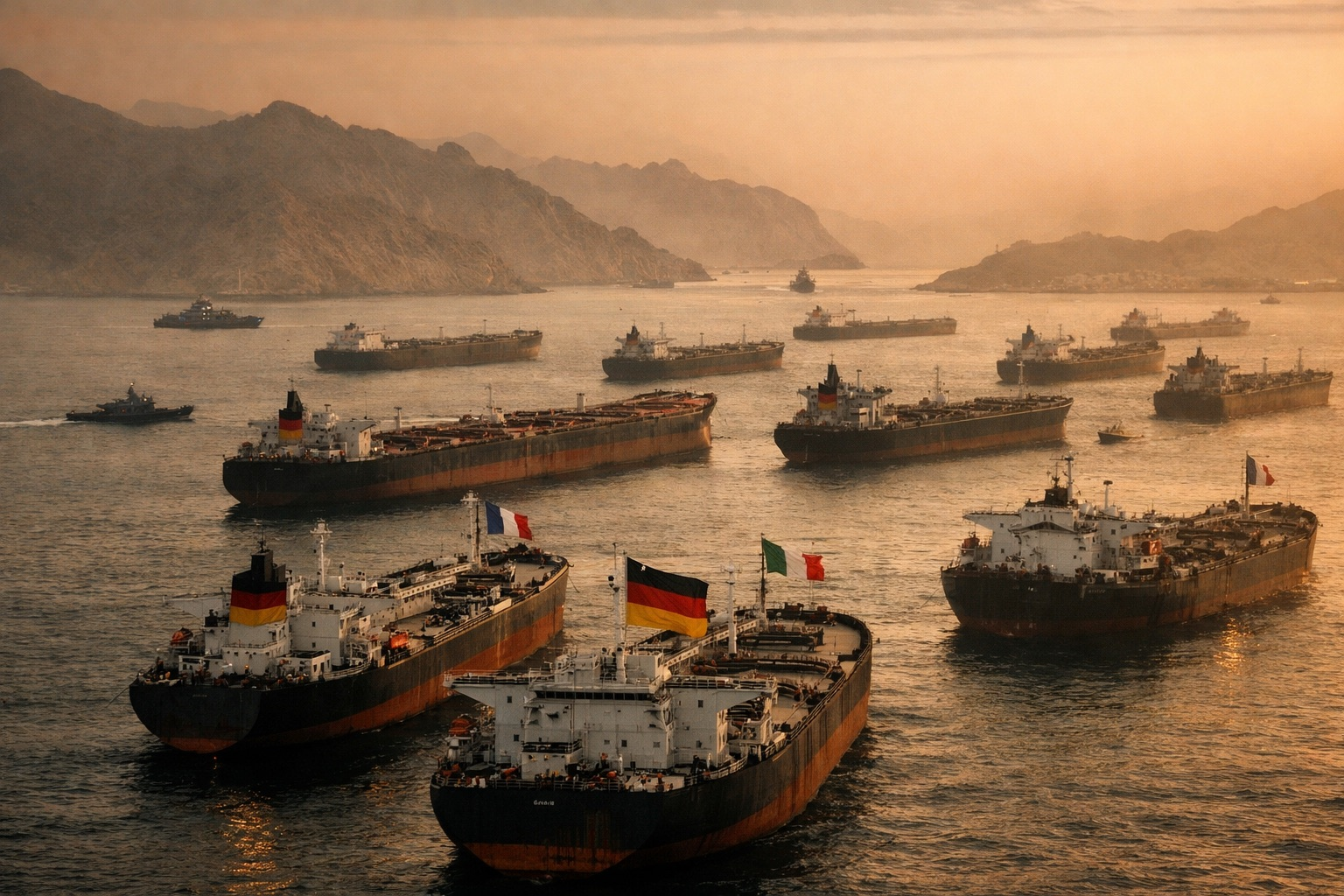
What these countries miscalculated was not Iran’s capacity to respond, but its leverage over the global system. The Strait of Hormuz, long treated as a theoretical vulnerability, became an operational choke point. Roughly 20% of global oil flows through that corridor, a structural dependency embedded in the daily functioning of modern economies.
Once disrupted, the illusion collapsed instantly.
Oil surged above $100 per barrel, with spikes exceeding $110 as supply tightened and uncertainty spread across markets . This was not a localized shock, it was systemic. Up to 12 million barrels per day were effectively removed from circulation, triggering a chain reaction across industries, transport, and national budgets .
And suddenly, the same nations that had nothing to say found their economies exposed.
Europe provides the clearest example of this contradiction. Despite minimal direct imports from Iran, its economies are deeply embedded in global energy pricing. Oil and gas are not regional commodities, they are globally priced assets. A disruption in the Gulf immediately translates into inflation, regardless of supply origin .
The consequences were immediate and measurable:
European gas prices surged by up to 60% within days of the escalation
Industrial energy costs soared, threatening closures in sectors like steel and chemicals
Fuel costs for consumers increased, adding direct pressure on households and mobility
This is where the critique sharpens into exposure.
These same countries, comfortable in silence when conflict seemed contained, are now confronted with the reality that their economic model is inseparable from global stability. Consumer societies are not resilient systems; they are precision systems. They require oil to arrive on time, at predictable prices, under secure routes.
Disrupt that flow, and the entire structure begins to fracture.
Air travel, one of the first sectors to react, is already under pressure. Rising fuel costs are forcing airlines to increase fares, cancel routes, and extend flight paths due to restricted airspace. Tourism declines. Logistics slow. Inflation spreads.
And beyond energy, a second layer emerges: policy response.
European governments, already under fiscal strain, are now considering or implementing additional taxation measures to stabilize budgets and manage inflationary pressure. This compounds the shock. What began as a distant military escalation now translates into higher costs of living, reduced economic output, and increased political tension at home.
This is the true cost of strategic silence.
It was never neutrality, it was a bet. A bet that the conflict would be short. A bet that the system would absorb the shock. A bet that the consequences would remain external.
That bet has failed.
Because in a globalized economy, there is no external anymore. The Strait of Hormuz did not just block oil, it exposed the illusion that power can be exercised without consequence, and that silence can shield a nation from the fallout of decisions it chose not to question.
Florida lawmakers, including allies of Governor Ron DeSantis, are advancing a constitutional amendment (HJR 203) that would phase out most non-school property taxes on homesteaded primary residences, subject to voter approval.
On its face, the proposal is straightforward: homeowners are under pressure, and property tax relief provides breathing room.
Insurance premiums have surged. Condo assessments are climbing. Carrying costs feel unstable for many households.
But public policy is not only about relief.
It is also about redistribution, of pressure, of risk, and of stability.
The question is not whether homeowners need relief. Many do.
The question is whether this relief quietly reshapes the financial architecture of Florida’s housing system in ways that alter long-term ownership patterns.
The Housing Boom Raised the Stakes
From 2012 through 2019, Florida home prices rose steadily. Between 2020 and 2022, they accelerated sharply. In counties such as Miami-Dade, Lee, and Collier, values increased more than 60% from pandemic lows.
The drivers were well known:
Historically low mortgage rates
Pandemic migration
Remote work flexibility
Investor demand
Limited housing supply
Unlike 2008, underwriting standards were tighter. Most homeowners secured fixed-rate loans.
But the velocity of appreciation altered buyer psychology. During the pre-COVID acceleration, and especially the pandemic surge, competitive pressure intensified. Bidding wars became routine. Properties frequently sold above asking price. Buyers, anxious not to miss opportunity, entered what increasingly resembled a momentum-driven market.
In that environment, many Floridian households purchased at peak-cycle valuations.
Prices climbed. Leverage expanded. And beneath the headline gains, fragility accumulated.
When assets are purchased at compressed cap rates and elevated multiples, stability becomes dependent on continued public infrastructure strength, predictable carrying costs, and sustained confidence.
If any of those pillars weaken, whether through insurance volatility, regulatory cost shocks, or fiscal contraction at the municipal level, the margin between “equity growth” and “distressed repricing” narrows quickly.
What felt like appreciation can, under pressure, become exposure.
And exposure, when widely distributed among households with finite liquidity, creates the very volatility that long-horizon capital waits for.
Insurance: The Structural Shock
Between 2021 and 2023, more than a dozen Florida insurers became insolvent or exited the market. The state-backed Citizens Property Insurance Corporation expanded rapidly.
Florida accounts for roughly 9% of U.S. homeowners policies but a disproportionate share of insurance litigation.
Premiums in high-risk areas now frequently exceed $6,000 per year.
Insurance is not capped. It is not predictable. It can double between renewals.
And importantly, property tax reform does not resolve insurance volatility.
That is the primary destabilizing force in Florida housing today.
Condominiums, HOAs, and the Post-Surfside Mandate
After the 2021 collapse of Champlain Towers South in Surfside, Florida enacted stricter condominium regulations:
Mandatory milestone structural inspections
Structural Integrity Reserve Studies (SIRS)
Full funding of certain structural reserves
Older buildings now face significant special assessments, often $20,000 to $100,000 per unit.
Simultaneously, Florida law allows HOAs and condominium associations to place liens and ultimately initiate foreclosure proceedings over relatively small unpaid assessments, amounts that can begin in the hundreds of dollars but grow rapidly once interest, penalties, and legal fees are added.
Homeowners now face layered obligations:
Mortgage
Insurance
HOA dues
Special assessments
Property taxes
Of these, property tax is the most stable and predictable.
Insurance and assessments are the most volatile.
Reducing the predictable cost does not eliminate volatility. It reshuffles exposure.
What Property Tax Funds
Property tax is not merely a homeowner expense.
It finances:
Police and fire protection
Roads and drainage
Municipal infrastructure
Public services
A substantial portion of K–12 education
In many Florida counties, property tax represents nearly half of local general fund revenue.
Stable revenue underwrites stable services.
Stable services support stable property values.
If homestead tax revenue declines without clear replacement, local governments must adjust.
If Revenue Falls, Adjustment Is Inevitable
Local governments cannot run persistent operating deficits. If revenue declines, they must:
1. Reduce services
2. Increase fees
3. Expand alternative taxes
4. Issue debt
5. Monetize public assets
Each option redistributes pressure.
Service reductions affect infrastructure and neighborhood quality.
Fee increases shift costs quietly.
Debt postpones strain.
Asset monetization introduces private capital into public systems.
Relief in one line item can reappear elsewhere.
How Fragility Influences Property Values
Real estate values depend on two variables: income and risk perception.
If:
Insurance costs remain elevated
Condo assessments continue
Municipal services weaken
Public infrastructure deteriorates
Then net operating income declines and risk premiums rise.
When risk perception rises, cap rates expand.
When cap rates expand, valuations adjust.
This does not require a crash. It requires repricing.
Repricing creates opportunity.
Why Liquidity Wins in Volatile Environments
Homeowners operate on monthly cash flow constraints.
Institutional investors operate on long-term capital allocation cycles.
When volatility rises and some homeowners face cumulative financial strain, motivated sales increase.
Private equity firms enter when:
Sellers are pressured
Assets are discounted
Long-term demographic growth remains intact
Florida still benefits from migration and long-term growth. That makes temporary dislocation attractive to institutional capital.
Private capital does not require collapse.
It requires price dispersion.
Distribution of Relief and Risk
Property tax relief primarily benefits current homestead owners.
Higher-value homes receive larger absolute dollar reductions.
Renters receive no direct benefit.
Future buyers do not benefit from past tax reductions.
If municipal budgets tighten, service reductions often affect lower-income neighborhoods first.
This creates asymmetric outcomes:
Immediate relief may be broad.
Long-term fiscal stress may be uneven.
Privatization as a Secondary Effect
Fiscal strain can lead to:
Public-private partnerships
Sale-leasebacks of public facilities
Ground lease arrangements
Outsourcing of services
Asset sales under budget pressure
Historical examples show that when municipalities face structural deficits, privatization accelerates, not necessarily through ideology, but through necessity.
Detroit after 2008 provides one example of distressed asset acquisition. East Ramapo in New York illustrates how school funding conflicts can reshape governance priorities.
Privatization functions as a financial strategy. It advances when predictable fiscal conditions align. When stable public revenue contracts and alternatives narrow, monetization of public assets is reframed as pragmatism. What appears as administrative necessity can, over time, restructure ownership, control, and long-term public influence.
Is the Amendment Protective, or Structurally Transformative?
Supporters argue the amendment prevents foreclosure and protects homeowners.
That argument is coherent. Reducing stable costs can relieve stress.
But if:
Public revenue declines materially
Insurance instability persists
Condo reserve burdens continue
Municipal services are constrained
Then fragility is not removed. It is redistributed.
The system becomes more sensitive to shocks.
And volatility benefits those with liquidity.
The Question Voters Must Consider
Public policy does not require secret coordination to produce predictable outcomes.
It only requires incentives that move in a consistent direction.
When a state reduces one of the most stable revenue sources sustaining its public systems, fiscal pressure does not vanish. It relocates.
If predictable homeowner costs decline while the financial base supporting schools, infrastructure, and municipal services narrows, the strain shifts quietly, from private households to the public ledger.
Public balance sheets do not absorb strain indefinitely.
When public systems weaken, neighborhood quality erodes.
When neighborhood quality erodes, asset values adjust.
And when assets reprice under pressure, ownership patterns change.
History shows that prolonged fiscal tightening often precedes privatization, not as an announcement, but as a response. Public assets are monetized. Services are outsourced. Long-term contracts are structured. Private equity firms, built to operate in volatility, enter where public stability retreats.
Liquidity does not wait for collapse.
It waits for dislocation.
The question is not whether homeowners deserve relief.
It is whether the financial architecture emerging beneath that relief expands volatility in ways that make privatization not ideological, but inevitable.
Because when stable public revenue recedes and risk concentrates in stressed communities, consolidation follows.
The debate, ultimately, is not about next year’s tax savings.
It is about who owns Florida’s land, services, and institutions ten years from now, and whether short-term relief becomes the quiet precondition for long-term privatization.






 Entertainment1 year ago
 Opinion1 year ago
 Politics1 year ago
 Tech1 year ago
 Economy1 year ago
 Sports1 year ago
 Opinion11 months ago
 Entrepreneur1 year ago