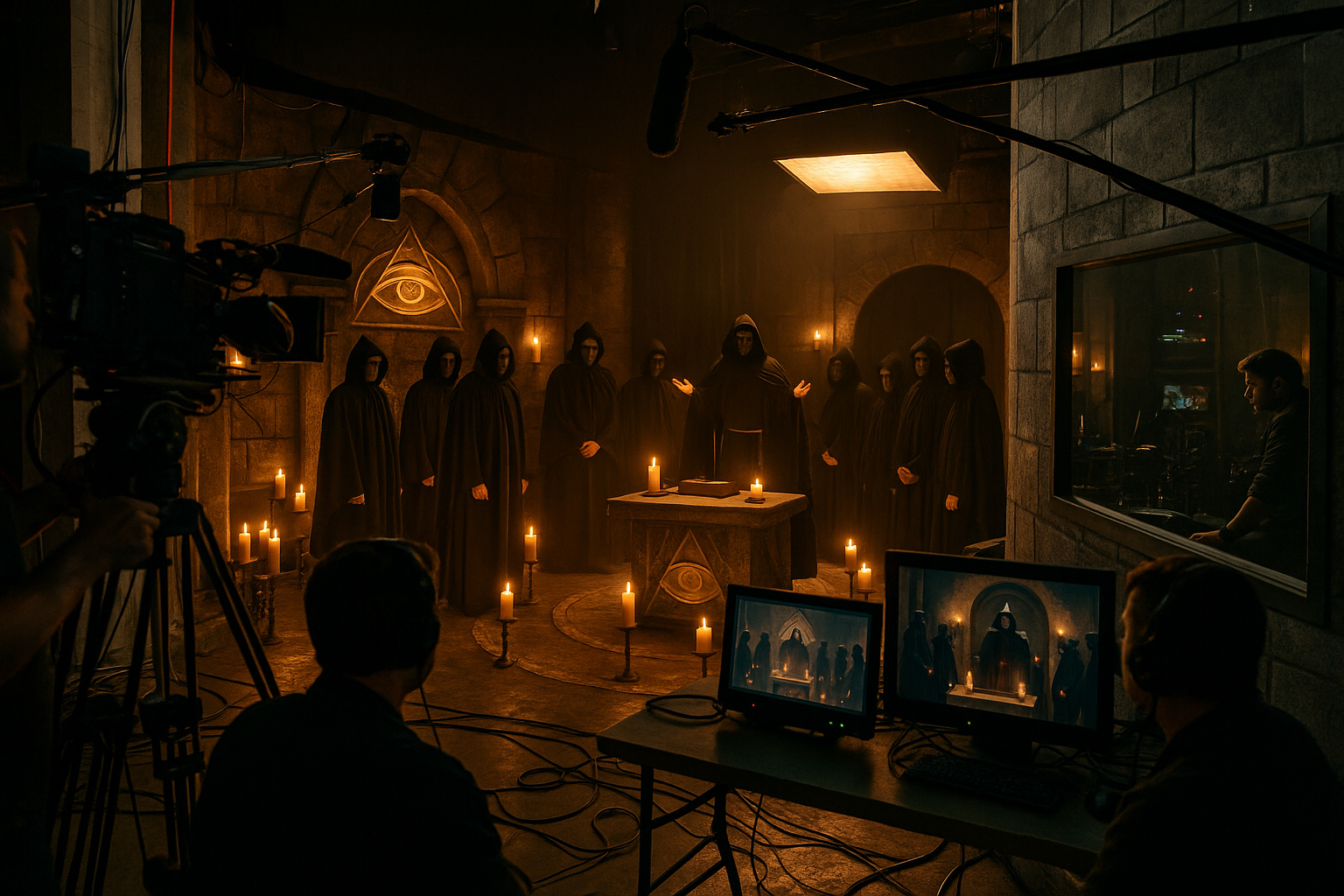
The acheminement to truth is often tangled, but the conclusion is usually clear. When we strip away the noise, the symbols, the whispered legends of secret cults and hidden orders, what remains is something far more mundane and far more disturbing. The cabal ritual, the so-called Illuminati, the notion of supernatural power orchestrating fame, fortune, and world domination, is, in essence, folklore. A mythology so seductive, so performative, that it camouflages the far more pedestrian and sinister mechanics of real control. There is no ancient demon waiting in a pentagram. What there is, however, is a group of influential individuals who dress up domination in costume, who use the appearance of mysticism to shroud a structure of manipulation, gatekeeping, and fear. This is not the spiritual force they claim it to be. This is not divine initiation. It is a performance, a lie coated in robes and candles, created to serve two purposes: expand the circle of influence and enforce psychological submission.
The so-called rituals are not ancient. They are not rooted in any real esoteric practice. They are curated experiences, designed to look powerful and feel mysterious. But their function is simple: to attract new disciples and weed out dissenters. What they promise is supernatural access to fame and fortune. What they deliver is psychological domination, social control, and a system where silence is the toll for success. People are not initiated, they are seduced. They are not spiritually reborn, they are psychologically absorbed. The illusion of ritual provides a layer of mystique, enough to convince the ambitious that they are being welcomed into something transcendent. In reality, they are stepping into a hierarchy disguised as a sacrament.
It is important to understand why people believe. The idea of a powerful cabal appeals to those who feel that success must be more than talent and timing. It seduces the mind because it makes extraordinary success feel earned through a mythic journey. If success is merely a product of human bias, systemic gatekeeping, or personal compromise, then the dream is less magical. But if success is rare, secret, and spiritual, it becomes mythological. This illusion gives the gatekeepers power. They become the priests of fame, able to decide who is chosen, who is left behind, and who is punished. The belief in ritual solidifies their control, because now they are not just producers or executives or financiers. They are mystics, oracles, gods.
In reality, the power at play is very human. It is built on access, fear, opportunity, and obedience. “I can get you in the room,” becomes the first hook. “But I can take it away just as fast,” becomes the second. The mechanics are not complex. They are predatory. A young artist is invited to a gathering. The atmosphere is surreal. Phones are taken. Lights are dimmed. Symbols are everywhere. A celebrity acts erratic. Someone whispers something cryptic. It feels like the border between this world and the next is thin. You are told that many of the greats have stood right where you are. You are told this is where stars are made. You are given a choice. Or so it seems.
What really happens in that moment is not spiritual initiation. It is psychological testing. How much will you normalize? How much will you ignore? How willing are you to remain silent? Once you pass, once you perform your willingness, you are brought closer. But not to magic. To proximity. Proximity to power. Proximity to influence. You are handed the illusion of control, while the terms of your silence begin to write themselves inside your body.
This is where the manipulation deepens. Once you are inside, you are changed. Not by energy or spirits, but by complicity. You know something others do not. Or you believe you do. And that belief is enough to hold you hostage. Because now, if you leave, you betray the illusion. If you speak, you sound unstable. If you question, you are ungrateful. This is not ancient occultism. This is power strategy. The same tactics used by cults, by gangs, by governments. Create awe, foster loyalty, demand silence, and punish deviation.
In this light, the so-called rituals are better understood not as ceremonies of power, but as tests of submission. The more bizarre, the better. The more uncomfortable, the more effective. You are being pushed to see how far you will go, not for a demon, but for a shot at relevance. The mysticism is decoration. The sadism is real. What appears as spiritual sacrifice is often just social humiliation. What is presented as a sacred test is often just a boundary violation. The result is not enlightenment. It is dependency.
This is why the entertainment industry is fertile ground. It thrives on illusion. It rewards performance. It attracts the ambitious and the vulnerable alike. It glamorizes the forbidden. It teaches people to obey direction, to sell images, to suppress emotion for the sake of a role. This makes it the perfect environment for manipulation. And once the culture of silence sets in, everyone plays their part. Those who succeed say nothing. Those who fall are labeled bitter. Those who tell the truth are not taken seriously.
It is easy to see how this turns into folklore. Online, the story becomes about devils and blood oaths, celebrities who “sold their souls,” symbols in music videos and coded gestures at award shows. But this folklore serves the very people it supposedly exposes. Because once the truth is wrapped in myth, it becomes deniable. Once reality becomes exaggerated, it can be dismissed as conspiracy. The best way to hide real abuse is to surround it with fantasy. That way, when someone points to it, it’s already been turned into entertainment.
This is why it’s time to look clearly. No, Beyoncé did not sell her soul. No, your favorite rapper did not sacrifice someone in a ritual. No, there is no ancient order controlling award shows from beneath a pyramid. But yes, there are groups of powerful people who use orchestrated performances, ritualized behaviors, and cultivated secrecy to control access to wealth and visibility. Yes, there are psychological initiations, not magical ones, that test how far someone will go for success. Yes, there are performances that appear sacred but are actually exploitative. This is not spiritual darkness. It is human deception.
What’s more dangerous than magic is belief in magic when it’s being used to cover abuse. What’s more manipulative than a spell is a lie that dresses itself in ritual to silence you. The real cabal is not a cult. It is a system. A system of money, status, obedience, fear, and desire. A system that rewards compliance and punishes authenticity. A system that sells power as mystery, and silence as loyalty.
So if you are reading this from inside the industry, or from the gates of it, hear this clearly. Success should never come through shame. No role, no deal, no contract is worth the erasure of your integrity. Real connection is not built in whispers. Real influence does not require masks. Anyone who offers you access in exchange for secrecy is not inviting you to power, they are inviting you to be controlled.
The ritual is not ancient. It is not mystical. It is not real. What is real is the manipulation behind it. What is real is the way fear, superstition, and ambition are used as tools of control. The robes, the candles, the eyes and symbols are costumes for a deeper truth: that exploitation is easier when people believe they are chosen. That obedience is easier when people think they are special. And that silence is more complete when people are made to believe they are complicit in something sacred.
The great illusion is not that the Illuminati exists. It’s that it needs to. The real machinery of control does not require gods or spirits. It only requires belief. And once you believe that success is supernatural, you will stop seeing the human cost. You will stop naming abuse. You will start calling it the price of entry. The truth is, there is no price. There is only a choice. A choice to see clearly. A choice to name the manipulation. A choice to refuse the script.
Success does not require superstition. It requires clarity. It requires resistance to performance dressed as purpose. It requires a rejection of the idea that obedience is the same thing as loyalty. The robes are just robes. The rituals are just games. The power is not in the mysticism. It is in your decision to believe it or not.
This is the truth behind the illusion. Not a story of darkness, but a lesson in distraction. Not a secret code, but a visible pattern. And once you see it, it cannot hold you. Once you name it, it cannot use you. And once you walk away from it, you reclaim your own story, your own power, your own success, on your own terms.
Netflix didn’t just tell the story of the Goiânia disaster.
It recast it.
What happened in 1987 was one of the worst civilian radiological accidents in history, a chain reaction of ignorance, exposure, and institutional failure after a radioactive source was removed from an abandoned clinic and circulated through a scrapyard network.
It spread the way real disasters spread: through proximity, through trust, through human error.
On paper, this is a story about radiation.
On screen, it becomes something else entirely: a story about who gets to embody suffering, and who doesn’t.
When Accuracy Becomes Selective
The real Goiânia disaster had no racial script.
Victims were linked by contact, not identity: scrapyard workers, relatives, neighbors, people pulled into the same invisible chain of exposure. Contamination moved through touch and curiosity, not through any demographic divide.
The fatalities reflect that reality. They came from the same working-class network, including a child, all connected by proximity to the source, not by any constructed contrast between groups.
Even the most documented case, six-year-old Leide das Neves Ferreira, complicates the visual narrative imposed by the series. Her real-life identity, widely recorded at the time, does not align with the pattern the adaptation leans into.
Because on screen, a different logic takes over.
A pattern emerges:
The exposed, the contaminated, the suffering → disproportionately darker-skinned
The analysts, the authorities, the ones in control → more often lighter-skinned
One instance might be incidental.
A repeated structure isn’t.
Not an Error, A System
This is where the series stops being a dramatization and starts following a template.
Because this pattern didn’t start here.
Across global media, the same visual hierarchy keeps resurfacing:
Vulnerability has a look
Authority has a different one
Chaos is embodied
Control is institutional, and visibly separate
“Radioactive Emergency” doesn’t invent this language. It speaks it fluently.
Even at the level of intimate storytelling, the symbolism holds. Within affected families, visual contrast is preserved, not just narratively, but aesthetically. The result isn’t accidental nuance. It’s coded familiarity.
This is how modern bias operates: not declared, not explicit—just repeated until it feels natural.
Creative License, or Convenient Flexibility?
The defense is obvious: artistic interpretation.
And that argument holds, until it doesn’t.
Because the series, created by Gustavo Lipsztein, is meticulous where it chooses to be:
The physics of radiation
The progression of symptoms
The timeline of contamination
Precision everywhere.
Except in representation.
That’s where realism loosens. Patterns appear. Consistency disappears.
You don’t get to claim authenticity while selectively bending the human reality at the center of the story.
That’s not creative freedom.
That’s curation.
Rewriting Memory in Real Time
“Based on a true story” is not a neutral label.
It’s a claim on memory.
For most viewers, this version is Goiânia. There is no competing reference point. No footnote. No correction.
So when representation shifts, memory shifts with it.
And what gets lost isn’t just accuracy, it’s context:
A complex, mixed social fabric flattened into visual shorthand
A disaster driven by exposure reframed through familiar imagery
A reality replaced by something more recognizable, but less true
Over 100,000 people were examined. Hundreds were contaminated. Not by race, but by contact.
That distinction isn’t minor.
It’s the difference between history and narrative.
The Industry Pattern Hiding in Plain Sight
This is bigger than one series.
The real question isn’t whether media reflects bias.
It’s whether it keeps standardizing it. quietly, consistently, visually.
Because the roles rarely change:
Who is shown as exposed?
Who is shown as helpless?
Who is shown as needing intervention?
And on the other side:
Who analyzes?
Who contains?
Who restores order?
These aren’t random distributions.
They’re patterns.
And patterns, repeated often enough, stop being noticed, and start being believed.
Conclusion
“Radioactive Emergency” succeeds in recreating the fear of invisible contamination.
But it also reveals something far more familiar: how easily reality can be reshaped, not by what is said, but by what is shown.
The Goiânia disaster was not a racial allegory.
It didn’t need one.
But when storytelling begins to assign roles instead of reflect them, subtly, visually, repeatedly, it stops documenting tragedy and starts redesigning it.
And at that point, the most dangerous form of exposure isn’t radioactive.
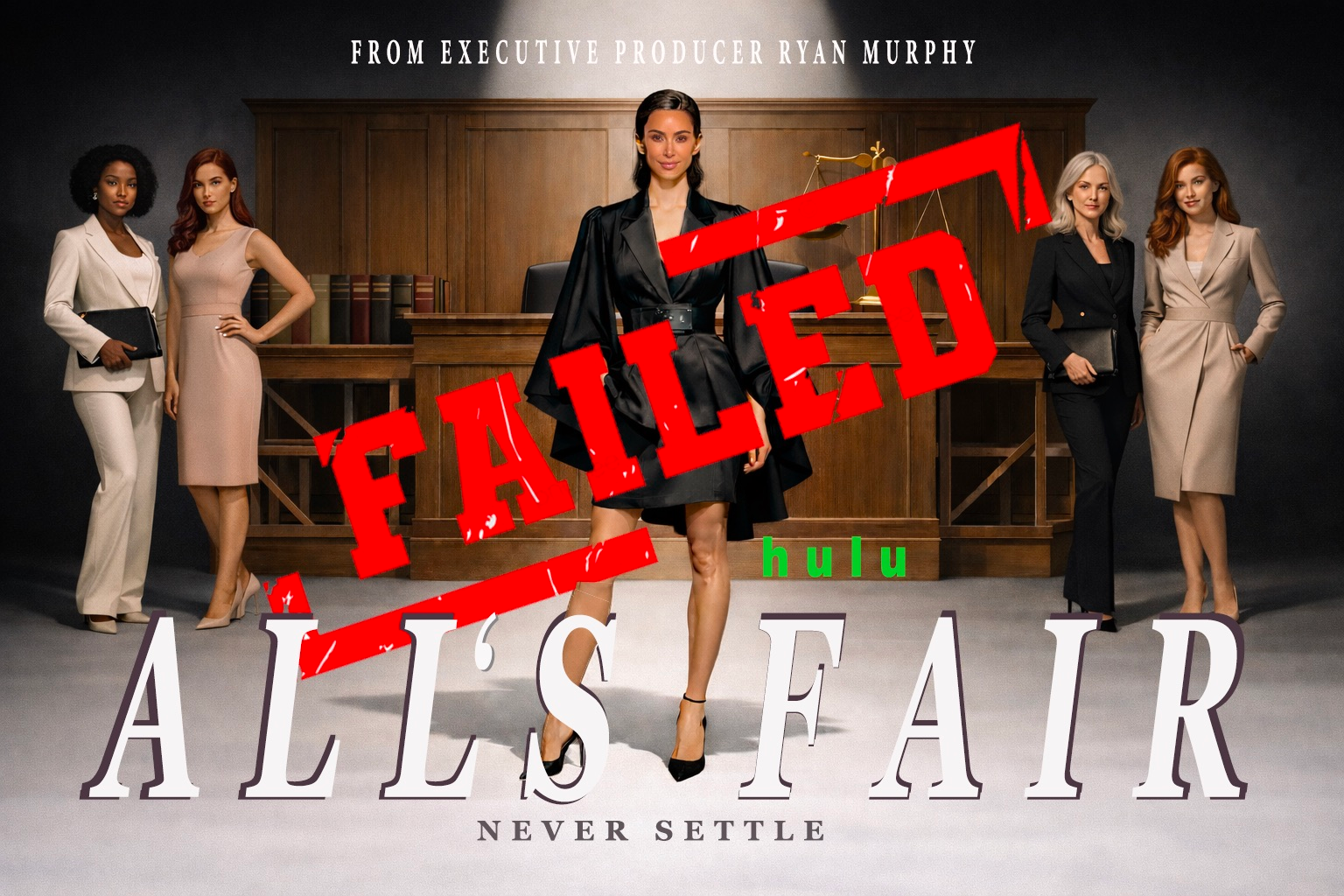
All’s Fair arrives not merely as a television series, but as a declaration of confidence. Created by Ryan Murphy, backed by 20th Television, and financed to the tune of nearly $70 million, the show enters the cultural arena armored with institutional trust. Few series debut with such an unspoken guarantee: this matters.
That promise collapses almost immediately.
Not because All’s Fair is underfunded. Not because it lacks access to talent. But because it embodies a more corrosive belief now metastasizing through prestige television: that image can replace authority, fame can substitute for competence, and power no longer needs to be earned so long as it is convincingly displayed.
This is not a failed legal drama. It is a successful illusion, and that is far more damning.
Law as Costume, Not Constraint
All’s Fair calls itself a legal drama, but the law here behaves like clothing, not structure. It is worn, admired, and discarded, never felt. Cases drift through the series like props rolled onto a stage and quietly removed once they’ve served their visual purpose. They create noise without pressure, motion without momentum. Nothing hardens. Nothing breaks. There is no moment where a character hesitates because the consequences might be real. No fear that a mistake could end a career. No sense that preparation separates the powerful from the exposed. The law never closes in. It never tightens the room. It never remembers what came before. In serious professional drama, law acts like gravity. It limits movement. It drags arrogance downward. It rewards discipline and punishes shortcuts. It turns ambition into risk. Here, it does the opposite. The institution bends politely out of the way, existing only to flatter whoever stands at the center of the frame. What remains is not stylization but weightlessness. Conflict floats. Stakes evaporate on contact. Authority is never challenged because it is never placed under strain. It simply arrives fully formed, untouched by effort, consequence, or doubt, an image of power with nothing underneath it.
Kim Kardashian Center of Gravity
The show’s central miscalculation is also its governing thesis: Kim Kardashian is not merely cast in All’s Fair, she is its organizing principle.
Reportedly paid over $10 million for the season and installed as both lead actress and executive producer, Kim is positioned as an unquestioned axis around which the series bends. The show never asks whether her character deserves authority; it presumes the audience will accept it by recognition alone.
This is not stunt casting. It is an ideological statement.
All’s Fair operates on the premise that fame itself is now a credential, that visibility can bypass apprenticeship, branding can replace discipline, and authority no longer needs to be demonstrated if it can be convincingly staged.
Kim’s performance is not forged through sacrifice, failure, or intellectual pressure. It is frictionless. Power is worn, not built. Expertise is implied, never shown. The fantasy is not interrogated—it is protected.
Craft Reduced to Decorative Capital
That fragility becomes impossible to ignore given the presence of genuinely elite performers, Glenn Close, Naomi Watts, Sarah Paulson, Niecy Nash, actors whose careers were built through rejection, rigor, and professional filtration.
They are impeccably delivered and structurally neutralized.
Their characters behave without institutional logic. Emotional outbursts carry no strategic cost. Decisions are untethered from incentive. Conflict ignites and extinguishes without leaving scars. These actors are asked to perform intensity rather than intelligence, reaction rather than calculation.
They do not orbit power. They decorate it.
What should have been a living professional ecosystem instead resembles a showroom, veteran talent arranged around a preordained center that cannot be challenged, tested, or meaningfully opposed.
The Fraud of “Strong Women”
All’s Fair markets itself as a celebration of powerful women. What it delivers is luxury feminism emptied of professional substance.
Authority is communicated not through mastery, preparation, or strategic command, but through wardrobe, glamour, real estate, and lifestyle excess. The camera lingers on surfaces, not labor. Success is visualized through consumption rather than competence.
This is not empowerment. It is containment.
The show reproduces patriarchal logic under a feminist veneer: women are validated through aesthetic dominance rather than operational power. Authority is ornamental, not functional. Labor is invisible. Competence is suggested, never demonstrated.
In this world, women do not win by being formidable. They win by being seen.
Why The TV Show “Suits” Still Humiliates This Project
The comparison to Suits is unavoidable, and humiliating.
Suits was imperfect, stylized, and occasionally implausible. But it was professionally credible. Law functioned as consequence. Careers rose and collapsed. Partnerships were earned slowly. Betrayals carried cost. Dialogue conveyed intelligence. Wardrobe signaled hierarchy rather than distraction.
Most importantly, Suits understood that authority must be defended daily.
All’s Fair, with vastly superior resources, abandons that understanding entirely. It does not dramatize how power is acquired or maintained. It presents power as already owned, luxurious, insulated, and immune to consequence.
Where Suits explored ambition under pressure, All’s Fair displays status under glass.
Luxury Is the Point
The show’s budget is not invested in narrative depth or institutional complexity. It is spent on display: designer wardrobes, pristine interiors, expensive vehicles, curated excess.
This visual language mirrors Kardashian’s existing brand more than it serves drama. The show does not interrogate power through law; it aestheticizes power as lifestyle.
The profession is incidental. The luxury is essential.
Final Verdict
All’s Fair does not fail because it lacks money, attention, or access. It fails because it embodies a dangerous assumption now spreading through prestige television: that craft is optional, training is obsolete, and authority can be borrowed from fame rather than earned through competence.
This is not a mistake of execution. It is a declaration.
All’s Fair asks image to carry meaning, and when image is finally forced to do that work, it collapses.
Once upon a time, fame was an accident of talent. Now it’s a profession, a full-time performance that stretches far beyond any stage or screen. In modern entertainment, the currency of relevance isn’t art alone; it’s emotion. Every smile, heartbreak, and dinner outing is monetized, measured, and optimized.
Few artists embody this reality, and endure its cost, more vividly than Taylor Swift. Not because she manipulates the system, but because she can’t escape it.
The Industry That Never Sleeps
For over a century, Hollywood has lived by one rule: the show must go on. In the digital age, the show never stops.
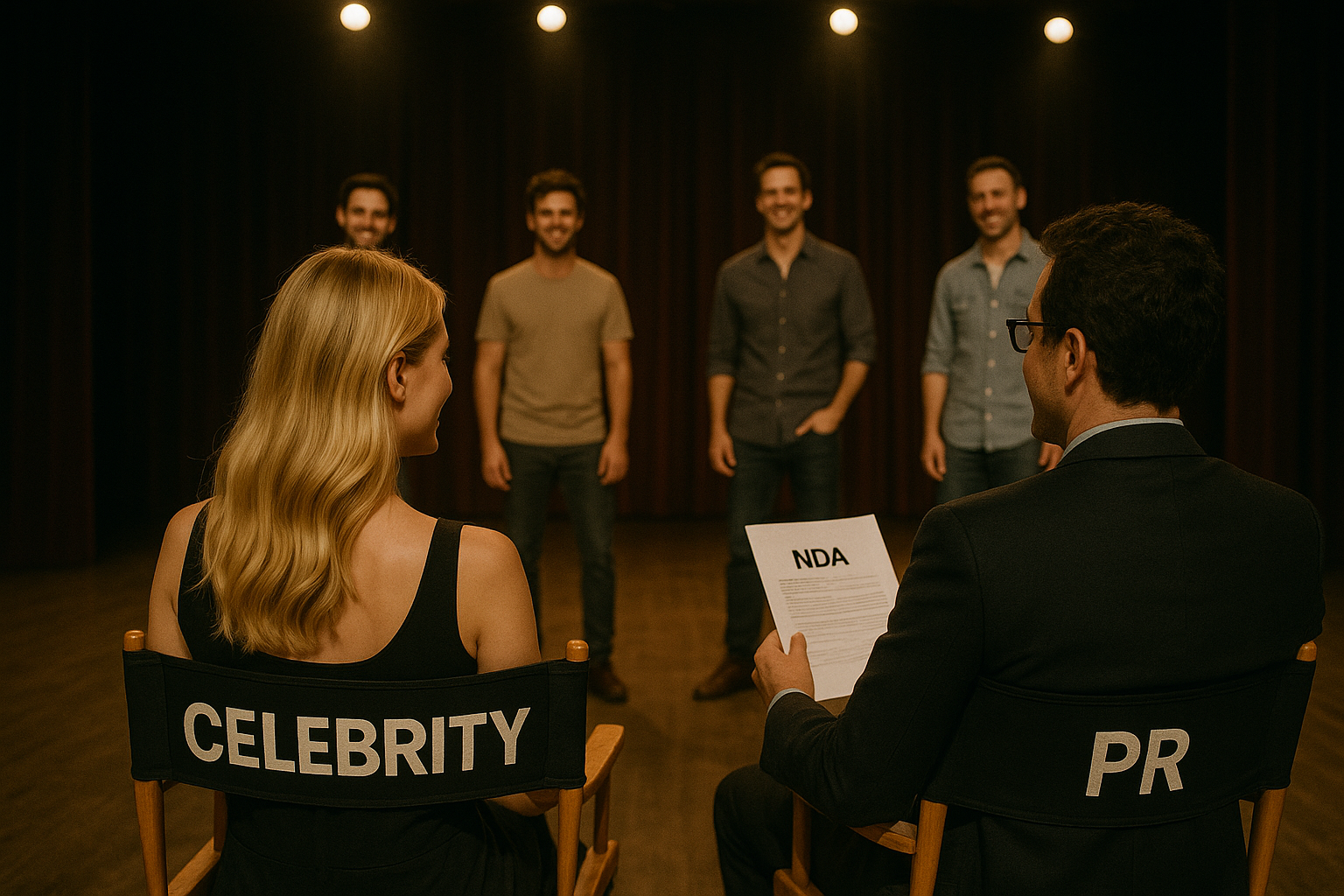
The 24-hour news cycle, algorithmic feeds, and global fandoms have erased the line between public persona and private life. Publicists have become emotional engineers, curating continuity rather than crises. Their mission is simple but relentless: keep audiences feeling something.
Love stories, heartbreaks, and redemptions now arrive in seasons as predictable as album releases. What began with studio-chaperoned romances has evolved into a data-driven factory of sentiment, where affection and strategy blur until they are indistinguishable.
Taylor Swift: The Mirror, Not the Mystery
Taylor Swift has lived her entire adult life inside this structure. Every relationship she forms becomes instant public property, turned into a narrative “era.” Each breakup is an aesthetic pivot, each partner a storyline.
To mistake her as the architect of this system is to misunderstand its reach. Swift is both its beneficiary and its casualty, rewarded for transparency, punished for privacy. When she sings of heartbreak, it’s “authentic.” When she retreats, it’s “calculated.” The contradiction isn’t hers alone. It’s the paradox of modern celebrity itself.
Inside the Factory: How Image Management Works
Behind every global superstar lies an invisible workforce, managers, lawyers, brand consultants, media strategists. Their job is to maintain narrative alignment: ensuring every public moment supports ongoing campaigns, partnerships, and endorsements.
A typical high-profile rollout follows a calculated rhythm:
Coordinated public appearances timed with releases
Calibrated social media activity that mirrors brand tone
Pre-approved talking points for every interview
Crisis-response playbooks for personal or reputational turbulence
Romance, too, becomes part of the playbook, a strategic variable that can soften controversy, distract from scandal, or expand a fan base through crossover appeal. When love is curated by committee, it no longer exists for intimacy but for alignment: aligning narratives, demographics, and market sentiment.
It’s not deception. It’s defense, the shielding of billion-dollar brands from the volatility of real human life. Yet for an artist whose craft depends on authenticity, that same defense can begin to feel like imprisonment, where even vulnerability must be scripted, and sincerity becomes the first casualty of fame.
The Price of Constant Relevance
In a world where silence equals invisibility, privacy becomes rebellion. Swift embodies this paradox: to stay human, she must occasionally disappear, but disappearing risks losing momentum in a marketplace that never pauses.
Algorithms reward immediacy. Absence breaks the spell. So even genuine romance must be timed and managed. The artist becomes a perpetual campaign, a personality in constant pre-release mode.
No wonder so many stars describe fame as disassociation: when sincerity becomes performance, survival requires a mask.
Hollywood’s Ghosts
This system isn’t new, only modernized. In the Golden Age, studios scripted personal lives to preserve moral façades. Rock Hudson’s career thrived under the choreography; Judy Garland’s collapsed beneath it.
The tools have changed, not the logic. Yesterday’s morality clauses are today’s sponsorship deals; yesterday’s gossip columns are today’s algorithms. Image continuity remains the most valuable currency.
From Tom Cruise and Katie Holmes to Brangelina to Bennifer, each high-profile pairing has operated inside the same industrial logic: romance as brand merger, heartbreak as sequel.
The Economics of Intimacy
In this economy, intimacy becomes transactional not from cynicism but survival. Two public figures align and instantly inherit one another’s markets, demographics, and bandwidth. It’s symbiosis disguised as coincidence.
For the men in Swift’s orbit, actors, athletes, DJs, the benefits are tangible: spikes in followers, streaming numbers, and sponsorships. For her, the gain is narrative continuity, the oxygen of a global brand that cannot go dark.
The machine does the rest, transforming personal moments into international content. Everyone profits. Everyone pays.
The Gendered Double Bind
Fame is not an equal playing field. A man linked to multiple partners is called charismatic; a woman, calculating. Swift’s love life has been treated as both morality play and sport, a paradox that sustains the very scrutiny she resists.
Society demands women in power share everything, yet remain untouched by the sharing. The result is exhaustion disguised as glamour.
The Human Cost
To live as a perpetual storyline is to risk eroding the self. Every gesture is analyzed; every silence, politicized. Even genuine emotion starts to feel rehearsed.
Swift’s recent creative turns, introspective, self-produced, stripped-down, read as quiet rebellion. A reclaiming of authorship from a machine that profits most from her vulnerability.
The Audience’s Complicity
The machinery thrives because we feed it. We demand constant access, decode every lyric, and consume every photograph as serialized fiction.
In this sense, Taylor Swift is not merely the face of the system, she’s its mirror, reflecting our hunger to know and our refusal to look away. The spectacle continues because we keep buying tickets.
A Manufactured Modernity
What we mistake for orchestration is often adaptation. The machinery doesn’t erase emotion; it processes it. It packages love and heartbreak into digestible narratives.
Swift may choose her partners freely, yet every choice is instantly transformed by context. Every date becomes data. Every heartbeat becomes PR.
Toward Empathy, Not Exposure
To see this system clearly is not to condemn it, but to humanize those caught in it. Fame today isn’t built on deceit, it’s built on survival in an economy where identity is product.
The question isn’t who Taylor Swift dates. It’s what it costs her, and anyone, to remain visible in a culture that punishes authenticity the moment it appears.
The Loop That Never Ends
The “PR Power Couple Factory” isn’t a conspiracy. It’s the inevitable outcome of a culture that values narrative over nuance. Taylor Swift didn’t invent it, she mastered surviving it.
In a better world, fame would follow art. Until then, the machine runs the show, and its brightest stars burn to keep the lights on.








 Entertainment1 year ago
 Opinion1 year ago
 Politics1 year ago
 Tech1 year ago
 Economy1 year ago
 Sports1 year ago
 Entrepreneur1 year ago
 Opinion11 months ago