Opinion
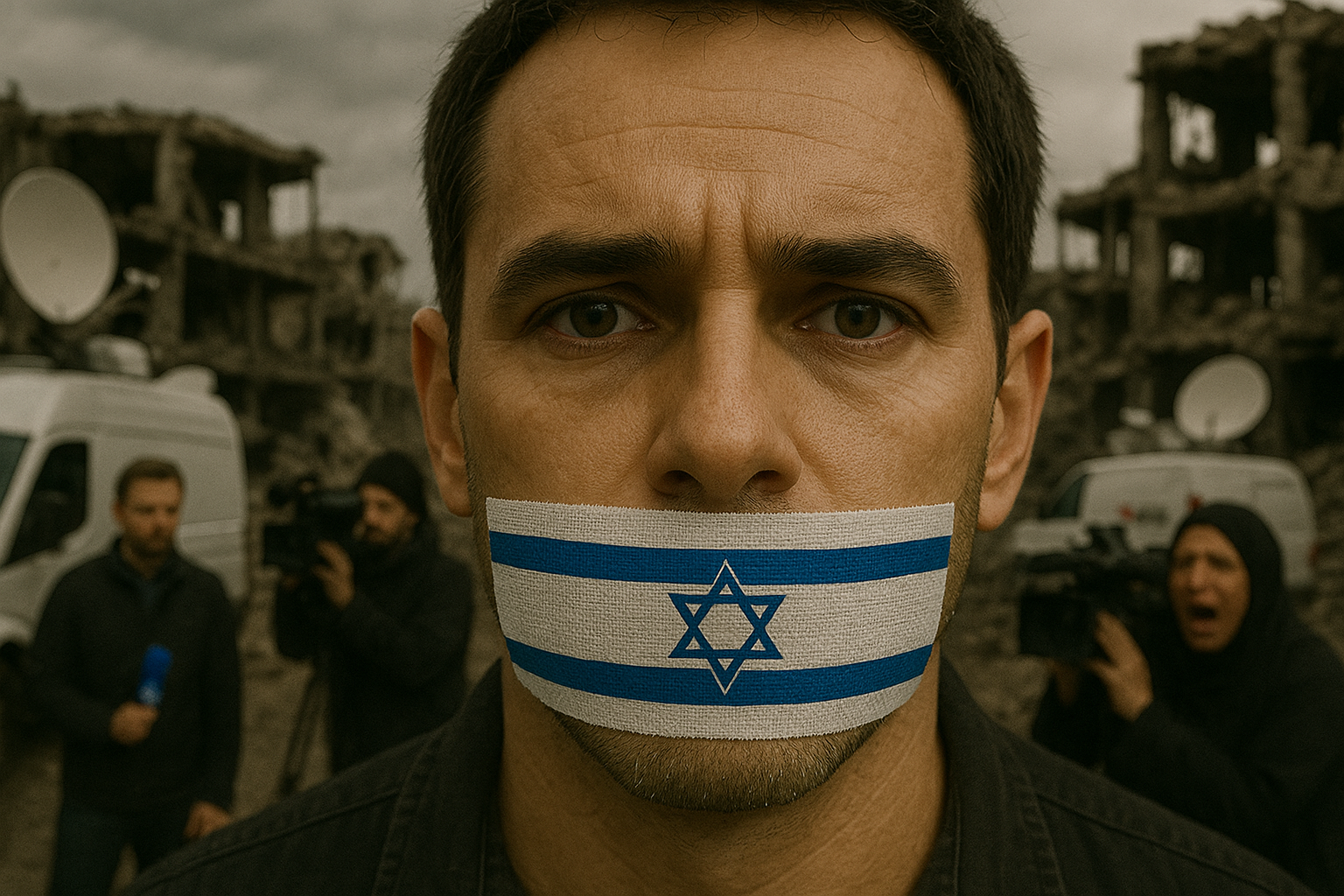
When Speaking the Truth Becomes a Risk: The Double Standard Shielding Israel’s Government
Published
8 months agoon
By
E.J Rae
In today’s world of selective outrage and curated morality, some governments are fair game. We critique U.S. drone strikes. We denounce Russia’s war in Ukraine. We analyze China’s surveillance state and Saudi Arabia’s repression, often without a second thought.
But criticize the Israeli government, and everything shifts. The air gets heavier. Disclaimers follow. Labels appear. The conversation changes, not because the facts are unclear, but because the power structure around this particular truth is protected in ways few others are.
Let’s say it clearly from the outset: criticism of the Israeli government is not antisemitism. And the persistent effort to conflate the two is more than an intellectual failure, it’s a political strategy. One designed to shield a government from accountability by branding dissent as hate.
The Structure of Silence
The silencing doesn’t always look like censorship. It’s often embedded in how rules are applied, how headlines are written, how algorithms flag certain phrases, and how online conversations are moderated.
These mechanisms didn’t emerge by accident. Many of them were born from a historical and moral imperative: to combat antisemitism, a hatred with centuries of devastating consequences, culminating in the Holocaust. The goal was to prevent it from ever taking root again.
But over time, those protections have been overextended, warped into tools that suppress criticism of a powerful state, rather than protecting a vulnerable people. This overcorrection has led to a dangerous paradox: the very language once created to prevent hate is now used to shield power from accountability.
Words like “apartheid,” “occupation,” or “ethnic cleansing”, routinely applied to other nations, are treated as inflammatory when used to describe Israeli state policy, even when those same terms are echoed by human rights groups like Amnesty International (2022), Human Rights Watch (2021), and UN Special Rapporteurs (2022).
This isn’t moral consistency. It’s structural bias.
“What About…?” The Deflection Machine
The pattern is predictable. Criticize Israeli military actions, and the response pivots instantly:
- What about Hamas?
- What about Iran?
- What about other conflicts?
But no one says “What about Ukraine’s corruption?” when we condemn Russia’s invasion. No one insists on balance when we denounce North Korea or the Taliban.
So why must every criticism of Israel be paired with context, caveats, and moral gymnastics?
This is not nuance. It’s evasion dressed up as caution. And it’s meant to exhaust the speaker into silence.
When Language Is Weaponized
The term “antisemitism” is powerful, and rightly so. But when it is used to discredit any criticism of the Israeli state, it loses its meaning and diminishes its power to protect.
Real antisemitism is rising. It must be called out and fought without compromise. But stretching the definition to include any mention of military aggression, occupation, or systemic abuse by the Israeli government does not protect Jewish communities, it undermines their safety by making the real thing harder to identify.
This conflation also erases the many Jewish voices, activists, scholars, Holocaust survivors, who are raising these same criticisms. To silence them is not only dishonest; it’s dangerous.
For Those Who Still Don’t Know, and For Those Who Do
If you’re just learning the full scope of this issue, you’re not alone. For years, public discourse has been shaped to obscure rather than reveal. But now, the footage is everywhere. The numbers are unavoidable. The evidence is mounting.
This is not abstract policy talk. This is Gaza. This is the West Bank. This is demolished homes, displaced families, and dead children. These are real people living under siege, occupation, and collective punishment, while the world debates whether it’s even acceptable to say so.
According to UN OCHA, thousands of Palestinians have been killed in recent years, including many children. In the 2023–2024 war alone, more than 38,000 people have died in Gaza, most of them civilians, according to Gaza’s Ministry of Health and corroborated by UN agencies.
And yet, many remain silent.
Not because they don’t know, but because they do.
The Complicity of the Comfortable
This is where the conversation must shift.
To those who marched for Ukraine, posted black squares for George Floyd, and spoke boldly about Iran’s morality police, and yet go silent when it’s Gaza, or worse, defend the violence, know this: you are not being neutral. You are being selective.
Selective outrage is not principle. It’s performance. And it protects the powerful while leaving the oppressed to suffer alone.
The truth is not too complex. What’s complex is the moral theater required to justify watching people die and saying nothing.
When Silence Becomes Betrayal
The most insidious result of this double standard isn’t the censorship itself, it’s the internalized silence it breeds.
People begin to second-guess their empathy. They fear posting what they feel. They edit their grief. They self-censor, not out of confusion, but out of fear that compassion for Palestinian lives will be misread, misquoted, or condemned.
This isn’t moral discourse. It’s emotional policing, and it corrodes the possibility of real justice.
A Closing Clarity
You can condemn antisemitism, and also condemn state violence.
You can respect Jewish dignity, and also demand Palestinian liberation.
You can grieve the Holocaust, and still recognize apartheid when you see it.
But you cannot claim to support human rights, and then pick and choose who deserves them.
This is not about sides. It’s about standards.
It’s not about religion. It’s about power.
It’s not about history alone. It’s about what is happening, now.
If freedom of speech means anything, it must include the freedom to name injustice, even when the oppressor has allies in high places.
Because truth is not hate.
And silence, in the face of what we all can see, is never neutral.
It is complicity, disguised as caution.
Opinion
How Israel Dressed Up Annexation and Forced Displacement into “Population Growth”
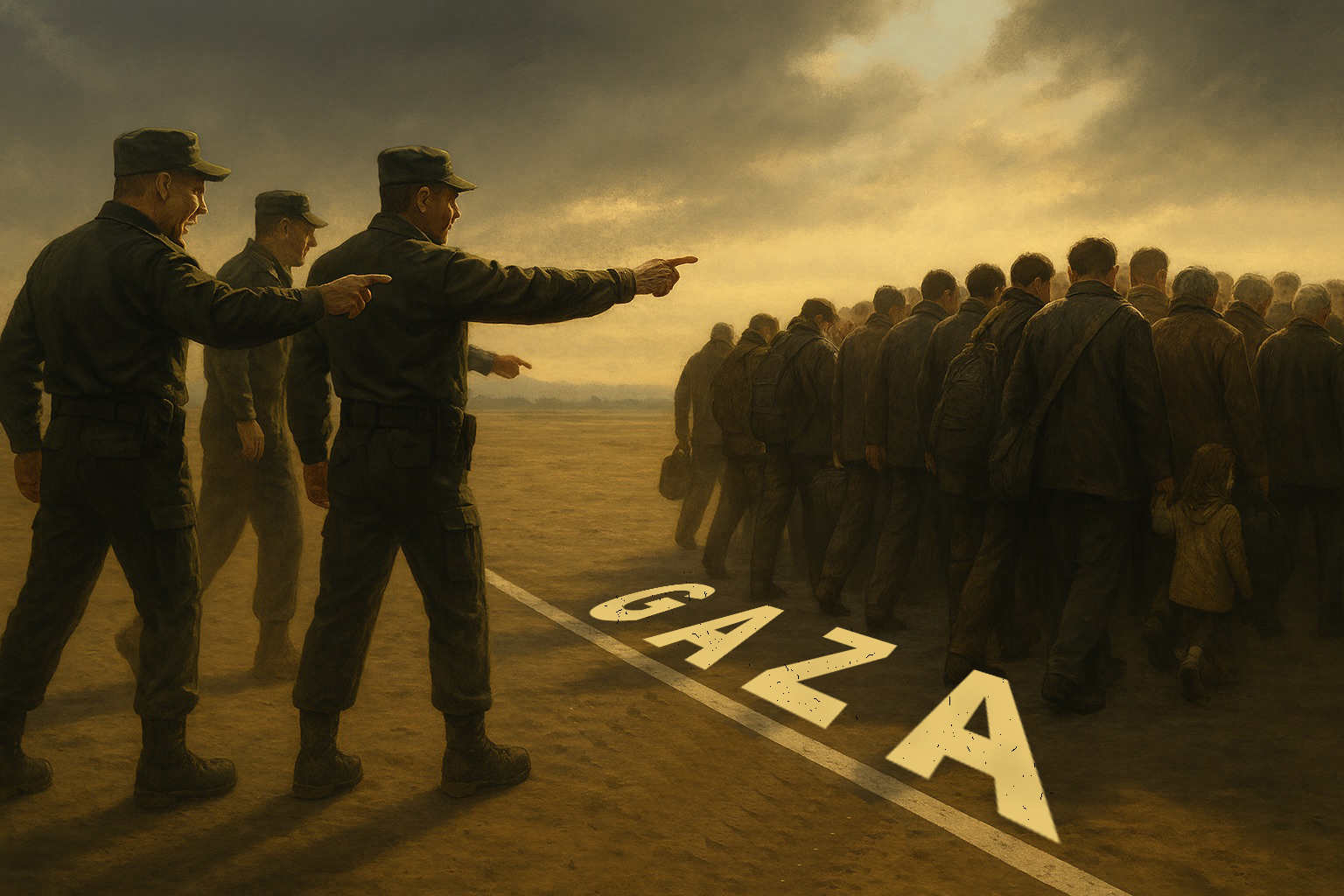
Israel’s claim of stunning Palestinian “population growth” is simply a headcount of the people it has pushed off their land, rebranded as “growth.”
Published
3 months agoon
December 11, 2025By
E.J Rae
For years, Israeli officials and their allies have repeated the same line: the Palestinian population is growing. On paper, it sounds like proof that nothing truly catastrophic is happening. If there are more Palestinians now than twenty years ago, how can anyone speak of ethnic cleansing or genocide? This demographic story is presented as neutral fact, a scientific reassurance that, despite the images of bombed cities and fenced-in lives, the situation is still “within normal limits.”
My argument is that this story is not neutral at all. It is a political construction built under occupation, where the same power that seizes land and controls borders also decides who is counted, where they are registered, and which numbers the world is allowed to see. The so-called “growth” of the Palestinian population in Gaza and the West Bank does not prove safety; it measures the scale of forced displacement, land theft, and confinement. Every additional body counted in Gaza or in fragmented West Bank enclaves is the human echo of a family pushed off its land somewhere else. In a territory carved by settlements, checkpoints, and annexation, rising headcount do not describe a healthy society, they describe a cage that has been steadily filled.
Seen this way, Israel’s own numbers betray its narrative. Either they are manipulated, or they are even more damning than intended: they show how many people have been compressed into shrinking, militarised spaces, expected to live and raise children in conditions where even captive animals would struggle to reproduce. The statistics that were meant to dismiss Palestinian suffering instead become evidence of how much land has been taken, how many communities have been uprooted, and how tightly an entire population has been trapped.
A Territory on Paper, an Archipelago in Reality
On a political map, the West Bank appears as one continuous piece of land, roughly 5,655 km² in area. In theory, that looks like enough space for a few million inhabitants. In reality, Palestinians do not live in a normal territory, they live in fragments.
Around 60% of the West Bank is designated Area C, where Israel retains full security and planning control. Only a tiny fraction of this land is zoned in a way that allows Palestinians to obtain building permits; most Palestinian construction is either blocked or later demolished as “illegal”. Israeli settlements and related infrastructure occupy large areas inside this same zone. Those settlements are widely recognised as illegal under international law by the UN, the International Court of Justice, the International Committee of the Red Cross and multiple human-rights organisations, as they violate the Fourth Geneva Convention’s ban on transferring the occupier’s population into occupied territory.
Meanwhile, Palestinian homes and basic structures are demolished at record levels. In 2025, the Norwegian Refugee Council reported that in less than nine months, Israel had already demolished more Palestinian homes and structures in the West Bank, including East Jerusalem, than in the entire previous year, explicitly linking this to a wider annexation agenda. Each demolition does not just remove bricks; it removes a family from a place.
Movement across what is left is tightly restricted. UN OCHA documented 565 physical obstacles to Palestinian movement in the West Bank at the start of 2023, including checkpoints, roadblocks and earth mounds; later that year they counted 645 obstacles, an 8% increase. After the Gaza war escalated, new surveys reported around 849–900 barriers, including “iron gates” at village entrances, turning daily travel to work, school or hospital into an unpredictable ordeal.
On paper, the West Bank is a territory. On the ground, Palestinians inhabit isolated pockets, surrounded by checkpoints, settlement blocs and military zones. The land still exists, but the parts they can actually use, build on and move through freely are shrinking.
Annexed Land Has a Demographic Echo
Land is never emptied in silence. When hillsides are declared military zones, when outposts are legalised, when Palestinian houses are flattened for lack of permits that are almost never granted, the people who lived there do not evaporate. They have to go somewhere.
Documentation from the UN, NGOs and human-rights groups has, for years, shown a pattern:
- Palestinian communities in parts of Area C, East Jerusalem and rural zones are removed through demolitions, settler violence or administrative orders.
- Those displaced families reappear in denser, poorer spaces: refugee camps, urban peripheries, and, increasingly over decades, in Gaza or in a few crowded West Bank cities.

At the same time, Israel has never fully ceded control of the population registry. Since 1967, it has held ultimate authority over which Palestinians receive ID cards and are recorded as residents of the West Bank, Gaza or East Jerusalem, and it can freeze updates or block family reunification. This means the same power that redraws the map on the ground also shapes the categories on the spreadsheet: who “belongs” to Gaza, who is recognised in the West Bank, who is kept in legal limbo.
From that angle, official “growth” is not a neutral snapshot of fertility. It is the demographic shadow of annexation. Every new outpost, every “legalised” settlement, every demolition in Area C pushes Palestinians into fewer, smaller nodes, then those crowded nodes are later cited as proof that the population is simply “growing”.
Gaza as the End of the Pipeline
Gaza has become the most extreme expression of this logic. International institutions routinely describe it as an area under land, sea and air blockade for over fifteen years, with severe restrictions on the movement of people and goods in and out of the Strip. After October 2023, these restrictions tightened further, with aid agencies warning of famine conditions and a “web of obstacles” systematically blocking humanitarian convoys. For ordinary Gazans, leaving is almost impossible; for foreign journalists or aid workers, entering is allowed only under Israeli security vetting and veto.
Over roughly the last two decades, official figures show Gaza’s population rising above two million. That is routinely labelled “natural growth” and pinned solely on a high birth rate. But this increase cannot be understood apart from the wider map:
- As West Bank land is progressively absorbed into settlement blocs and closed zones, displaced Palestinians often have one direction they can legally or practically go: into already crowded areas – including Gaza.
- Israeli control over the registry and ID categories makes it much easier to reclassify or treat people as “Gazan”and much harder for anyone registered in Gaza to legally move to the West Bank or Jerusalem.
Gaza thus becomes not only an “open-air prison”, but the end-station of displacement: the place where Palestinians pushed out of other spaces eventually accumulate. Counting them there as evidence of “growth” while ignoring how and why they were forced into that enclosure is, at best, a half-truth.
Who Counts, and What They Choose to Count
Even if Palestinian institutions do much of the day-to-day statistical work, they operate inside a framework where Israel controls borders, population categories and, in key ways, access to the outside world. The result is an obvious asymmetry in how numbers are used.
When the subject is Palestinian deaths, especially in the context of recent wars, we hear constant hesitation: the numbers are “unverified”, the situation is “too chaotic”, the figures are “disputed”. Hospitals are bombed, civil registries damaged, mass graves feared but not investigated, journalists blocked from free access. The uncertainty is real – and it is always emphasised.
When the subject is Palestinian demographic growth, those doubts seem to evaporate. Fertility curves, long-term projections and smoothed population lines are presented with great confidence. The same environment that is supposedly too unstable to count the dead becomes perfectly stable when it is time to show that “they are multiplying”.
This is where the accusation hits: uncertainty is never neutral. It consistently protects Israel from having to face a clear, universally accepted death toll, while hardly ever being used to question the comforting story that Palestinians are “growing” and therefore cannot be that persecuted. In other words, doubt is reserved for the numbers that incriminate, not the numbers that reassure.
Habitat, Captivity, and Common Sense
There is a simple intuition people have about safety and reproduction. n wildlife reserves and zoos, keepers observe that many species show less interest in reproducing and display reduced fertility when their enclosure is noisy, cramped, and unpredictable. Animals sense when a habitat is unsafe; reproduction slows down or collapses. Births are not just biology; they are a fragile vote of confidence in the environment.
Now apply this basic logic to human beings in Gaza and the West Bank:
- Gaza lives under blockade, periodic bombardment and, since late 2023, large-scale destruction that has displaced around 90% of the population at least once.
- The West Bank is held under occupation, with nearly 1,000 barriers reported in recent surveys, cutting communities off from each other and from essential services.
Common sense says no parent wants a child to grow up in these conditions. Many Palestinians do, in fact, decide not to have children or to delay them for exactly that reason. Others, under economic necessity (no pension system, children as future support), cultural pressure, or simply lack of real options, still end up with families. Life continues even in cages.
What this means for the numbers is crucial:
A rising headcount in Gaza or the West Bank does not describe a thriving society. It describes a population trapped in place, without routes of safe exit, and subjected to policies that slowly shrink their living space. In such a context, any recorded “growth” says as much about confinement and crowding as it does about private choices.
My analogy is not that Palestinians are animals; it is that habitat and control matter. If even zoo managers recognize that hostile enclosures suppress reproduction, then describing Gaza and the West Bank as places of “normal demographic growth” defies basic common sense. It invites the world to treat a war-zone cage as if it were an ordinary country.
Displacement Dressed Up as Demography
Everything circles back to one key point: the way Israel uses demographic data is not just biased, it is inverted.
- First, land is seized: through settlements, demolitions, and legal tricks that transfer control of hills, valleys and neighbourhoods to settlers and the army.
- Second, people are pushed: families are uprooted from those areas and forced into smaller, already-crowded zones, camps, town peripheries, Gaza.
- Third, the registry and ID system are managed in a way that cements these shifts on paper and limits any possibility of reversing them.
Then, once this process has run for years, we are shown a demographic chart and told:
“Look, the Palestinian population has grown; how persecuted can they really be?”
From my perspective, this is the final manipulation. What is presented as “neutral evidence” of Palestinian resilience is, in reality, a blurred photograph of the crime scene. The increase in numbers does not prove that Palestinians are safe; it reveals how many have been forced to survive within ever tighter boundaries, on ever smaller fragments of their own land.
When the Numbers Turn Against Their Authors
Officially, demographic statistics are supposed to clear Israel: more Palestinians alive now than twenty years ago means there is no systematic attempt to erase them. That is the script.
But when you pull back and look at the map, the checkpoints, the registry, the blockade and the demolitions, those same numbers take on a different meaning. In a normal state, population growth might signal stability. In a system of occupation and enclosure, it signals something else: how many people you have managed to trap.
If the data are polished or manipulated, they still show a simple, incriminating reality: millions of Palestinians compressed into shrinking, militarised spaces, living under a regime that controls their land, their movement, their IDs and their sky. And if the data are broadly accurate, they are more damning still: they prove that a growing population is being held in conditions where even basic habitat, safety, space, dignity, is denied.
Either way, the figures do not wash Israel’s record. They underline it.
Israel’s government wanted demographic charts to act as a shield: a way to say “we cannot be committing a crime if they are still here.” Instead, the logic turns on itself. The very numbers meant to reassure become a quiet admission of scale, of how many people have been displaced, how much land has been taken, and how fully an entire people has been locked inside a conflict they did not choose.
In the end, that is the paradox exposed:
The more Israel brandishes Palestinian “population growth” as proof of its innocence, the more it hands the world a statistical confession of how many people it has pushed off their land and packed into enclaves. What it calls growth is, in truth, the headcount of the displaced.
Opinion
The Quiet Motive: What Truly Drove America’s Sudden Reversal on Abortion
A data-driven analysis of America’s abortion reversal, exploring how population decline, fertility trends, and demographic projections quietly reshaped political incentives behind the Dobbs decision.
Published
3 months agoon
December 6, 2025By
E.J Rae
For fifty years, America lived under one assumption: abortion rights were settled law. The debate never disappeared, but the constitutional foundation seemed immovable. Then, almost overnight, the nation watched Roe v. Wade fall apart, replaced by a new regime of restrictions, bans, and criminal penalties. The public explanation was predictable, morality, Christianity, and the protection of unborn children. But beneath the familiar speeches and rehearsed ideological lines, something else was moving quietly, steadily, and far more strategically.
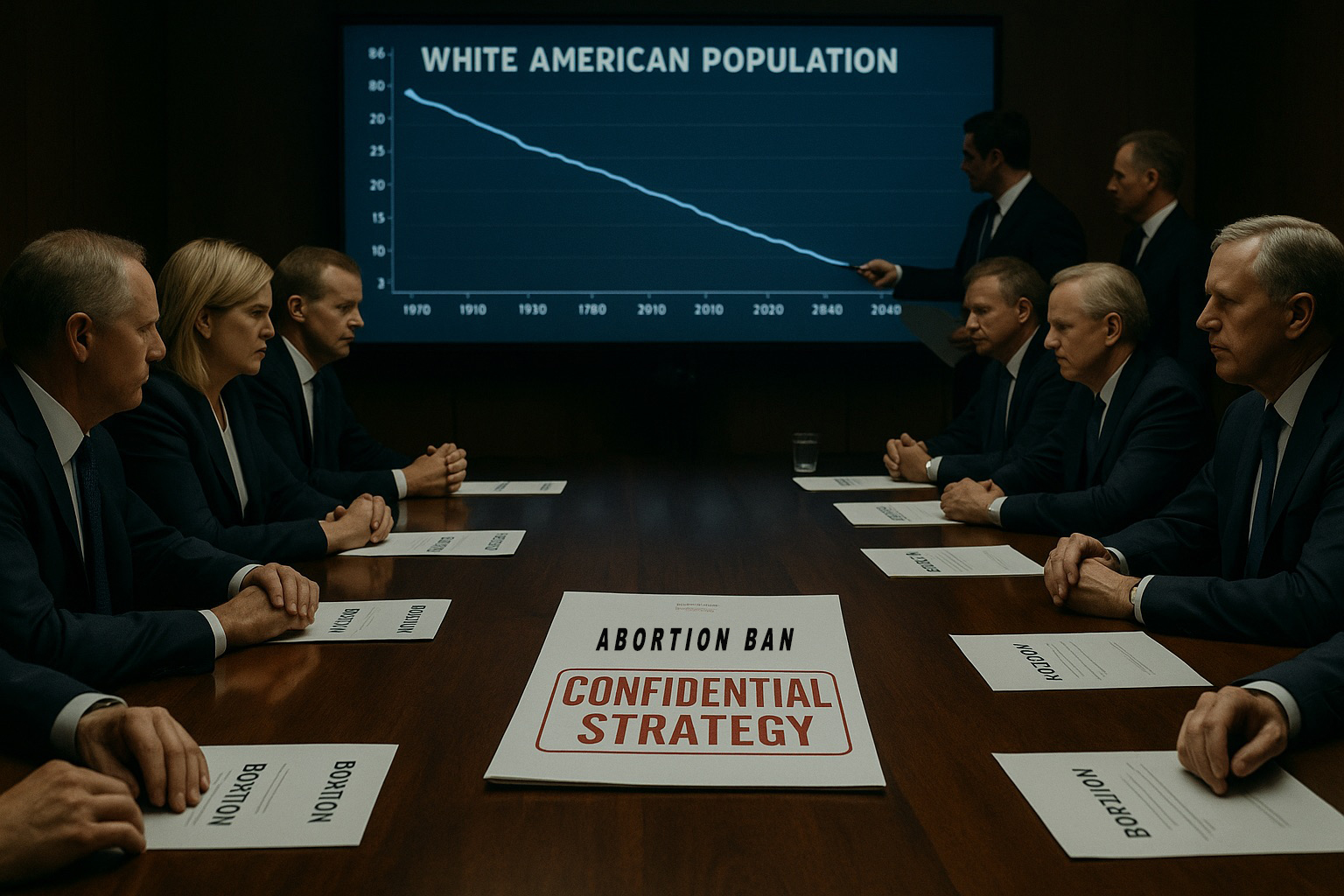
A demographic shift that has been building for decades finally reached a point where political consequences could no longer be ignored. The United States is undergoing one of the most rapid population transformations in its history, and the decline of the white (non-Hispanic) population sits at the center of that transformation. Once the unquestioned majority, white Americans are now shrinking in both percentage and absolute numbers. And when populations decline, political power follows.
This is the demographic backdrop that makes the sudden, forceful abortion reversal intelligible, not as a moral awakening, but as a calculated response to a shrinking electorate and an uncertain future.
A Nation Changing Faster Than Its Politics
The U.S. Census revealed a story that shook long-standing assumptions about American demographics:
- In 1960, white Americans were 89% of the population.
- By 2000, they had fallen to 69%.
- In the 2020 Census, they dropped again to 57.8%, the lowest ever recorded.
- And between 2010 and 2020, the white population didn’t just shrink in percentage, it declined by 5.1 million people in total numbers.
Meanwhile, every other demographic group grew:
- Hispanic/Latino population: +11.6 million
- Asian population: +5.2 million
- Black population: +3.2 million
- Multiracial population: +19 million
These numbers reveal a simple truth: the only major group declining is the one that once defined America’s demographic core.
Political strategists saw these numbers years before the public did. They understood what the projections meant:
White Americans are on track to become a minority by 2045.
In public, this shift is framed as a natural part of national evolution. In private, it fuels a deep anxiety, especially among the political movements most invested in maintaining traditional power structures.
The Fertility Collapse: Why White Birth Rates Hit Historic Lows
To understand why abortion suddenly became a political emergency, you must look at fertility rates.
Here is what CDC data show:
- White (non-Hispanic) fertility rate: 1.55
- Asian fertility rate: 1.59
- Black fertility rate: 1.72
- Hispanic fertility rate: 1.94
The replacement level is 2.1.
Every group except Hispanic Americans is below it, but white Americans are declining the fastest.
Why? Because white Americans occupy a socio-economic landscape structured around:
- Career prioritization
- Late marriage
- Academic and professional delay
- The pursuit of financial independence
- The normalization of child-free lifestyles
- The highest national average age at first birth (≈ 30.2 years old)
Add to this the reality that white teens and young white adults account for a large share of abortion patients, not because they have more pregnancies, but because they terminate at higher rates when pregnancies conflict with education or early career building.
Before Roe fell, white women represented about 38–39% of all abortions, the largest absolute number of any group.
If your objective is to slow demographic decline, this statistic becomes politically explosive.
The Conservative Rhetoric vs. the Demographic Reality
In the public narrative, Republican leaders argued that abortion had been used to “target the Black community,” framing bans as a moral correction meant to protect Black lives and restore Black population growth.
But the data rejects this claim completely.
1. Black population growth is strong, not declining.
Black population:
- 2010: 34.6 million
- 2020: 41.1 million
A 19% growth far higher than white growth, which was negative.
2. Federal funding does not incentivize abortion in Black communities.
Medicaid is barred from covering abortion in most cases under the Hyde Amendment. Abortions are overwhelmingly paid privately, not by massive federal spending.
3. If conservatives truly aimed to increase Black birth rates…
They would invest in:
- Maternal care,
- Medicaid expansion,
- Childcare subsidies,
- Maternal mortality reduction.
Yet the states banning abortion are the same states refusing these resources.
The rhetoric does not match the policy.
The numbers reveal who abortion bans truly affect the most: young white women, the group with the largest share of abortions in absolute terms and the group whose declining fertility most threatens the demographic balance. (CDC.gov)
Cultural Patterns Accelerating the Decline
Beyond economics, cultural factors also create fertility gaps:
- White Americans are the most supportive of same-sex marriage, gender transition, and non-traditional family structures.
- LGBTQ+ identification is highest among white youth, especially white women.(Gallup.com)
- These social patterns, while rooted in personal freedom, reduce natality within the white population more than any other group. (CDC.gov)
In a society where cultural acceptance intersects with demographic math, this combination becomes politically significant.
The Shadow of the “Great Replacement” Narrative
While the term “Great Replacement” has been weaponized in extremist circles, the underlying demographic fear is not fringe. It quietly shapes the worldview of millions of Americans and directly influences political strategy.
The projections are unambiguous:
- By 2045, the U.S. becomes majority-minority.
- White children are already a minority in public schools.
- The white under-18 population collapsed by 14% in a single decade.
For segments of the white electorate, and especially for the political parties that depend on them, these numbers signal an existential threat.
When a population fears it is shrinking, politicians respond with policies designed to reverse or slow that decline.
How Abortion Bans Function as a Demographic Tool
Once you put all the data together, a clear pattern emerges.
1. Restricting abortion increases birth rates most among white women.
Evidence from Texas after the 2021 ban shows:
- Births increased most among white women aged 20–34
- Minority birth rates remained stable due to out-of-state access
2. The states banning abortion are the same states with the sharpest white population decline.
These legislatures are not responding to morality, they are responding to demographic survival.
3. Policies align with political incentives, not moral narratives.
A declining white birth rate threatens:
- the long-term voting bloc that supports conservative politics
- the cultural identity many conservatives believe defines America
- the structural power that comes from being a demographic majority
Increasing white births, even indirectly, is a political strategy masked as moral crusade.
This does not require conspiracy or coordination.
It simply follows the logic of demographics:
When the dominant group declines, the system adapts to preserve it.
The Unspoken Motivation Behind the Sudden Reversal
The abortion decision happened at the exact moment America crossed the threshold where white decline became permanent, measurable, and irreversible without policy intervention.
Publicly, the argument was about life.
Privately, it was about numbers.
And beneath both, it was about power.
America is not banning abortion to save money.
Nor is it banning abortion to protect the Black community.
The data shows overwhelmingly that abortion restrictions reinforce one outcome above all others:
slowing the demographic decline of white Americans and preserving the political balance built upon their majority.
The story told on television is morality.
The story written in data is demography.
And the story unfolding in real time is the quiet restructuring of America’s future.
Culture
The Velvet Rope of Belonging: When Communities Close Their Doors
To heal from trauma is to not recreate the conditions that caused it
Published
5 months agoon
October 9, 2025By
E.J Rae
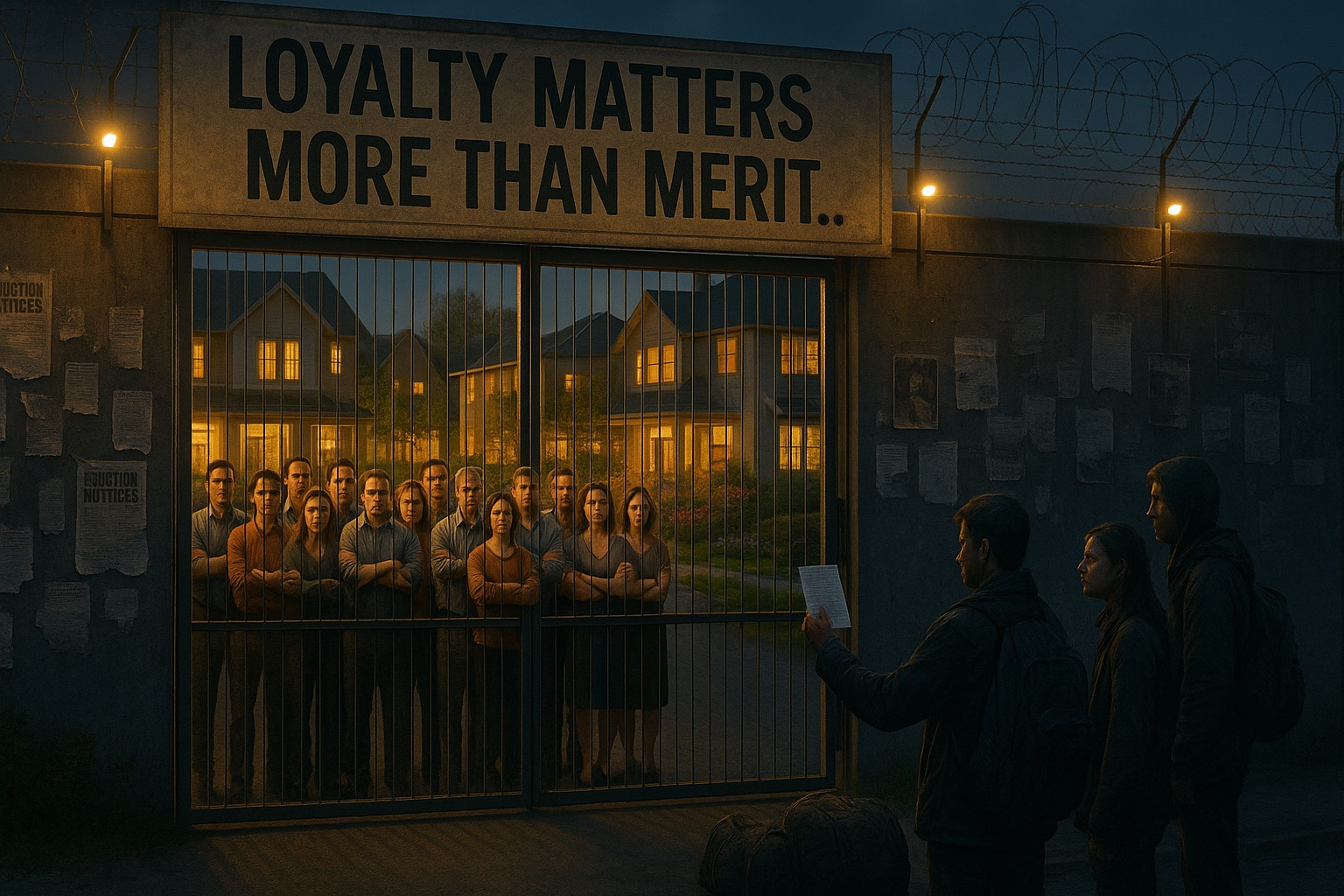
Every community begins as a safety net. Too many end up as a fortress.
What starts as neighbors helping neighbors, a network of trust and belonging, slowly hardens into an insider’s club. Belonging turns into currency. Favors turn into gates. And the same bonds that keep people safe begin to quietly lock others out.
Community vs. Communitarianism
Healthy communities are built on mutuality. They welcome newcomers, exchange support, and adapt to change. Social capital flows freely.
But social capital accumulates. It consolidates. And when loyalty becomes a condition of access, a community crosses a subtle line into communitarianism.
The difference:
- Community: “We look out for each other.”
- Communitarianism: “We only look out for each other.”
It wears the same face, but its focus shifts from growth to gatekeeping.
The Social Cost of Closed Doors
When this shift happens, solidarity becomes favoritism:
- Job markets where only insiders are mentored or hired.
- Schools or co-ops where entry depends on “who you know.”
- Industries where opportunities circulate within cliques while equally qualified outsiders never get a chance.
What began as protection becomes social insulation. Talented people are locked out, not for lack of merit, but because they don’t belong to the “right” circle.
Even online, this pattern repeats. Activist groups silence dissent, influencers amplify only their own friends, movements gatekeep who counts as “one of us.”
The result: invisible walls in places that once promised openness.
When Trauma Explains, But Doesn’t Excuse
Communitarianism often grows from pain. Marginalized groups, in particular, close ranks out of survival. History justifies the instinct.
But here’s a hard truth: trauma explains behavior. It doesn’t excuse it.
Pain cannot be a free pass for harm. Left unchecked, trauma can turn from shield to sword:
- “We were excluded, so now we decide who gets in.”
- “The world didn’t protect us, so we owe nothing to anyone else.”
This isn’t healing. It’s payback. It doesn’t break the system; it repeats it with new gatekeepers.
Integration vs. Insulation
There’s a difference between building strength together and hoarding power.
Integration: using a community’s resources to grow and connect outward.
Insulation: building walls that protect insiders while shutting everyone else out.
Every community must ask:
- Are we empowering and connecting, or just protecting and excluding?
- Are we rewarding loyalty over merit?
- Who is missing from the room?
When Belonging Becomes a Bran
In the digital age, “community” has also been commodified. Political tribes, lifestyle brands, and social movements now sell belonging. It looks inclusive but often deepens division: echo chambers, cliques, silencing of dissent.
Belonging becomes transactional. Visibility gets mistaken for value.
A Better Model: Circles, Not Fences
What if communities were built like concentric circles instead of fenced yards?
At the core: shared values, culture, or identity.
Around that core: porous edges where dialogue flows, ideas enter, and assumptions are challenged.
The goal isn’t to erase difference. It’s to keep openness alive.
The Test of a Communit
The real test of a community isn’t how fiercely it protects its own.
It’s whether it has the courage to keep the door open.
When fear hardens into walls, we lose the very thing that made the community possible in the first place: trust.
If we want communities that are not just safe but wise, we must resist the velvet rope, and choose openness over exclusion.
3. Specific Data Points & Case Studies to Add
To strengthen the argument and give weight:
- Hiring & Insiders:
Research from Harvard Business Review shows that up to 70% of jobs are never publicly advertised, with most filled through existing networks. This illustrates how insider networks gate opportunities. - Funding Circles:
In 2023, 77% of venture capital in the U.S. went to alumni from just three universities (Stanford, Harvard, MIT). This is communitarianism in action. - Housing/Schools:
In many cities, co-op housing boards reject applicants without explanation, leading to accusations of favoritism and closed networks. - Digital Gatekeeping:
Studies on social platforms like Instagram and TikTok show algorithmic amplification of existing cliques—influencers promoting their own circle while new voices struggle to break in. - Marginalized Groups Example:
Highlight how safe spaces for LGBTQ+ youth originally saved lives, but in some contexts, unspoken hierarchies (race, body image, class) later created exclusion within the very spaces built to include.
Can Dual Citizenship in U.S Public Office Remain Institutionally Impartial?
The Paradox of “Make America Great Again”: How the United States Learned to Practice the Authoritarianism It Claims to Fight
All’s Fair: When Fame Replaces Competence
Trending
-
Entertainment7 months agoFLASH NEWS: Malcolm-Jamal Warner Dies in Tragic Drowning Accident
-
Politics7 months agoJailed for Profit: How Private Incarceration Turned Justice into Revenue
-
Economy7 months agoBreaking Free: Debt, Location Freedom, and the New American Dream
-
Opinion7 months agoThe Forgotten Mothers of Israel: A Theory on the Real Bloodline of the Jewish People
-
Sports7 months agoEnhanced Games 2026: Where Performance Enhancing Drugs Allowed
-
Fashion8 months agoThe Strategic Power of Dressing Well: Navigating the Unspoken Dress Code Hierarchy in the Professional World
-
Culture8 months agoGay Hookup App: Attraction, Race, and Prejudice?
-
Tech6 months agoThe Gatekeepers Have Fallen: How Social Media and AI Broke the Monopoly on Truth