Opinion
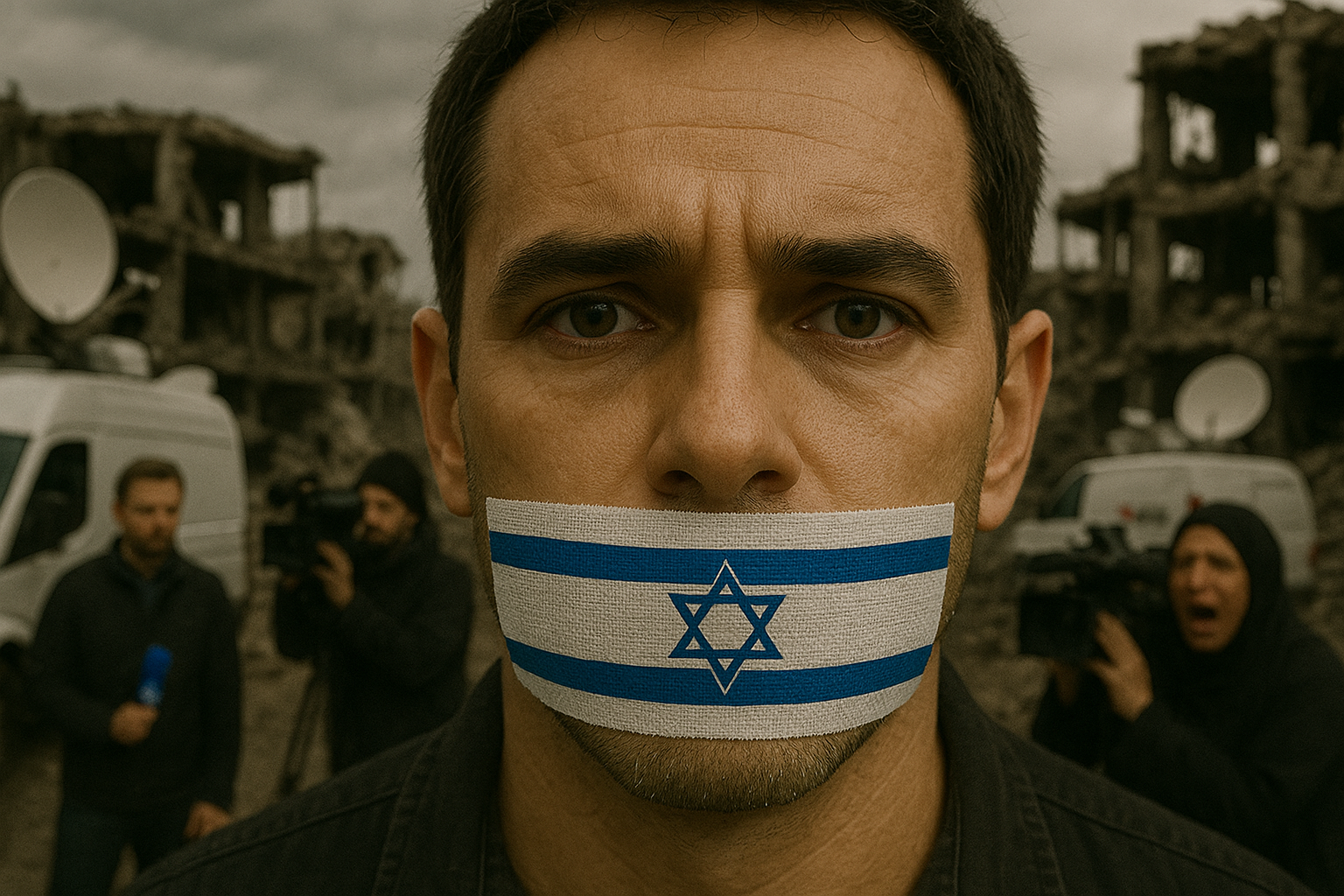
When Speaking the Truth Becomes a Risk: The Double Standard Shielding Israel’s Government
Published
1 year agoon
By
E.J Rae
In today’s world of selective outrage and curated morality, some governments are fair game. We critique U.S. drone strikes. We denounce Russia’s war in Ukraine. We analyze China’s surveillance state and Saudi Arabia’s repression, often without a second thought.
But criticize the Israeli government, and everything shifts. The air gets heavier. Disclaimers follow. Labels appear. The conversation changes, not because the facts are unclear, but because the power structure around this particular truth is protected in ways few others are.
Let’s say it clearly from the outset: criticism of the Israeli government is not antisemitism. And the persistent effort to conflate the two is more than an intellectual failure, it’s a political strategy. One designed to shield a government from accountability by branding dissent as hate.
The Structure of Silence
The silencing doesn’t always look like censorship. It’s often embedded in how rules are applied, how headlines are written, how algorithms flag certain phrases, and how online conversations are moderated.
These mechanisms didn’t emerge by accident. Many of them were born from a historical and moral imperative: to combat antisemitism, a hatred with centuries of devastating consequences, culminating in the Holocaust. The goal was to prevent it from ever taking root again.
But over time, those protections have been overextended, warped into tools that suppress criticism of a powerful state, rather than protecting a vulnerable people. This overcorrection has led to a dangerous paradox: the very language once created to prevent hate is now used to shield power from accountability.
Words like “apartheid,” “occupation,” or “ethnic cleansing”, routinely applied to other nations, are treated as inflammatory when used to describe Israeli state policy, even when those same terms are echoed by human rights groups like Amnesty International (2022), Human Rights Watch (2021), and UN Special Rapporteurs (2022).
This isn’t moral consistency. It’s structural bias.
“What About…?” The Deflection Machine
The pattern is predictable. Criticize Israeli military actions, and the response pivots instantly:
- What about Hamas?
- What about Iran?
- What about other conflicts?
But no one says “What about Ukraine’s corruption?” when we condemn Russia’s invasion. No one insists on balance when we denounce North Korea or the Taliban.
So why must every criticism of Israel be paired with context, caveats, and moral gymnastics?
This is not nuance. It’s evasion dressed up as caution. And it’s meant to exhaust the speaker into silence.
When Language Is Weaponized
The term “antisemitism” is powerful, and rightly so. But when it is used to discredit any criticism of the Israeli state, it loses its meaning and diminishes its power to protect.
Real antisemitism is rising. It must be called out and fought without compromise. But stretching the definition to include any mention of military aggression, occupation, or systemic abuse by the Israeli government does not protect Jewish communities, it undermines their safety by making the real thing harder to identify.
This conflation also erases the many Jewish voices, activists, scholars, Holocaust survivors, who are raising these same criticisms. To silence them is not only dishonest; it’s dangerous.
For Those Who Still Don’t Know, and For Those Who Do
If you’re just learning the full scope of this issue, you’re not alone. For years, public discourse has been shaped to obscure rather than reveal. But now, the footage is everywhere. The numbers are unavoidable. The evidence is mounting.
This is not abstract policy talk. This is Gaza. This is the West Bank. This is demolished homes, displaced families, and dead children. These are real people living under siege, occupation, and collective punishment, while the world debates whether it’s even acceptable to say so.
According to UN OCHA, thousands of Palestinians have been killed in recent years, including many children. In the 2023–2024 war alone, more than 38,000 people have died in Gaza, most of them civilians, according to Gaza’s Ministry of Health and corroborated by UN agencies.
And yet, many remain silent.
Not because they don’t know, but because they do.
The Complicity of the Comfortable
This is where the conversation must shift.
To those who marched for Ukraine, posted black squares for George Floyd, and spoke boldly about Iran’s morality police, and yet go silent when it’s Gaza, or worse, defend the violence, know this: you are not being neutral. You are being selective.
Selective outrage is not principle. It’s performance. And it protects the powerful while leaving the oppressed to suffer alone.
The truth is not too complex. What’s complex is the moral theater required to justify watching people die and saying nothing.
When Silence Becomes Betrayal
The most insidious result of this double standard isn’t the censorship itself, it’s the internalized silence it breeds.
People begin to second-guess their empathy. They fear posting what they feel. They edit their grief. They self-censor, not out of confusion, but out of fear that compassion for Palestinian lives will be misread, misquoted, or condemned.
This isn’t moral discourse. It’s emotional policing, and it corrodes the possibility of real justice.
A Closing Clarity
You can condemn antisemitism, and also condemn state violence.
You can respect Jewish dignity, and also demand Palestinian liberation.
You can grieve the Holocaust, and still recognize apartheid when you see it.
But you cannot claim to support human rights, and then pick and choose who deserves them.
This is not about sides. It’s about standards.
It’s not about religion. It’s about power.
It’s not about history alone. It’s about what is happening, now.
If freedom of speech means anything, it must include the freedom to name injustice, even when the oppressor has allies in high places.
Because truth is not hate.
And silence, in the face of what we all can see, is never neutral.
It is complicity, disguised as caution.
Opinion
Nolan Wells: The Investigation Itself Needs to Be Investigated
Nolan Wells was killed!
Published
2 weeks agoon
August 20, 2026By
E.J Rae
At what point does an investigative failure become an accountability problem?
That is the question Mississippi authorities now have to answer in the death of Nolan Wells.
The most troubling part of this case may not simply be what happened to Nolan. It may be how many obvious questions remain unanswered, and how much public pressure it has taken to force those questions into the open.
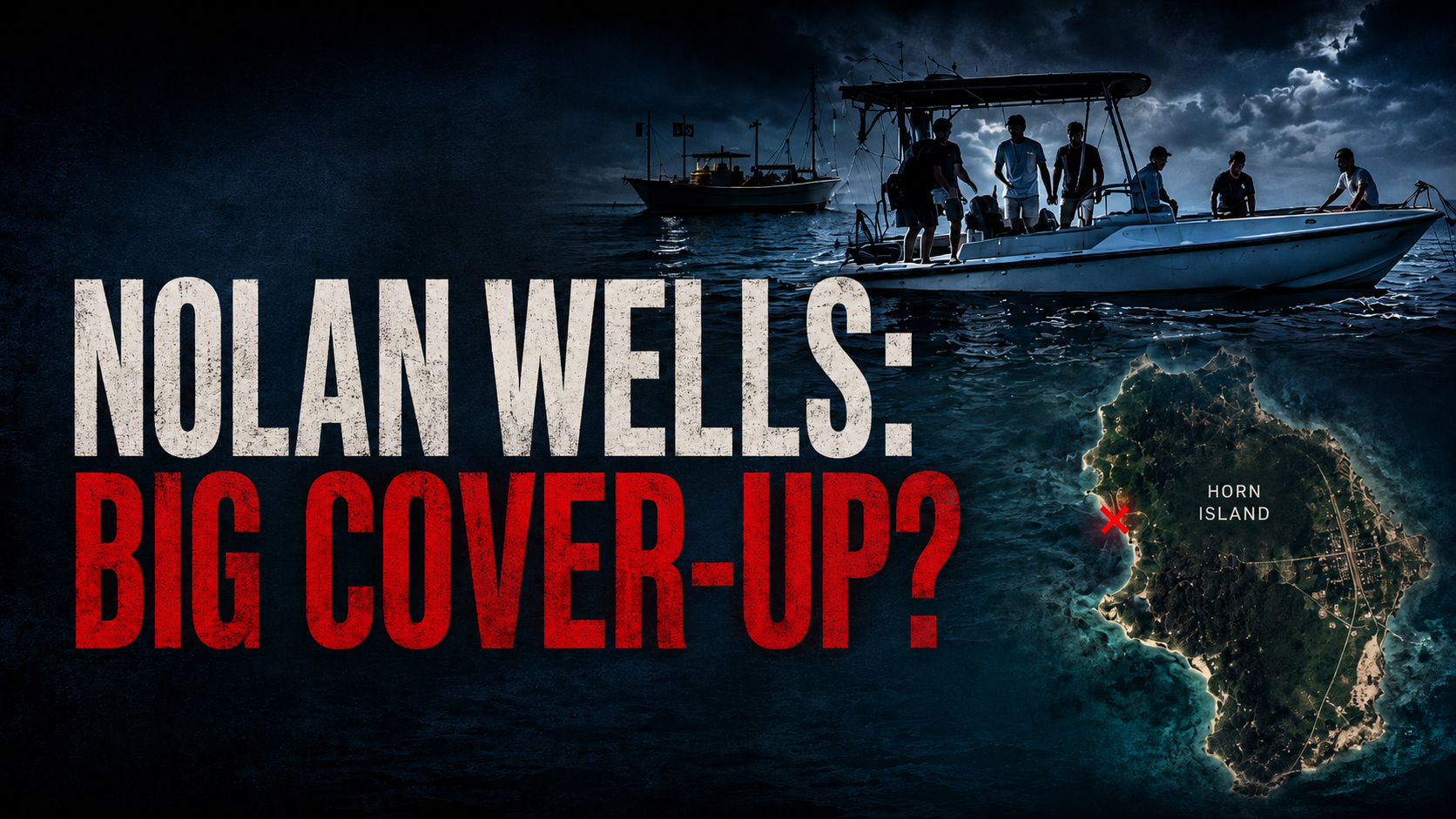
Nolan went to Horn Island with friends on July 4.
His friends came back with his phone and keys.
But Nolan did not.
Two days later, Nolan’s body was found in the water.
And yet authorities initially indicated that they did not suspect foul play.
That is where scrutiny of this investigation should begin.
Those circumstances did not prove Nolan was murdered. But they were more than sufficient to justify treating the people who were last with him as the primary suspects until evidence eliminated them.
A suspect is not a convicted person. Suspicion is where an investigation begins. Evidence determines where it ends.
So what evidence eliminated Nolan’s friends as suspects before authorities publicly indicated that foul play was not suspected?
Why Weren’t Nolan’s Friends Treated as the Prime Suspects?
Strip away everything social media subsequently uncovered and look only at what investigators had in front of them.
A young man traveled to an isolated barrier island with friends.
Those friends returned without him.
His phone and keys returned with them.
The explanation was that Nolan voluntarily remained on Horn Island and planned to return another way.
Nolan subsequently turned up dead.
Under what reasonable investigative standard are the people who were among the last known to be with him not the first people whose accounts must be aggressively tested?
That does not require an arrest or criminal charge. It requires investigation.
Separate them. Interview them independently. Preserve their original statements. Establish exactly when each person last saw Nolan. Determine who possessed his belongings. Compare their timelines. Secure relevant digital evidence. Authenticate their videos. Examine location histories. Inspect the boat. Investigate the distress call.
Then try to disprove their accounts.
If the evidence corroborates them, eliminate them as suspects.
That is investigation.
The problem is that the public was hearing that foul play was not suspected before many of these questions had been publicly resolved.
The issue is therefore not whether Nolan’s friends are guilty.
It is what evidence justified minimizing the possibility of foul play so early.
Nolan’s Phone Was in a Friend’s Possession
This fact should not be softened.
Nolan’s phone did not simply “return to the mainland.”
It was recovered from one of Nolan’s friends on the mainland.
That matters.
Nolan was missing, and one of the people who had been with him was in possession of one of the most important potential pieces of evidence concerning his disappearance.
That should have generated immediate investigative scrutiny.
Why did the friend have Nolan’s phone?
When did that friend take possession of it?
Did Nolan voluntarily leave it?
When did the friend realize Nolan was missing?
When was Nolan’s family told that the phone was in that person’s possession?
Was the device unlocked or accessed?
Were messages, photographs or other data deleted?
What does its location history show?
What do application records, cloud records and forensic artifacts show?
Reporting has indicated that some messages were deleted, although that alone does not establish who deleted them or when. That is precisely what forensic examination is supposed to determine.
Possession of Nolan’s phone does not prove that his friend harmed him.
But a missing teenager’s cellphone being found in the possession of one of the last people known to have been with him is evidence that demands investigation.
And yet weeks into the case, the phone’s forensic examination was still caught in a dispute over how that examination would be conducted.
For a device capable of reconstructing communications, movements and potentially Nolan’s final hours, that delay deserves scrutiny.
The phone is not merely one of Nolan’s possessions.
It is potentially a digital witness.
The “We’re Sinking” Call and the Boat
Then there is the boat.
A distress call was made to Sea Tow on July 4. The caller reportedly said:
“Our bilge pump stopped working. We’re sinking.”
Water was reportedly entering the vessel. GPS coordinates were provided and assistance was requested.
The dispatcher reportedly asked whether everyone was aboard and safe. The caller said everyone was aboard and in good health.
The tow was subsequently cancelled after the boat owner indicated that assistance had been obtained elsewhere.
That sequence should have created an immediate physical-evidence investigation.
If the boat was taking on enough water for someone to say “We’re sinking,” what exactly happened to it?
Was the bilge pump actually malfunctioning?
Was it inspected?
How much water entered the vessel?
Was there structural damage?
Was the condition of the boat photographed before repairs?
Who provided the alternative assistance?
Was that person interviewed?
What did that person observe?
A distress call involving a supposedly sinking boat is not an insignificant detail when the same trip ends with one passenger missing and subsequently dead.
The call may have been completely legitimate.
But legitimacy should have been established through evidence.
And the boat problem connects directly to the explanation for leaving Nolan behind.
According to the account given publicly, Nolan voluntarily remained on Horn Island because he intended to return another way.
Then who was supposed to bring him back?
Was that person identified?
Was that person interviewed?
Did Nolan communicate with them?
Was there a text or call?
Did another independent witness hear Nolan say he was staying?
And why would Nolan voluntarily remain on a remote island without his phone or keys while the people he arrived with departed aboard a boat that had supposedly been experiencing a serious emergency?
Maybe that happened exactly as described.
But an investigation should not begin with “maybe.”
It should begin with corroboration.
A Video Is Not a Timestamp
Videos have also become important to the public reconstruction of Nolan’s final hours.
But a video does not establish a timeline merely because somebody says when it was recorded.
If video is being relied upon to establish where Nolan was during a critical period, investigators should have obtained the original files and examined their metadata where available.
Creation time.
Modification history.
Device information.
Location metadata.
Continuity with other photographs and videos.
Comparison with messages, GPS information, phone activity and witness statements.
A video presented without an independently verified timestamp may show that an event occurred.
It does not necessarily establish when it occurred.
That distinction matters when minutes and hours can determine whether competing accounts are credible.
Digital sleuths should not have to establish that standard.
Investigators should already have done it.
The Autopsy Created Another Serious Problem
Then there is the forensic handling of Nolan’s remains.
Nolan’s family obtained an independent autopsy, but by the time their pathologist examined him, key organs such as the esophagus and lungs had already been removed or retained during the initial examination.
The consequence is significant.
The independent examiner could not personally examine all of the anatomy that might have helped address important questions concerning drowning or possible injury.
The independent examination ultimately classified both the cause and manner of death as undetermined.
That does not establish homicide.
But it also does not provide the definitive medical explanation that would resolve the circumstances of Nolan’s death. How convenient is it that key organs that could have helped determine whether Nolan drowned or suffered another cause of death were unavailable for the independent examination?
The issue is not whether organs or tissue may legitimately be retained during an autopsy. They can be.
The issue is what happened in this case.
What exactly was retained?
Why?
Where is it now?
What testing was performed?
Was everything properly documented?
Why were crucial organs unavailable to the family’s independent pathologist?
Can the retained material still be independently examined?
When one forensic examination materially limits what a second pathologist can independently evaluate, transparency becomes even more important.
The answer cannot simply be:
Trust the process.
The answer has to be:
Show what the process did.
Why Is the Internet Doing the Pressure-Testing?
This is where the investigation becomes an accountability issue.
Nancy Grace, independent investigators, influencers and digital sleuths have spent weeks interrogating the publicly available story.
What happened to the boat?
Why was Sea Tow called?
Why was the tow cancelled?
Who provided assistance instead?
Why did Nolan remain behind?
Who was supposed to retrieve him?
Why was Nolan’s phone in a friend’s possession?
What happened to the deleted digital material?
What time were the videos actually recorded?
What happened during the critical period before the boat departed?
These are not extraordinary questions.
They are basic investigative questions.
And law enforcement possesses something Nancy Grace and social media do not:
Police power.
Investigators can obtain warrants and subpoenas. They can preserve physical evidence, request telecommunications records, conduct forensic examinations, document chains of custody and formally interview witnesses.
Internet investigators have fragments.
Police have access to evidence the public may never see.
That is why an active investigation should be ahead of the internet, not appearing to follow behind it.
If investigators had already reconstructed the timeline, inspected the boat, established the chain of possession for Nolan’s phone, authenticated the videos and tested the witnesses’ accounts before these questions exploded online, then the investigative record should eventually demonstrate that.
If those steps happened only after public pressure, that tells a different story.
That chronology matters.
If someone possessed Nolan’s phone, establish exactly what happened to the device while it was outside Nolan’s control.
If a video establishes a supposedly crucial moment, authenticate when it was recorded.
If several people witnessed the same event, interview them separately and compare their accounts.
The objective is not to prove the first story investigators receive.
The objective is to determine whether that story survives investigation.
And Yes, Race Belongs in This Conversation
Now reverse the races.
Imagine a young white teenager travels to an isolated Mississippi island with Black friends.
The Black friends return without him.
One of them is later found in possession of his cellphone.
His keys return without him.
Their boat had generated a distress call saying they were sinking.
The rescue was cancelled.
The explanation is that the white teenager voluntarily remained behind without his phone or keys.
Two days later, his body is recovered.
Would those Black friends have received the same initial benefit of the doubt?
Or would they have immediately become the prime suspects until investigators eliminated them through evidence?
That question cannot simply be dismissed as inflammatory.
It goes directly to whether suspicion is applied equally.
Mississippi also does not enter this conversation without history.
The state has a documented history of racial terror against Black people, failures to prosecute violence against Black victims, and notorious instances of law-enforcement complicity in racial violence.
That history does not prove Nolan was lynched.
It does not prove his friends killed him.
It does not automatically prove that today’s investigators are concealing what happened.
But it explains why Mississippi authorities cannot reasonably expect unquestioning trust when a Black teenager dies under unresolved circumstances and the initial investigative posture appears to have favored an innocent explanation.
Bias does not require somebody consciously deciding, I am going to protect these people because they are white.
Institutional bias can operate through assumptions.
Who instinctively looks suspicious?
Whose explanation sounds believable?
Who is immediately treated as a potential perpetrator?
Who receives the benefit of the doubt?
Which victim’s death triggers immediate suspicion?
Which one is initially interpreted as an accident?
That is the deeper racial question surrounding this investigation:
Would exactly the same facts have produced exactly the same investigative response if the races had been reversed?
If the answer is no, then the problem is not merely perception.
It is unequal justice.
Now the Investigation Itself Needs to Be Investigated
At this point, Mississippi authorities do not merely have to explain what they believe happened to Nolan.
They should eventually have to demonstrate how they reached that conclusion.
When were Nolan’s friends separately interviewed?
When were inconsistencies identified?
When was the boat examined?
When was its alleged mechanical failure documented?
When was the Sea Tow call investigated?
When was the person who supposedly provided alternative assistance interviewed?
When was Nolan’s phone secured?
When was its chain of possession established?
When was deleted digital information investigated?
When were the videos authenticated?
When was the explanation that Nolan voluntarily remained behind independently corroborated?
Most importantly, were those investigative steps already underway before Nolan’s family, Nancy Grace, independent investigators and social media began forcing these questions into public view?
Investigators are entitled to protect sensitive information while a case remains active.
They are not entitled to rewrite the chronology afterward.
If authorities were doing this work from the beginning, the investigative record should prove it.
If they were not, public pressure did not interfere with the investigation.
Public pressure exposed its weaknesses.
And that distinction may ultimately be as important as the final conclusion itself.
What did authorities know?
When did they know it?
What evidence did they secure?
What did they verify?
What contradictions did they investigate?
What evidence eliminated the people who returned without Nolan as suspects?
And the question that now hangs over the entire investigation:
Were Mississippi investigators searching for the truth before the public forced them to, or were they protecting an old racial bias tradition?
Nolan Wells did not need influencers to become detectives.
He did not need Nancy Grace to conduct the interrogation the public expected from police.
He did not need his family to conduct a parallel investigation simply to force obvious questions into the open.
He needed investigators to be suspicious first, follow the evidence second, and reach a conclusion last.
Anything less is not an investigation worthy of public trust.
Opinion
Is YouTube Protecting Quality or Capturing the AI Video Market?
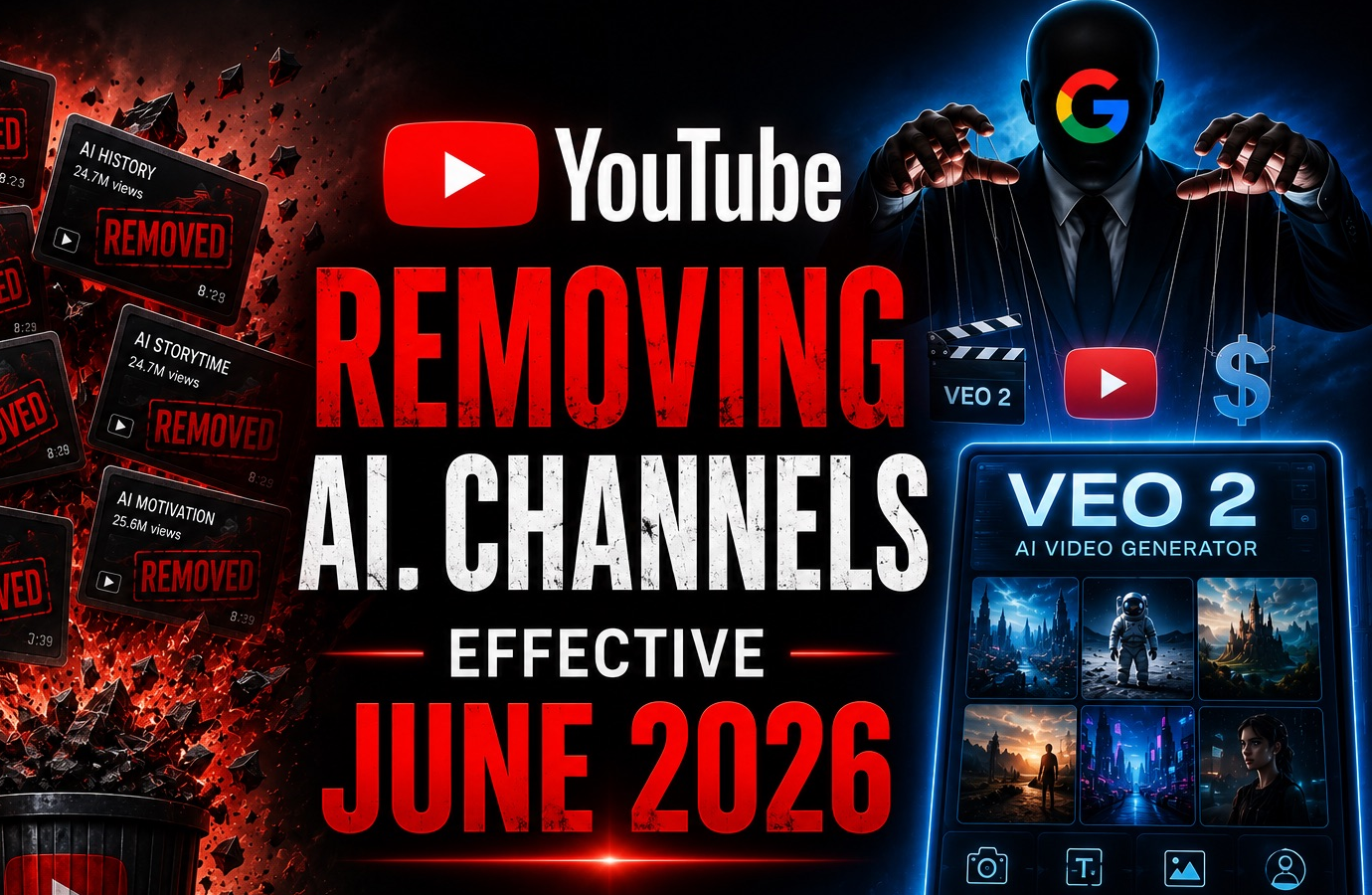
YouTube’s removal of AI-generated channels with 4.7 billion views raises questions about whether it is fighting spam or protecting Google’s Veo 2 ambitions.
Published
3 months agoon
June 1, 2026By
E.J Rae
YouTube has intensified its campaign against repetitive AI-generated content. The platform reportedly removed a large number of AI-generated channels that had accumulated more than 4.7 billion views.
According to reports, many of these channels relied on mass-produced AI videos. YouTube says it wants to reduce misleading, scammy, spammy, low-effort, and highly automated content. On the surface, that sounds reasonable. However, the timing raises important questions.
At the same time that YouTube is increasing scrutiny of AI-generated videos, its parent company Google is aggressively promoting Veo 2, an AI video-generation tool built for short-form and cinematic content.
The contradiction is difficult to ignore.
Google promotes Veo 2 as a powerful tool for creating engaging AI videos. By doing so, it indirectly suggests that content created with its technology will be more authentic, engaging, and less repetitive than other AI-generated videos. Yet no company can guarantee that millions of users generating videos from prompts will not eventually create repetitive, formulaic, or low-effort content. The very problem YouTube claims to be fighting could eventually emerge within Google’s own AI ecosystem.
This leads to a larger question: Is YouTube improving content quality, or is it positioning itself to capture a fast-growing segment of the creator economy?
The 4.7 Billion View Question
For years, independent creators built businesses around AI-generated content. They experimented with AI storytelling, AI animation, AI narration, educational videos, and entertainment channels. Some attracted millions of views and generated significant advertising revenue.
That revenue came from YouTube.
One fact makes this debate even more complicated. The channels YouTube reportedly removed had accumulated more than 4.7 billion views.
Whether people like AI-generated content or not, billions of views suggest there was a substantial audience for it. YouTube’s recommendation algorithm exists to maximize engagement, retention, and watch time. If these videos reached billions of views, YouTube’s systems repeatedly recommended them to viewers.
That does not automatically prove the content was high quality. However, it raises an important question. If viewers consumed this content at massive scale, was the problem really audience demand? Or did an emerging content category grow faster than YouTube expected?
Google’s Position in the AI Content Economy
Now consider the economics from Google’s perspective.
Instead of simply paying creators who use third-party AI tools, why not become the AI tool provider itself?
Why not participate in every step of the process?
The creator generates the video.
The creator uploads the video to YouTube.
YouTube distributes the video.
Advertisers pay YouTube.
And increasingly, Google wants to provide the AI technology used to create the content.
The platform no longer operates only at the end of the value chain. It potentially participates in every stage.
Critics argue that this is not about eliminating AI content. It is about controlling AI content.
Advertiser Pressure and Business Incentives
Another possible explanation involves advertisers.
Brands spend billions of dollars on YouTube advertising. If advertisers worry that a growing share of impressions comes from low-cost AI-generated channels, they may demand stricter quality standards.
In response, YouTube could tighten monetization policies while promoting AI tools that operate inside Google’s preferred ecosystem.
There is also a less-discussed explanation rooted in economics.
Storing video at YouTube’s scale is expensive. Billions of AI-generated uploads consume enormous amounts of storage and computing resources. From a business standpoint, discouraging low-retention or low-value content may simply make financial sense.
Why store endless amounts of automatically generated content if it generates little engagement or advertising revenue?
Viewed this way, the crackdown may have less to do with artistic integrity and more to do with platform efficiency. Yet the optics become more complicated when YouTube simultaneously encourages adoption of its own AI-generation tools.
From Platform to Gatekeeper
The result is a system where Google becomes the gatekeeper, distributor, monetization platform, and potentially the dominant supplier of AI-generated content.
This would not be the first time Google entered a market that independent businesses helped build.
Critics often point to the comparison-shopping controversy. Long before Google Shopping existed, independent comparison websites helped consumers compare prices across multiple retailers. Regulators later argued that Google leveraged the vast amount of data and insights generated through its search engine to develop and promote services such as Google Shopping, while simultaneously giving its own product greater visibility and disadvantaging competing platforms. In doing so, Google entered an established market and used its dominance in search to capture a larger share of traffic, deeply disrupted the industry and triggered massive antitrust penalties
The concern today is similar.
A new content model has emerged: AI-generated video.
YouTube recognized the trend.
The question is whether the company is simply regulating that market or preparing to own it.
Quality Control or Market Control?
Once a platform starts defining what qualifies as “good AI” while also selling the tools that produce that AI, creators naturally begin asking questions.
Are these rules really about quality?
Or are they about market share?
The larger issue is not whether Google has the right to moderate its platform. Every platform has that right.
The real concern is whether a company can remain neutral while it regulates a market, owns the distribution network, controls monetization, collects unmatched user-behavior data, and sells the tools used to create the content being regulated.
History shows that regulators have repeatedly questioned Google’s ability to separate those roles.
As AI-generated video becomes a major segment of online media, creators may increasingly wonder whether YouTube is protecting quality or positioning itself to become the dominant supplier of AI content on its own platform.
This version should score significantly better for SEO plugins such as Yoast or Rank Math because it improves readability, distributes keywords naturally, adds crawlable subheadings, and reduces passive construction while keeping your thesis intact.
Opinion
How Israel Dressed Up Annexation and Forced Displacement into “Population Growth”
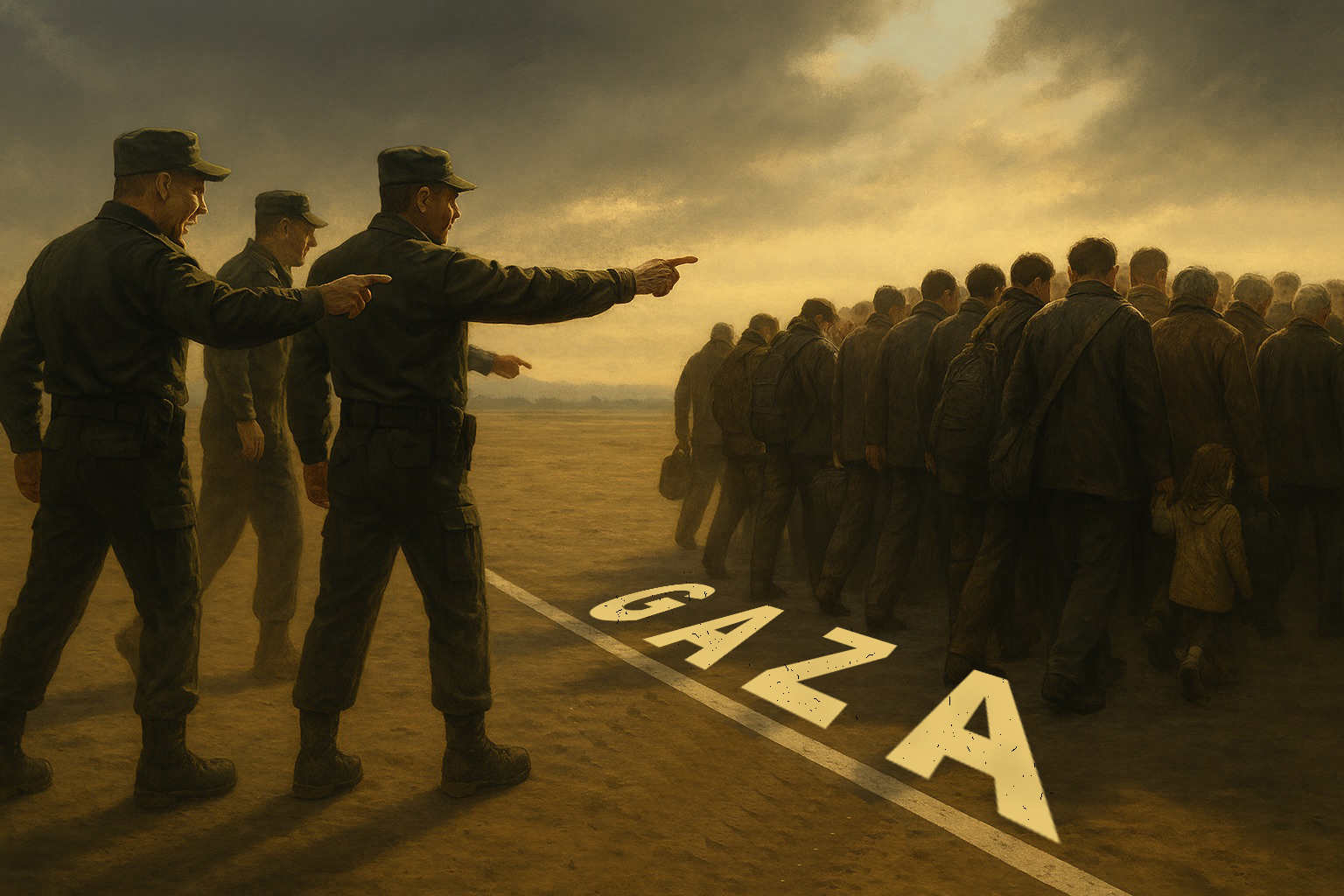
Israel’s claim of stunning Palestinian “population growth” is simply a headcount of the people it has pushed off their land, rebranded as “growth.”
Published
9 months agoon
December 11, 2025By
E.J Rae
For years, Israeli officials and their allies have repeated the same line: the Palestinian population is growing. On paper, it sounds like proof that nothing truly catastrophic is happening. If there are more Palestinians now than twenty years ago, how can anyone speak of ethnic cleansing or genocide? This demographic story is presented as neutral fact, a scientific reassurance that, despite the images of bombed cities and fenced-in lives, the situation is still “within normal limits.”
My argument is that this story is not neutral at all. It is a political construction built under occupation, where the same power that seizes land and controls borders also decides who is counted, where they are registered, and which numbers the world is allowed to see. The so-called “growth” of the Palestinian population in Gaza and the West Bank does not prove safety; it measures the scale of forced displacement, land theft, and confinement. Every additional body counted in Gaza or in fragmented West Bank enclaves is the human echo of a family pushed off its land somewhere else. In a territory carved by settlements, checkpoints, and annexation, rising headcount do not describe a healthy society, they describe a cage that has been steadily filled.
Seen this way, Israel’s own numbers betray its narrative. Either they are manipulated, or they are even more damning than intended: they show how many people have been compressed into shrinking, militarised spaces, expected to live and raise children in conditions where even captive animals would struggle to reproduce. The statistics that were meant to dismiss Palestinian suffering instead become evidence of how much land has been taken, how many communities have been uprooted, and how tightly an entire population has been trapped.
A Territory on Paper, an Archipelago in Reality
On a political map, the West Bank appears as one continuous piece of land, roughly 5,655 km² in area. In theory, that looks like enough space for a few million inhabitants. In reality, Palestinians do not live in a normal territory, they live in fragments.
Around 60% of the West Bank is designated Area C, where Israel retains full security and planning control. Only a tiny fraction of this land is zoned in a way that allows Palestinians to obtain building permits; most Palestinian construction is either blocked or later demolished as “illegal”. Israeli settlements and related infrastructure occupy large areas inside this same zone. Those settlements are widely recognised as illegal under international law by the UN, the International Court of Justice, the International Committee of the Red Cross and multiple human-rights organisations, as they violate the Fourth Geneva Convention’s ban on transferring the occupier’s population into occupied territory.
Meanwhile, Palestinian homes and basic structures are demolished at record levels. In 2025, the Norwegian Refugee Council reported that in less than nine months, Israel had already demolished more Palestinian homes and structures in the West Bank, including East Jerusalem, than in the entire previous year, explicitly linking this to a wider annexation agenda. Each demolition does not just remove bricks; it removes a family from a place.
Movement across what is left is tightly restricted. UN OCHA documented 565 physical obstacles to Palestinian movement in the West Bank at the start of 2023, including checkpoints, roadblocks and earth mounds; later that year they counted 645 obstacles, an 8% increase. After the Gaza war escalated, new surveys reported around 849–900 barriers, including “iron gates” at village entrances, turning daily travel to work, school or hospital into an unpredictable ordeal.
On paper, the West Bank is a territory. On the ground, Palestinians inhabit isolated pockets, surrounded by checkpoints, settlement blocs and military zones. The land still exists, but the parts they can actually use, build on and move through freely are shrinking.
Annexed Land Has a Demographic Echo
Land is never emptied in silence. When hillsides are declared military zones, when outposts are legalised, when Palestinian houses are flattened for lack of permits that are almost never granted, the people who lived there do not evaporate. They have to go somewhere.
Documentation from the UN, NGOs and human-rights groups has, for years, shown a pattern:
- Palestinian communities in parts of Area C, East Jerusalem and rural zones are removed through demolitions, settler violence or administrative orders.
- Those displaced families reappear in denser, poorer spaces: refugee camps, urban peripheries, and, increasingly over decades, in Gaza or in a few crowded West Bank cities.

At the same time, Israel has never fully ceded control of the population registry. Since 1967, it has held ultimate authority over which Palestinians receive ID cards and are recorded as residents of the West Bank, Gaza or East Jerusalem, and it can freeze updates or block family reunification. This means the same power that redraws the map on the ground also shapes the categories on the spreadsheet: who “belongs” to Gaza, who is recognised in the West Bank, who is kept in legal limbo.
From that angle, official “growth” is not a neutral snapshot of fertility. It is the demographic shadow of annexation. Every new outpost, every “legalised” settlement, every demolition in Area C pushes Palestinians into fewer, smaller nodes, then those crowded nodes are later cited as proof that the population is simply “growing”.
Gaza as the End of the Pipeline
Gaza has become the most extreme expression of this logic. International institutions routinely describe it as an area under land, sea and air blockade for over fifteen years, with severe restrictions on the movement of people and goods in and out of the Strip. After October 2023, these restrictions tightened further, with aid agencies warning of famine conditions and a “web of obstacles” systematically blocking humanitarian convoys. For ordinary Gazans, leaving is almost impossible; for foreign journalists or aid workers, entering is allowed only under Israeli security vetting and veto.
Over roughly the last two decades, official figures show Gaza’s population rising above two million. That is routinely labelled “natural growth” and pinned solely on a high birth rate. But this increase cannot be understood apart from the wider map:
- As West Bank land is progressively absorbed into settlement blocs and closed zones, displaced Palestinians often have one direction they can legally or practically go: into already crowded areas – including Gaza.
- Israeli control over the registry and ID categories makes it much easier to reclassify or treat people as “Gazan”and much harder for anyone registered in Gaza to legally move to the West Bank or Jerusalem.
Gaza thus becomes not only an “open-air prison”, but the end-station of displacement: the place where Palestinians pushed out of other spaces eventually accumulate. Counting them there as evidence of “growth” while ignoring how and why they were forced into that enclosure is, at best, a half-truth.
Who Counts, and What They Choose to Count
Even if Palestinian institutions do much of the day-to-day statistical work, they operate inside a framework where Israel controls borders, population categories and, in key ways, access to the outside world. The result is an obvious asymmetry in how numbers are used.
When the subject is Palestinian deaths, especially in the context of recent wars, we hear constant hesitation: the numbers are “unverified”, the situation is “too chaotic”, the figures are “disputed”. Hospitals are bombed, civil registries damaged, mass graves feared but not investigated, journalists blocked from free access. The uncertainty is real – and it is always emphasised.
When the subject is Palestinian demographic growth, those doubts seem to evaporate. Fertility curves, long-term projections and smoothed population lines are presented with great confidence. The same environment that is supposedly too unstable to count the dead becomes perfectly stable when it is time to show that “they are multiplying”.
This is where the accusation hits: uncertainty is never neutral. It consistently protects Israel from having to face a clear, universally accepted death toll, while hardly ever being used to question the comforting story that Palestinians are “growing” and therefore cannot be that persecuted. In other words, doubt is reserved for the numbers that incriminate, not the numbers that reassure.
Habitat, Captivity, and Common Sense
There is a simple intuition people have about safety and reproduction. n wildlife reserves and zoos, keepers observe that many species show less interest in reproducing and display reduced fertility when their enclosure is noisy, cramped, and unpredictable. Animals sense when a habitat is unsafe; reproduction slows down or collapses. Births are not just biology; they are a fragile vote of confidence in the environment.
Now apply this basic logic to human beings in Gaza and the West Bank:
- Gaza lives under blockade, periodic bombardment and, since late 2023, large-scale destruction that has displaced around 90% of the population at least once.
- The West Bank is held under occupation, with nearly 1,000 barriers reported in recent surveys, cutting communities off from each other and from essential services.
Common sense says no parent wants a child to grow up in these conditions. Many Palestinians do, in fact, decide not to have children or to delay them for exactly that reason. Others, under economic necessity (no pension system, children as future support), cultural pressure, or simply lack of real options, still end up with families. Life continues even in cages.
What this means for the numbers is crucial:
A rising headcount in Gaza or the West Bank does not describe a thriving society. It describes a population trapped in place, without routes of safe exit, and subjected to policies that slowly shrink their living space. In such a context, any recorded “growth” says as much about confinement and crowding as it does about private choices.
My analogy is not that Palestinians are animals; it is that habitat and control matter. If even zoo managers recognize that hostile enclosures suppress reproduction, then describing Gaza and the West Bank as places of “normal demographic growth” defies basic common sense. It invites the world to treat a war-zone cage as if it were an ordinary country.
Displacement Dressed Up as Demography
Everything circles back to one key point: the way Israel uses demographic data is not just biased, it is inverted.
- First, land is seized: through settlements, demolitions, and legal tricks that transfer control of hills, valleys and neighbourhoods to settlers and the army.
- Second, people are pushed: families are uprooted from those areas and forced into smaller, already-crowded zones, camps, town peripheries, Gaza.
- Third, the registry and ID system are managed in a way that cements these shifts on paper and limits any possibility of reversing them.
Then, once this process has run for years, we are shown a demographic chart and told:
“Look, the Palestinian population has grown; how persecuted can they really be?”
From my perspective, this is the final manipulation. What is presented as “neutral evidence” of Palestinian resilience is, in reality, a blurred photograph of the crime scene. The increase in numbers does not prove that Palestinians are safe; it reveals how many have been forced to survive within ever tighter boundaries, on ever smaller fragments of their own land.
When the Numbers Turn Against Their Authors
Officially, demographic statistics are supposed to clear Israel: more Palestinians alive now than twenty years ago means there is no systematic attempt to erase them. That is the script.
But when you pull back and look at the map, the checkpoints, the registry, the blockade and the demolitions, those same numbers take on a different meaning. In a normal state, population growth might signal stability. In a system of occupation and enclosure, it signals something else: how many people you have managed to trap.
If the data are polished or manipulated, they still show a simple, incriminating reality: millions of Palestinians compressed into shrinking, militarised spaces, living under a regime that controls their land, their movement, their IDs and their sky. And if the data are broadly accurate, they are more damning still: they prove that a growing population is being held in conditions where even basic habitat, safety, space, dignity, is denied.
Either way, the figures do not wash Israel’s record. They underline it.
Israel’s government wanted demographic charts to act as a shield: a way to say “we cannot be committing a crime if they are still here.” Instead, the logic turns on itself. The very numbers meant to reassure become a quiet admission of scale, of how many people have been displaced, how much land has been taken, and how fully an entire people has been locked inside a conflict they did not choose.
In the end, that is the paradox exposed:
The more Israel brandishes Palestinian “population growth” as proof of its innocence, the more it hands the world a statistical confession of how many people it has pushed off their land and packed into enclaves. What it calls growth is, in truth, the headcount of the displaced.
Nolan Wells: The Investigation Itself Needs to Be Investigated
Black Women Climbed the Ladder: Only to Find Too Few Black Men at the Top
Trump Administration: The Counter-Revolution Against Minority Ascension
Trending
-
Entertainment1 year agoFLASH NEWS: Malcolm-Jamal Warner Dies in Tragic Drowning Accident
-
Opinion1 year agoThe Forgotten Mothers of Israel: A Theory on the Real Bloodline of the Jewish People
-
Politics1 year agoJailed for Profit: How Private Incarceration Turned Justice into Revenue
-
Economy1 year agoBreaking Free: Debt, Location Freedom, and the New American Dream
-
Tech12 months agoThe Gatekeepers Have Fallen: How Social Media and AI Broke the Monopoly on Truth
-
Sports1 year agoEnhanced Games 2026: Where Performance Enhancing Drugs Allowed
-
Fashion1 year agoThe Strategic Power of Dressing Well: Navigating the Unspoken Dress Code Hierarchy in the Professional World
-
Culture1 year agoGay Hookup App: Attraction, Race, and Prejudice?