Social Media: The Double Standard Faced by Minority Creators in a White-Centered Digital World
Even when creators of color manage to build large, loyal audiences, they are still routinely undervalued by brands. Sponsorship deals, promotional collaborations, and product placements, the lifeblood of the influencer economy, are rarely distributed fairly.
In the age of social media, it is easy to believe that influence is democratic, that with enough followers, engagement, and content, anyone can rise. But beneath the surface of algorithms and aesthetics lies a stubborn truth: not all creators are treated equally. And often, those left out of the digital spotlight are the very ones who shaped the culture being sold back to them.
This is not just about visibility. It is about value. In the United States, where whiteness still defines what is considered universal, safe, and aspirational, creators of color remain systemically disadvantaged, even when their numbers, creativity, or influence match, or exceed, their white counterparts.
1. The Illusion of Meritocracy: Followers Are Not the Full Story
On the surface, platforms like Instagram, TikTok, and YouTube give everyone a voice. But what happens when two creators have the same reach, yet radically different opportunities?
A white content creator can post a video of themselves dancing in their kitchen or casually reviewing a snack and rack up millions of views. The same content, posted by a Black or Brown creator, may struggle to reach a fraction of the same engagement. The difference is not effort, not quality, and not even originality. It is who the algorithm favors, and more importantly, who society subconsciously validates.
Social media algorithms are not neutral. They are trained on data, and data reflects human bias. If white creators have historically received more engagement, the algorithm learns to replicate that pattern. Over time, this creates a self-reinforcing loop where whiteness becomes the default setting for success.
2. Beauty, Bias, and the Aesthetic Gatekeeping
Let us talk about appearance. On platforms where images reign, attractiveness becomes currency. But attractiveness itself is often defined by Eurocentric standards: light skin, slim bodies, straight hair, and Western features.
White creators who align with these standards are often able to build massive followings with little more than their looks and lifestyle. Meanwhile, creators of color are often expected to bring something extra, humor, intellect, talent, activism, just to be seen as equally valuable.
This creates an emotional and economic gap. White creators are rewarded for existing. Marginalized creators are rewarded only when they over-perform.
3. Culture as Commodity: The Appropriation Machine
Ironically, many of the trends that go viral, dances, slang, style, music, originate within Black, Latinx, or other marginalized communities. But when it comes to credit, visibility, and monetization, it is often white creators who benefit most.
We have seen this play out repeatedly, especially on TikTok. A Black creator starts a dance trend, only for it to be picked up and popularized by a white creator who gets invited to talk shows, brand deals, and viral fame. The original is left behind, uncredited, unpaid, and often erased.
Cultural capital flows upward, but the profits rarely trickle down.
4. Brand Bias: Equal Followers, Unequal Pay
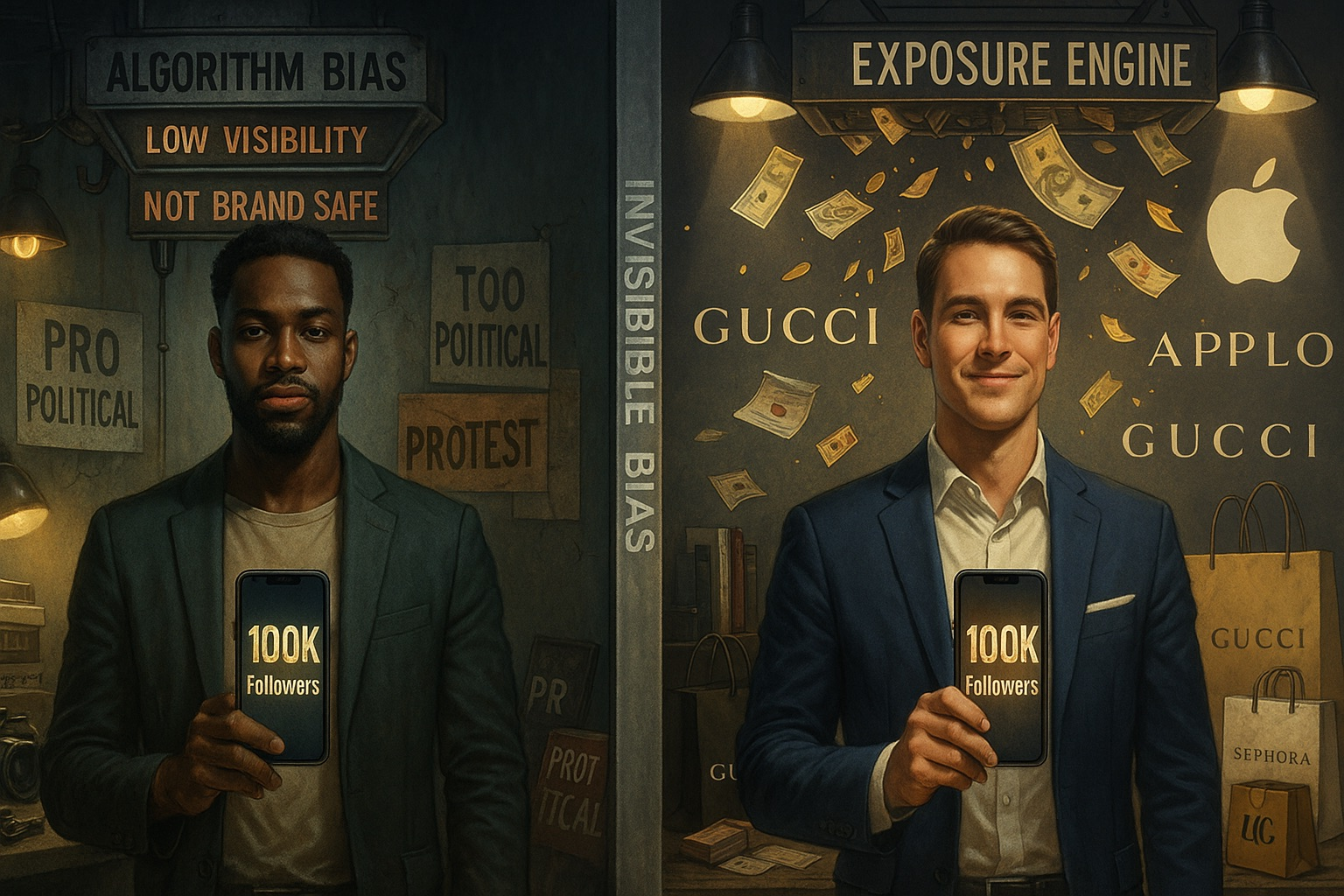
Even when creators of color manage to build large, loyal audiences, they are still routinely undervalued by brands. Sponsorship deals, promotional collaborations, and product placements, the lifeblood of the influencer economy, are rarely distributed fairly.
Why? Because brands do not just buy reach. They buy image. And when the people holding the marketing budgets are predominantly white, their choices reflect their comfort zones. This often means defaulting to creators who look like them or who feel “brand safe.”
“Brand safe” is a loaded phrase. It often translates to creators who will not talk about race, politics, or identity. It means appealing to a wide, often white, demographic. It means being palatable, non-threatening, and easy to market.
As a result, a white influencer with 100,000 followers might land a $10,000 brand deal. A Black influencer with the same stats might be offered half that amount, or passed over entirely. And when creators of color push back on these disparities, they are told they are being difficult, demanding, or unprofessional. Meanwhile, brands continue to profit from the culture without investing in the people who create it.
5. The Trap of “Universal Appeal”
There is another trap built into the system: the myth of universal appeal.
White creators are seen as relatable to “everyone.” Their content is considered broadly marketable. But creators from minority backgrounds are often treated as niche, even when their reach spans multiple demographics.
This means that minorities have to translate themselves to be seen. Whether it is switching languages, softening cultural references, or diluting their voice, they are pressured to flatten their identities to fit the mold of what brands and platforms deem accessible.
Meanwhile, white creators do not have to explain themselves, because their culture is seen as the default.
6. The Policing of Cultural Spaces: Damned If You Do…
Perhaps the most ironic injustice is what happens when minority creators finally choose to speak directly to their own communities, creating content that centers Black, Brown, or Asian experiences without catering to a white gaze.
Instead of being celebrated for cultural pride or autonomy, they are often accused of exclusion, division, reverse racism, or “communitarianism.” In short, minority creators are punished for doing exactly what white creators have always done, speak to their own audience, in their own language, from their own reality.
This discomfort often manifests in content being flagged, shadowbanned, or suppressed. It also shows up in comments and brand silence. Why? Because white audiences, and the systems built around them, are not used to being outside the message.
This creates a lose-lose situation. If minority creators code-switch or water down their message, they lose authenticity. If they remain rooted in their community, they are seen as alienating.
7. Algorithmic Censorship and Suppression
Let us be even more direct. The system is designed to reward whiteness and discipline everyone else.
There have been numerous reports and leaked documents showing that platforms like TikTok, Instagram, and Facebook have suppressed content related to Black Lives Matter, Indigenous land rights, police brutality, and LGBTQ+ issues.
Often, the excuse is “violating community guidelines,” even when the content in question contains no hate, nudity, or violence, just truth.
This disproportionate censorship not only limits reach, it forces creators of color into silence or self-censorship just to maintain their accounts or avoid being shadowbanned. Meanwhile, white creators can freely co-opt those same aesthetics or narratives, stripped of context, and be rewarded for “edginess” or “activism.”
So What Is the Solution?
The goal is not to flip the script and disadvantage white creators. It is to expose the imbalance and build systems that reward value more equitably.
That includes transparent brand deals and public pay disclosures. It means algorithm audits to ensure racial and cultural bias is not baked into promotion patterns. It means hiring diverse decision-makers on brand and platform teams. It means direct investment in underrepresented creators, not just through “Black History Month” campaigns or temporary spotlights, but long-term equity strategies.
Most importantly, it means public awareness among audiences. Who we follow, share, and uplift sends a message to the system.
Final Words: It Is Not About Likes. It Is About Liberation.
To be a minority creator in the United States today is to constantly walk a tightrope: be visible, but not too ethnic. Be proud, but not divisive. Be talented, but not threatening. Be everything, and somehow still not enough.
This is not a failure of individual creators. It is a reflection of the systems they are forced to operate within, systems built on legacy ideas about who deserves power, attention, and reward.
But creators are waking up. They are organizing, speaking out, and building their own ecosystems. Because the truth is, culture has always come from the margins.
What is changing now is the demand that credit, compensation, and control follow that culture home.
Until then, the follower count will remain a façade, one that hides the real imbalance behind the screen.
Black Women Climbed the Ladder: Only to Find Too Few Black Men at the Top
Black women climbed through education and professional success, only to find that systemic barriers had left too few Black men at the same social level.
How systemic racism created unequal pathways for Black men and Black women, and turned educational success into a social divide
The educational rise of Black women cannot be fully understood without examining the different pressures historically imposed on Black men and Black women within America’s racial order.
For much of American history, Black male independence was often treated as more than a social development, it was viewed as a challenge to established systems of racial and economic hierarchy. Economic self-sufficiency, landownership, political participation, military service, entrepreneurship, and educational advancement frequently brought Black men into conflict with institutions designed to preserve existing power structures.
This dynamic was embedded not only in individual prejudice but also in systems of law enforcement, labor regulation, voting restrictions, education, housing, and criminal justice.
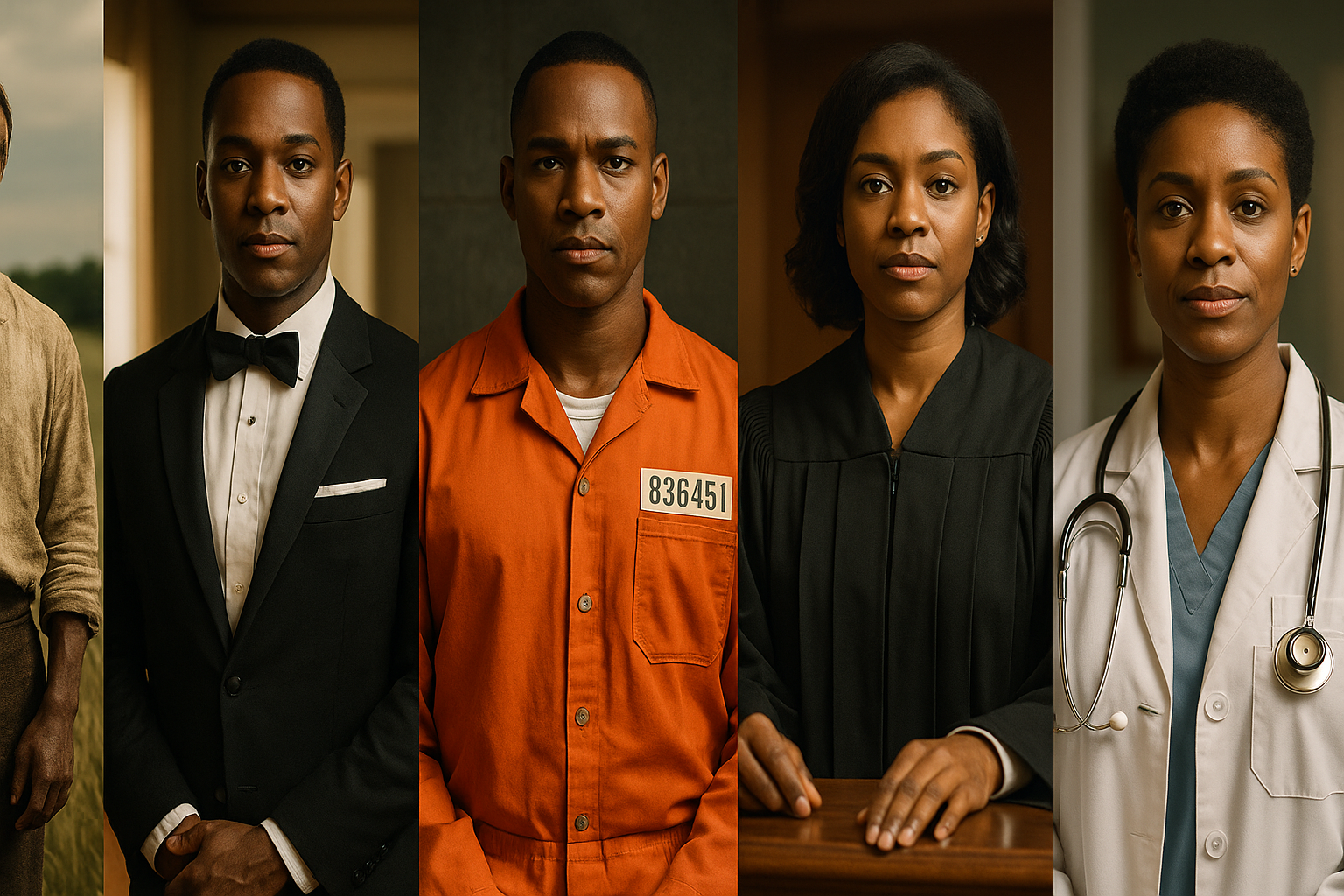
Its effects can be seen in the destruction of prosperous Black communities such as Tulsa’s Greenwood District, the dispossession of Black-owned farmland, lynching campaigns, wrongful convictions, discriminatory policing practices, and cases such as George Stinney Jr., the Exonerated Five, Rodney King, and countless lesser-known individuals whose lives were shaped by institutions that often presumed Black male guilt, danger, or inferiority.
The intent behind these policies and practices varied across time and place, but the outcomes were remarkably consistent. Black men were disproportionately subjected to surveillance, exclusion, criminalization, political disenfranchisement, economic displacement, and violence. In many instances, institutions that should have provided protection instead became mechanisms of restriction.
Understanding this history helps explain why educational inequality within Black America cannot be reduced to questions of motivation or cultural preference. Black men did not simply choose different outcomes. They were more likely to encounter forces that interrupted schooling, removed them from households, restricted employment opportunities, destabilized wealth accumulation, and transformed routine interactions with authority into potential encounters with punishment.
The consequences extended far beyond individual lives.
Because men often occupied, or were expected to occupy, central economic and protective roles within families, their exclusion weakened entire households. Incarceration, employment discrimination, housing segregation, racial violence, and land dispossession disrupted family continuity, hindered wealth accumulation, and reduced the ability of Black communities to convert labor into lasting economic power.
Black women, meanwhile, faced profound forms of racism and sexism of their own. They endured exploitation, sexual violence, wage discrimination, political marginalization, and stereotypes that continue to influence their treatment in schools and workplaces. Their educational advancement should never be mistaken for evidence of a fair or welcoming system.
What differed was not the existence of oppression but the way it was often expressed.
Black women were frequently underestimated rather than viewed as an immediate political or physical threat. In some institutions, that underestimation created limited opportunities. Schools, churches, hospitals, public agencies, and employers often admitted Black women into positions considered supportive, educational, administrative, or service-oriented—roles seen as subordinate and non-threatening to the broader social order.
Those opportunities were narrow and unequal, but Black women transformed them into something larger.
This advancement is reflected in federal education data. During the 2021–22 academic year, Black women earned 130,424 of the 199,962 bachelor’s degrees awarded to Black students—approximately 65.2 percent. Black men earned 69,538, meaning Black women received nearly two bachelor’s degrees for every one received by a Black man.
They entered teaching, nursing, clerical work, social services, public administration, and higher education.
Black women’s participation in higher education has also consistently exceeded that of Black men across many recent years. According to the National Center for Education Statistics, the college-enrollment rate among Black women ages 18 to 24 was higher than the corresponding rate for Black men in 2013, 2014, 2017, 2018, 2020, and 2021, while the difference was not statistically measurable in the remaining years examined. This places Black women among the most educationally engaged populations within Black America, even though the data do not support describing them as the single most highly enrolled demographic group in every year.
They earned credentials, built professional networks, supported families, organized communities, and steadily converted positions of limited authority into platforms for advancement.
Their ascent was neither accidental nor generously granted. It was achieved through persistence, adaptation, and strategic use of opportunities that many institutions underestimated.
While much of the most visible punitive power of American institutions fell disproportionately upon Black men, Black women increasingly leveraged access to education and professional employment to establish a growing presence within major institutions. A system that often assumed weakening Black men would weaken Black communities underestimated the capacity of Black women to sustain families, build organizations, and accumulate educational and professional influence.
This does not mean Black women benefited from the hardships imposed on Black men. Quite the opposite. They frequently bore many of the economic, emotional, and familial consequences. They were often required to support households, care for relatives, compensate for lost income, and navigate institutions on behalf of family members affected by exclusion or criminalization.
Their educational advancement was therefore both a triumph and a burden.
Black men often encountered overt forms of surveillance, criminalization, and exclusion. These disparities continue into adulthood. At the end of 2023, Black adults were imprisoned in state or federal facilities at a rate of 1,218 per 100,000, compared with 231 per 100,000 White adults, a rate more than five times as high. Among males ages 18 and 19, the imprisonment rate for Black males was 352 per 100,000, approximately twelve times the rate recorded for White males of the same age.
Black women were more often channeled into undervalued roles and expected to remain useful without becoming powerful. Yet education gradually altered that equation. Credentials became professional standing, professional standing became institutional influence, and influence became a pathway to broader social and political power.
What began as tolerated participation evolved into a claim to authority.
That is the broader context behind the educational ascent of Black women. Their progress occurred alongside persistent barriers to Black male advancement and within a larger system that constrained Black economic and political independence.
The system did not eliminate Black ambition. It distributed obstacles unevenly.
Black men were often treated as threats to be contained.
Black women were often treated as labor to be utilized and voices to be underestimated.
Both were denied equality, but through different mechanisms.
And within the space created by that miscalculation, Black women built one of the most significant educational advancements in modern American history.
The Social Consequence of Unequal Educational Pathways
One of the most visible consequences of these divergent pathways appears in the intimate and social lives of educated Black women.
As Black women entered higher education and professional institutions in increasing numbers, many Black men continued to face disproportionate exposure to underfunded schools, disciplinary exclusion, unemployment, incarceration, neighborhood disinvestment, discriminatory policing, and restricted access to wealth-building opportunities.
The result was not merely a gap in academic achievement. It was the emergence of increasingly different social trajectories within the same community.
Many Black women converted educational attainment into professional credentials, economic independence, geographic mobility, and access to middle-class institutions. Meanwhile, many Black men encountered barriers that interrupted education, weakened employment prospects, reduced income stability, and limited opportunities to accumulate property and social capital.
This divergence narrowed the number of Black men occupying the same educational, professional, and economic spaces as highly educated Black women.
The issue is often framed as a matter of personal preference or unrealistic standards. Yet educational attainment frequently functions as a proxy for broader forms of compatibility: ambition, financial stability, intellectual outlook, lifestyle, long-term planning, and shared social experiences.
People tend to form relationships within the environments they regularly inhabit. When Black women are increasingly concentrated in universities, professional workplaces, healthcare systems, government institutions, and managerial occupations, while fewer Black men are present in those same spaces, opportunities for partnership naturally decline.
This does not suggest that Black men lack intelligence, character, or ambition. It highlights the difference between potential and opportunity.
A man may possess the qualities necessary for success while having encountered disruptions that prevented those qualities from being converted into credentials, income, or professional status. School suspensions, financial instability, family disruption, employment discrimination, criminal records, and early exposure to policing can permanently alter life trajectories even when ability remains intact.
The disparity begins well before adulthood. In the 2021–22 school year, Black boys constituted only 8 percent of public K–12 enrollment, yet represented 18 percent of students receiving in-school suspensions, 22 percent of those receiving out-of-school suspensions, and 21 percent of students expelled. Their representation among students receiving out-of-school suspensions was therefore approximately 2.75 times their share of enrollment. U.S Dpt of Edu
The resulting imbalance reflects more than individual decisions. It reflects the cumulative effects of institutions that shaped Black men and Black women through different forms of pressure.
Over time, these unequal pathways produced challenges in dating, marriage, and family formation. Educated Black women may find fewer Black men who share similar educational experiences, professional environments, or economic circumstances. Some may feel forced to choose between cultural familiarity and social compatibility. Some Black men may experience the growing educational and economic success of Black women as a challenge to traditional expectations surrounding male provision and status.
These tensions are often discussed as personal conflicts, but they have deeper structural roots.
The same forces that restricted Black male access to education, employment, property, and institutional legitimacy also required many Black women to become increasingly self-sufficient. They were often expected to serve as providers, decision-makers, and stabilizing figures within their families and communities.
This produced a striking contradiction.
Black women were encouraged, often by necessity, to become educated, independent, and professionally successful. Yet after achieving that success, they are sometimes criticized for being too ambitious, too self-reliant, or too selective.
At the same time, Black men are often judged solely by present socioeconomic status without sufficient consideration of the historical and institutional barriers that helped shape it.
The issue is not that Black women advanced too far, nor that Black men failed to work hard enough.
The issue is that both groups were placed on different tracks within the same racial system.
One was underestimated and allowed limited access to institutions that it later learned to master.
The other was more frequently surveilled, criminalized, and excluded from those institutions before its potential could fully develop.
The educational and social gap that emerged is now felt most acutely in the search for partnership.
Black women did not create the shortage of Black men at comparable educational and economic levels. Nor should Black men be reduced to the barriers they faced.
The imbalance is the intimate expression of a larger historical reality.
It is what happens when a society restricts the advancement of Black men, demands extraordinary resilience from Black women, and then treats the resulting disconnection as a private failure rather than a public consequence.
Western democracies often congratulate themselves on their progress. Slavery was abolished, Jim Crow dismantled, segregation declared illegal. Yet the evidence is plain: inequality has not disappeared, it has been repackaged. The same logic that guided monarchs to preserve their power, suppress rivals, hoard wealth, control narrative, still operates today. Only the methods have changed. Where once chains and laws enforced submission, now bureaucracy, finance, education, media, and culture perform the same function with greater subtlety.
The condition of Black America illustrates this perfectly. The obstacles are not random; they are engineered. From the destruction of Black prosperity in Tulsa to redlined maps that cut communities out of wealth, from biased appraisals to the criminalization of youth, the pattern is consistent: when progress emerges, systems adjust to contain it. The result is a cycle of exclusion that ensures Black success is minimized, Black culture is distorted, and Black power is denied.
Redlining: Cartography of Exclusion
In the 1930s, the Home Owners’ Loan Corporation (HOLC) drew maps of American cities to guide investment. Neighborhoods with Black residents were marked in red as “hazardous.” Banks refused to lend, insurance companies denied coverage, and property values collapsed.
This was not benign guidance, it was social engineering. A Black family might have enough income to purchase outside the red line, but color barred the door. By isolating Black families in neighborhoods stripped of credit, redlining ensured two outcomes:
Generational Wealth Denied: White families in “green” zones saw property values rise, passing down equity. Black families in red zones saw values stagnate or decline. The racial wealth gap today traces back directly to those maps.
Schools and Services Starved: Because American schools rely on property taxes, neighborhoods devalued by redlining also lost strong schools, recreation centers, and infrastructure.
Even today, descendants of redlined families live in neighborhoods with lower life expectancy, higher pollution, and weaker school systems. Segregation may be illegal, but its imprint lives in zip codes.
Biased Appraisals: The Modern Gatekeepers of Wealth
Even when Black families break through and purchase homes in middle-class neighborhoods, bias follows them. Study after study reveals that Black homeowners receive systematically lower appraisals. In some cases, families who “whitewash” their homes, removing African-American art or family photos before an appraisal, see values rise by tens or even hundreds of thousands of dollars.
This quiet theft is devastating. Equity is the foundation of generational wealth. Lower appraisals mean smaller loans, less leverage for education or entrepreneurship, and weaker inheritances. The message is unmistakable: even when you do everything “right,” the system finds new levers to keep you down.
Tulsa 1921: When Progress Was Burned
Perhaps the starkest example of engineered suppression is the Tulsa Race Massacre. In the early 20th century, Greenwood, known as “Black Wall Street,” was thriving. Black doctors, lawyers, business owners, and entrepreneurs built a prosperous community in the face of segregation. It was proof that Black progress was possible.
Then came the massacre. Over two days in 1921, White mobs, many deputized by authorities, destroyed more than 1,000 homes and businesses, killing an estimated 300 people. Airplanes dropped incendiaries. Insurance claims were denied. Generational wealth was literally burned to the ground.
Tulsa was not unique. Dozens of similar pogroms occurred across the country. But Tulsa demonstrates the principle: whenever Black progress threatened to rival White dominance, violence and policy combined to reset the hierarchy.
Minimization of Black Success
Even when progress survives, its legitimacy is undermined. In corporate America, in universities, in politics, Black achievement is too often framed as the product of DEI initiatives rather than merit. A Black professional is not congratulated for intellect or skill but quietly assumed to be the beneficiary of “diversity quotas.”
This rhetorical move is powerful. It erases effort, delegitimizes excellence, and signals to peers that Black success is conditional. It creates a double bind: succeed, and your merit is questioned; fail, and your shortcomings confirm stereotypes. It does not mean Black individuals cannot be successful and climb the social ladder at its highest levels; but those levels are capped, an invisible ceiling that ensures minority achievement cannot rise so high as to disrupt or overturn those who hold entrenched social and economic power. The purpose is not subtle: to prevent Black success from challenging the narrative of White superiority.
Media as Machinery: The Manufacture of “Black Culture”
Popular culture is not neutral. Hollywood, record labels, and mass media have long curated and commodified the image of Blackness, often in ways that reinforce the very stereotypes society uses to marginalize Black people.
Stereotyped Roles: For decades, Black actors were offered roles as criminals, maids, or sidekicks, never as full protagonists. These portrayals reduced Black life to caricature, teaching audiences to see limitation rather than humanity.
Over-sexualization: Especially of Black women, media narratives often depict hyper-sexual characters, reinforcing myths of moral looseness and justifying exploitation.
Over-violence in Music Videos: Corporate labels have promoted hyper-violent rap imagery, guns, gangs, nihilism, while sidelining socially conscious artists. Violence becomes “authentic Black culture,” when in fact it is a curated, profitable image.
By controlling the lens, media has redefined cultural expression as pathology. The result is profitable dehumanization: stereotypes that justify policing, exclusion, and fear.
Villainization of Black Youth
One of the most chilling examples of systemic engineering is the criminalization of Black children. Research shows Black boys are often perceived as older than they are, less innocent, and more threatening. This perception leads to harsher discipline in schools and, most tragically, to the sentencing of minors as adults.
When a White teenager commits a crime, headlines often frame him as “troubled” or “misguided.” When a Black teenager does the same, he is a “thug” or “super-predator.” The difference in language is the difference between rehabilitation and a life behind bars.
This process strips youth of humanity. It unmoors them from the protections of childhood and accelerates them into the criminal system. It also reinforces the broader narrative: that Blackness itself is dangerous, that fear is rational, and that systemic exclusion is justified.
The Pattern: Power Preserved by Design
Look at the through-line:
Redlining and biased appraisals prevent Black families from accumulating wealth.
Tulsa and other massacres destroyed wealth when it emerged.
DEI rhetoric minimizes Black excellence.
Media stereotypes distort culture into pathology.
Criminalization of youth feeds mass incarceration.
Every one of these mechanisms produces the same outcome: Black advancement is slowed, delegitimized, or reversed. This is not coincidence; it is consistency. Systems adapt whenever equality threatens hierarchy.
The comparison to monarchy is apt. Monarchs preserved power by blocking rivals, hoarding land, and manipulating culture. Today’s ruling class, not kings but structures of White advantage, use more refined tools: credit ratings, zoning laws, media industries, and prosecutorial discretion. The intent is the same: maintain supremacy by managing the ascent of others.
Beyond the Illusion of Democracy
Western nations claim democracy and equality, but the lived experience tells a different story. When a child’s future is predicted by their zip code, when a professional’s merit is questioned because of their skin, when entire communities are stripped of wealth by biased valuations, equality is not real, it is an illusion.
Frederick Douglass once recalled overhearing his master say: “If you give a n*** an inch, he will take an ell. Learning will spoil the best n**** in the world… If he learns to read, he will become unmanageable, and of no value to his master.” * Douglass later wrote that this moment revealed the true secret of slavery to him: education and slavery are incompatible. The logic was simple, if literacy and intellect were allowed to flourish, they would shatter the myth of racial inferiority upon which the system depended. Denying education was not just an act of cruelty; it was a strategy to preserve power through psychological domination.
That same logic endures in modern forms. Systems today still operate on the need to suggest Black people are “less capable” or that their successes are owed to special favors like DEI, rather than merit. Figures like Charlie Kirk play directly into this tradition, keeping the myth alive that Black advancement is artificial or undeserved. The goal is the same as it was in Douglass’s time: maintain the illusion of superiority by casting doubt on Black intellect, resilience, and achievement.
True democracy demands dismantling these engineered barriers. It requires:
Fair appraisal enforcement: rigorous oversight to end the systemic undervaluation of Black homes and ensure property equity reflects true market value.
Investment in historically devalued neighborhoods: repairing infrastructure, schools, and services deliberately stripped through redlining.
School funding reform: decoupling education from property tax wealth, with programs set at a national standard so that resources are not dictated by neighborhood demographics.
Media accountability: rejecting stereotypes and amplifying diverse, authentic narratives.
Juvenile justice reform: ending the systemic incarceration of youth for misdemeanors and dismantling the use of excessive bail that prevents them from returning to their lives.
Until then, the rhetoric of equal opportunity is hollow. What exists is a monarchy of whiteness, a system designed to preserve advantage. And as long as that system persists, no amount of individual merit, no degree, no achievement will fully free Black communities from the engineered shadow of exclusion.
The task before us is clear: dismantle the architecture, not merely paint over its walls.
In a world that prides itself on freedom, meritocracy, and equality of opportunity, a troubling pattern persists, one that is so deeply normalized it often escapes scrutiny. Black success, particularly in the United States, is rarely recognized across the full spectrum of possibility. Instead, it is frequently funneled into narrowly defined lanes: sports, entertainment, and spectacle.
And while these spaces can offer wealth and visibility, they also mask a deeper truth, that the freedom of choice available to Black individuals is often shaped by systemic limitation, not genuine equality. This article is not an indictment of sports or entertainment, nor of the remarkable Black individuals who excel in these domains. It is a call to examine why these are the arenas society consistently allows Black talent to thrive in, and what that says about the structure of opportunity itself.
When the Scoreboard Becomes the Only Honest Judge
At first glance, a young Black athlete choosing to pursue basketball, football, or track might appear to be exercising freedom, a self-determined path toward success. And on the surface, they are. But beneath that surface lies a sobering question:
why do so many Black youths choose these specific paths? Is it because they are uniquely gifted in physical ability? Or is it because, historically, these are the only fields where their success cannot be denied, blocked, or rewritten by bias?
When a young Black student excels in sports, the scoreboard does not lie. The stopwatch does not discriminate. A touchdown cannot be subjectively downgraded, and a three-pointer is worth three points regardless of who shoots it. In a society where Black intelligence has been questioned, Black ambition minimized, and Black leadership undermined, the world of sports represents a space where performance is visible, undeniable, and profitable.
The Invisible Gates of Academia and the Workplace
In contrast, academia and corporate spaces operate with invisible gatekeepers. These environments are shaped by recommendation letters, standardized tests, subjective evaluations, “culture fit,” and coded language that often masks racial bias.
In these arenas, success is not just earned, it must also be granted. And historically, Black students have found these gates far more difficult to open. Even in the rare moments when Black professionals break into corporate boardrooms or executive roles, their presence is often viewed through a distorted lens.
Diversity, Equity, and Inclusion initiatives, while created with good intentions, have unintentionally reinforced a damaging perception: that Black individuals are granted access, not earned it. As a result, many are seen as having entered through the service door, as though their positions are charity rather than merit. This undermines the fact that many of these individuals are not only qualified, but overqualified, often having had to work twice as hard to prove their worth in systems that were never designed for them to thrive in.
Education as a Barrier Disguised as Opportunity
Beyond that, tuition itself has become a class weapon. For individuals with equal potential, access to elite education is no longer about intellect, but income. The rising cost of college has become a strategic barrier, filtering out entire demographics under the guise of meritocracy. It is a quiet but powerful method of exclusion, one that keeps “undesirable” populations out without ever having to name race or class directly. Opportunity is sold at a price few can afford, and the illusion of fairness is preserved by pointing to the few who manage to break through.
Why Sports Remain a Refuge of Recognition
This is precisely why sports have remained so deeply rooted in Black families as a vehicle for advancement. On the field, merit is visible. Performance is measured in real time. Talent is undeniable. In sports, success is harder to distort, harder to question, and less likely to be explained away as a favor. When a Black athlete wins, the world sees it. It’s not up for debate. There are no hidden criteria, no back doors, no whispers of diversity quotas, just skill, will, and result. For many Black families, that visibility is worth everything.
Survival Through Strategy, Not Passion Alone
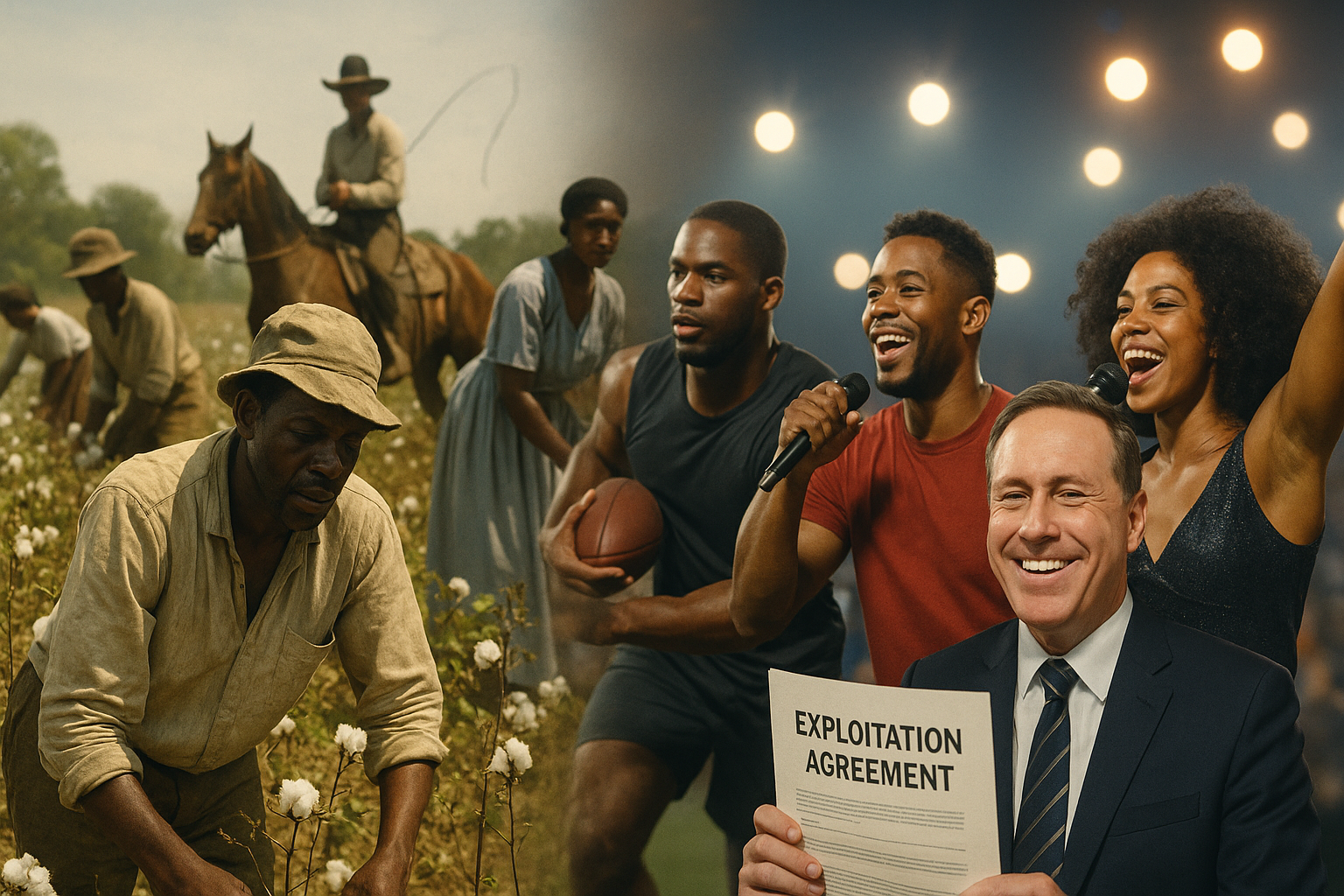
Given this landscape, is it really freedom of choice when a Black teenager chooses to pour themselves into athletics, where success is measured in points, not permission? The pursuit of sports is not just passion. It is strategy. It is survival. It is the conscious or unconscious gravitation toward a realm where their excellence will not be hidden or diminished. Black athletes today are not enslaved in the literal sense. They sign contracts, negotiate salaries, and own businesses. But that does not mean the systems around them are free of exploitative dynamics. When sports institutions, media companies, and sponsors earn billions off the physical labor and public image of Black athletes while maintaining white leadership at every institutional level, the echoes of exploitation become hard to ignore. This becomes especially apparent in college athletics, where the overwhelming majority of players in high-revenue sports like football and basketball are Black, while coaches, athletic directors, and university presidents remain predominantly white. The system profits off Black labor while preserving white power, and calls it education. In the professional arena, Black athletes are celebrated when they entertain, but often punished or silenced when they speak out. Their success is welcomed as long as it doesn’t threaten the structures that benefit from their visibility.
Excellence Repackaged as Instinct
Black people are still used for their physical capacity to sustain effort, echoing the exploitative slavery system. Their achievements are too often framed through tropes such as “natural talent” instead of “hard work,” while their white counterparts are more often praised for “cerebral intelligence.” The language alone reveals a hierarchy in how success is interpreted. Brilliance in a Black body is seen as instinct, not discipline. Intelligence in a white body is seen as earned.
Ask yourself: Why aren’t there more Black physicists on magazine covers? Why aren’t there more Black venture capitalists featured on business panels? Why aren’t there more Black CEOs of tech giants, law firms, or biotech firms?
The talent is there. The drive is there. But the gates are still closed or guarded. The media rarely spotlights Black excellence in these areas, even when it exists. It simply doesn’t fit the narrative society is used to consuming.
Entertainment as Containment
Meanwhile, a single Black NBA player or rapper garners more attention than an entire generation of Black scholars. Not because they matter more, but because these are the forms of Blackness society finds easiest to consume.
What happens when a group is only celebrated in roles that entertain others? What message does it send when Black bodies are on every screen but rarely at the table of real decision-making?
It creates a form of cultural containment. You are allowed to thrive, as long as you stay in the role that’s been scripted for you. And so, from a young age, Black children look to entertainers and athletes for aspiration. Not because they lack dreams of being doctors, engineers, or scientists, but because they see who gets celebrated. They see whose success gets televised, whose face ends up on a sneaker, and who gets silenced when they speak truth. This is not a coincidence. It is design.
A Curated Illusion of Equality
It’s not that Black people cannot succeed elsewhere, they do. Quietly. Brilliantly. Relentlessly. But the question is: where is that excellence systemically supported, publicly acknowledged, and culturally amplified? Too often, it is only in sports and entertainment. That is not freedom. That is a curated illusion of opportunity. Understanding this truth does not mean devaluing the incredible achievements of Black athletes and entertainers. Their contributions are immense, worthy, and culturally transformative. But it does mean recognizing that their dominance in these fields is not just about talent, it’s also about constraint. It’s about a system that, through centuries of exclusion, has left fewer open doors, and then celebrates those who walk through the few that remain.
A Call for Real Equity
If we want a truly equal society, we must do more than praise Black success on the field. We must ask:
what would happen if we supported Black potential in every domain with the same intensity, visibility, and investment? What if we cared as much about the next Black philosopher as we do about the next NBA draft pick? What if we funded schools the way we fund stadiums? What if we taught every Black child that their worth is not determined by applause, but by their unshakable right to thrive in any arena they choose?
The path to truth may be complex, but the insight is clear. Black people are not limited by talent. They are limited by the spaces that society chooses to reward them in. And when excellence is only accepted in roles that entertain, that is not progress, it’s a more polished form of containment. It’s time to ask not just why Black people choose sports, but why society keeps choosing to only reward their greatness when it’s on display, not when it’s in defiance. Until we expand the definition of what Black excellence looks like, we are not living in a meritocracy, we are just watching a game, and calling it freedom.






 Entertainment1 year ago
 Opinion1 year ago
 Politics1 year ago
 Tech1 year ago
 Economy1 year ago
 Sports1 year ago
 Entrepreneur1 year ago
 Opinion11 months ago